
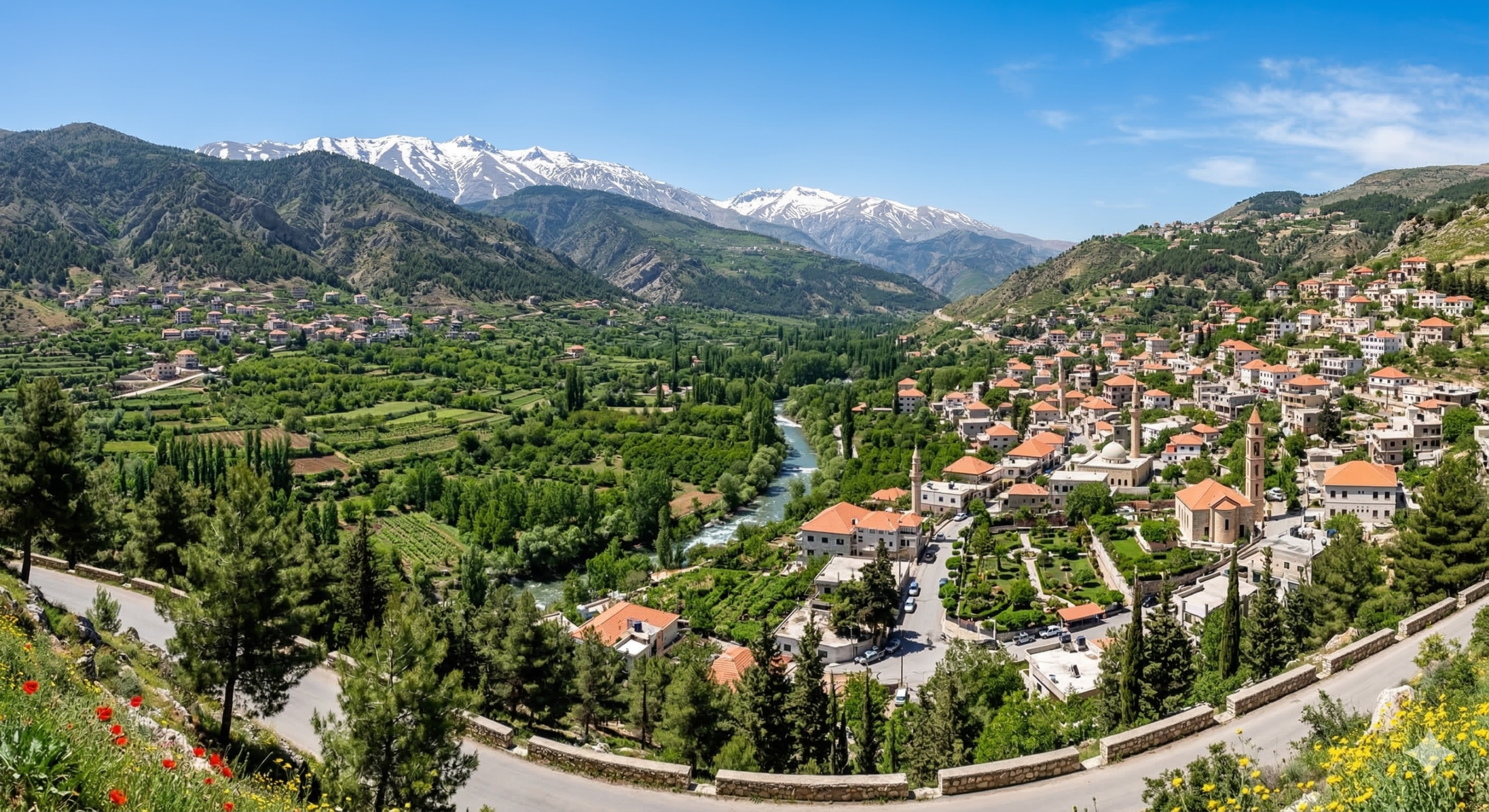
Zabadani: The Green Jewel of the Damascus Countryside – A Story of Beauty, History, and Resilience
Introduction
Zabadani (Arabic: الزبداني) is a city located in the green highlands of the Rif Dimashq Governorate in southwestern Syria, near the Lebanese border. The city is surrounded by mountains, fertile valleys, and a cool climate.
Because of this setting, Zabadani became one of Syria’s most famous mountain resorts. For decades, visitors came to the town to enjoy its natural beauty and fresh air.
Location and natural environment of Zabadani
Zabadani lies about 50–60 kilometers northwest of Damascus. The town sits in a fertile valley surrounded by the slopes of the Anti-Lebanon Mountains.
As a result, the climate here is milder than in the Damascus plains. Summers are cooler and more comfortable. Meanwhile, winters are cold and often bring snowfall. In some years, temperatures drop below –10°C.
Because of its rainfall and water resources, the valley supports orchards, farms, and green pastures. In contrast, many regions of central Syria are much drier.
For this reason, Zabadani became a popular summer destination for people from Damascus and across the Middle East.
History and Cultural Roots
The name Zabadani likely comes from Aramaic origins, which suggests that the area has very ancient roots.
Historical records from the 19th century describe a diverse community. At that time, the population included Sunni Muslims and Antiochian Greek Christians living in the valley.
Later, during the late Ottoman period and the French Mandate, the town became known as a summer hill station. Visitors traveled here to escape the intense heat of the surrounding plains.
In addition, agriculture played an important role in the local economy. Farmers in the valley became well known for growing apples and cherries, which were widely sold in nearby regions.
Cultural and Social Life Before the War
Before the war, Zabadani was a lively mountain town. According to the 2004 census, the city had about 26,000 residents.
During the summer months, tourism increased significantly. Families from Damascus often visited the town for holidays or weekend trips.
As a result, cafés, restaurants, and small guesthouses became common in the area. Many families even owned summer homes or rented villas in the valley.
The scenery of green hills and orchards gave visitors a peaceful countryside atmosphere not far from the capital.
The War Years
However, the Syrian Civil War, which began in 2011, dramatically changed the history of Zabadani.
Because of its strategic location near Lebanon, the town quickly became an important conflict area. In January 2012, opposition forces captured the city after heavy fighting.
Afterward, the town experienced repeated battles and sieges. Control shifted several times between opposition groups, the Syrian Army, and allied militias.
As a result, Zabadani suffered heavy destruction. Many buildings were damaged or destroyed, and large numbers of residents were forced to leave.
In addition, farms and forests in the valley were damaged during the fighting and years of neglect.
Recovery and Zabadani Today
In recent years, the situation has slowly improved. After ceasefires and evacuations, some residents began returning to the town.
Reconstruction efforts are still ongoing. Authorities have started rebuilding roads, infrastructure, and basic services.
More recently, environmental recovery has also become a priority. In 2025, a reforestation campaign began to restore vegetation lost during the war.
The project aims to plant hundreds of thousands of trees across the valley. Therefore, the program hopes to revive agriculture and protect the natural environment.
Although signs of destruction remain, these efforts show the resilience of both the land and its people.
How to Reach Zabadani
Traveling to Zabadani from Damascus is relatively simple.
By Road
Drive northwest from Damascus toward the Lebanese border. The trip usually takes 1 to 1.5 hours, covering about 50–60 kilometers.
By Private Vehicle or Tour
In the past, many visitors traveled with private drivers or guided tours. Today, travel conditions may vary, so visitors should check local information before planning a trip.
Public Transport
Historically, minibuses and shared taxis connected Zabadani with Damascus. However, travelers should verify current schedules and safety conditions.
Why Zabadani Matters
Zabadani remains an important place in the Syrian landscape.
First, it represents a region of rich natural beauty and a cool mountain climate.
Second, the town carries deep historical roots, from ancient Aramaic origins to the Ottoman and French periods.
Finally, Zabadani stands as a symbol of resilience. Despite years of conflict, the community continues working toward recovery and environmental restoration.
Leave a Reply