
The Heart of Damascus: The Umayyad Mosque — A Living Monument of History, Faith, and Culture
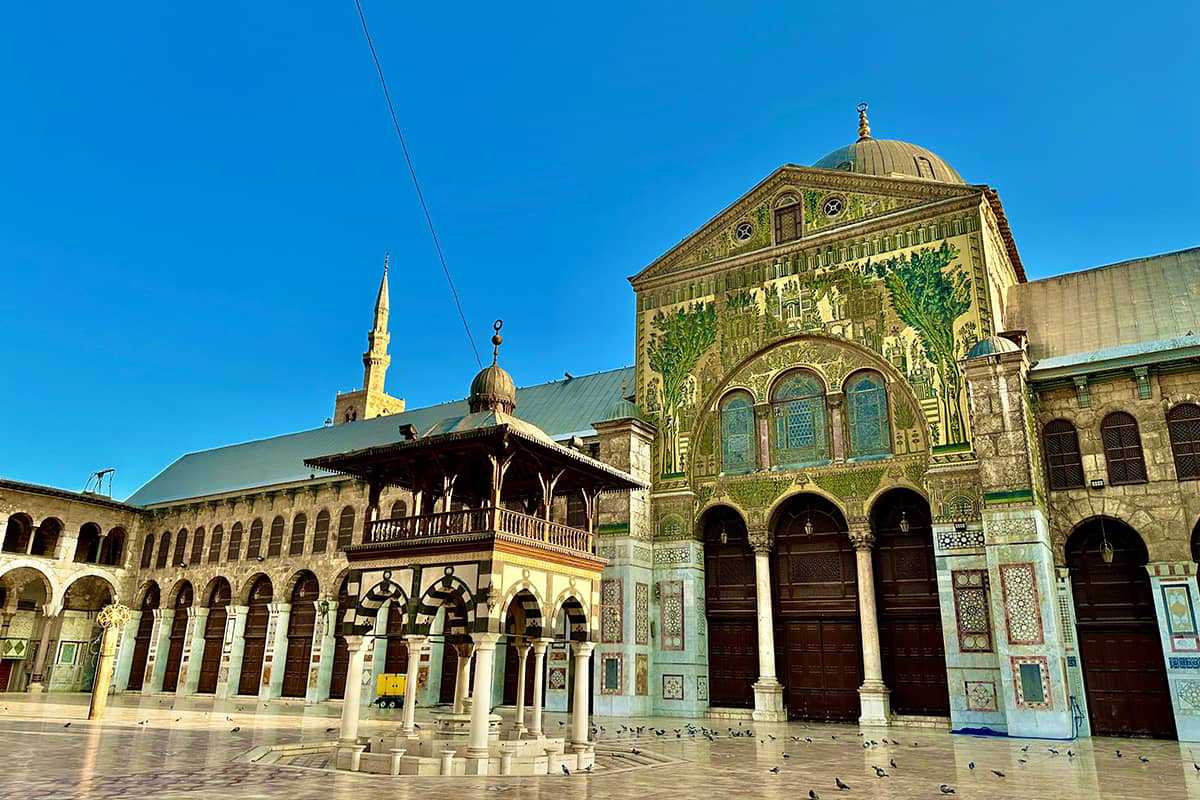
The Umayyad Mosque in Damascus stands among the most extraordinary religious landmarks in the world. Known also as the Great Mosque of Damascus, the Umayyad Mosque has served continuously as a place of worship for more than thirteen centuries. Located in the heart of Damascus, one of the oldest continuously inhabited cities on Earth, the mosque reflects layers of civilization, faith, and artistic achievement.
The Umayyad Mosque is not simply an architectural masterpiece. It is a living monument where Aramean, Roman, Byzantine, and Islamic histories converge in a single sacred space.
A Sacred Site Before Islam: A Crossroads of Civilizations
Long before the Umayyad Mosque took its present form, the site held deep spiritual importance.
In ancient Aramean times, it housed a temple dedicated to Hadad, the storm god. During the Roman period, builders transformed the space into a monumental sanctuary devoted to Jupiter, forming one of the largest temple complexes in the region.
In the 4th century CE, under Byzantine Christian rule, the temple complex became a cathedral honoring John the Baptist. This Christian presence shaped the identity of the site for centuries. The transformation from pagan temple to Christian cathedral demonstrates the spiritual continuity of the location, even as political powers changed.
Damascus itself functioned as a crossroads of trade and culture, and the sacred space at the city’s core reflected that diversity.
The Birth of the Umayyad Mosque
After Muslim Arab forces entered Damascus in 634 CE, part of the former cathedral served as a shared prayer space for Muslims. However, the vision for a grand Islamic monument emerged under Caliph Al-Walid I of the Umayyad dynasty.
Between 706 and 715 CE, Al-Walid I commissioned the construction of the Umayyad Mosque. Builders preserved sections of the Roman enclosure walls and integrated them into the new design. Artisans from across the Islamic and Byzantine worlds contributed materials, techniques, and artistic skill.
Over nearly a decade, thousands of workers created one of the earliest monumental mosques in Islamic history. When construction concluded shortly after Al-Walid’s death, the Umayyad Mosque stood as a symbol of Umayyad political authority and cultural ambition.
Architectural Splendor of the Umayyad Mosque
The Umayyad Mosque introduced architectural elements that shaped Islamic design for generations.
Grand Courtyard and Prayer Hall
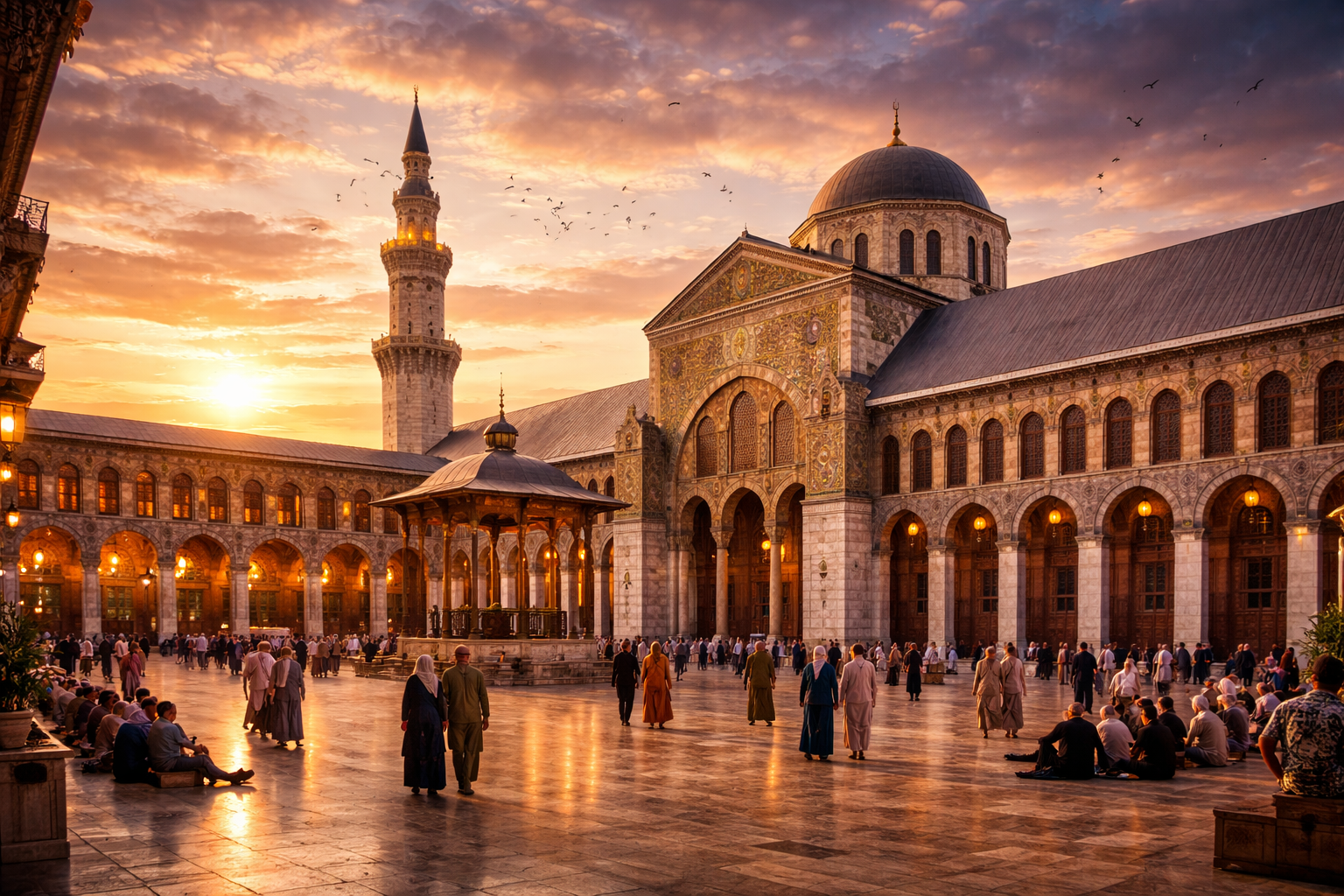
A vast rectangular courtyard measuring approximately 157 by 100 meters forms the mosque’s central open space. The courtyard leads to a large prayer hall along the southern side. Rows of columns and arches create long aisles that guide worshippers toward the qibla wall.
Dome and Central Nave
A central nave rises higher than the surrounding structure and culminates in an octagonal dome. This vertical emphasis enhances the sense of openness and grandeur inside the prayer hall.
Mosaics and Decoration
The mosque once displayed extraordinary mosaics on gold backgrounds, covering thousands of square meters. These mosaics depicted stylized landscapes, trees, rivers, and architectural scenes. Many fragments remain today and represent some of the finest surviving examples of early Islamic art.
Minarets
Three prominent minarets define the skyline of Old Damascus. These towers make the Umayyad Mosque visible from multiple vantage points across the city and emphasize its central role in urban life.
Religious and Cultural Significance
The Umayyad Mosque holds profound meaning for multiple religious traditions.
Islamic Importance
The mosque ranks among the oldest and most historically significant mosques still functioning for daily prayer. For Muslims, it represents early Islamic unity and the cultural flourishing of the Umayyad period.
Shrine of John the Baptist
Inside the mosque stands a shrine believed to house the head of John the Baptist. Christians revere him as a prophet, and Muslims honor him as Yahya. This shared reverence gives the Umayyad Mosque a rare interfaith dimension.
Shrine of Husayn ibn Ali
The mosque also contains a shrine associated with Husayn ibn Ali, grandson of the Prophet Muhammad. This association draws pilgrims, particularly from Shia communities.
Eschatological Traditions
Some Islamic traditions state that Jesus will return near the Umayyad Mosque at the end of times. This belief adds spiritual symbolism that extends beyond architecture and history.
Beneath its marble surfaces and towering arches lies a tapestry of faith narratives that reflect humanity’s search for meaning.
Survival Through War and Fire
Across thirteen centuries, the Umayyad Mosque has endured destruction and renewal.
In 1401, the Central Asian conqueror Timur invaded Damascus, causing damage to parts of the mosque. Reconstruction efforts followed, restoring its essential structure.
In the 19th century, a major fire severely damaged sections of the building. Restoration projects repaired the harm while preserving many historic features.
Despite invasions, disasters, and political upheavals, the Umayyad Mosque continues to stand at the heart of Damascus. Its endurance reflects both architectural resilience and the devotion of the communities that care for it.
The Umayyad Mosque in the Modern World
Today, the Umayyad Mosque remains an active center of faith and culture.
Daily Worship: Muslims gather for five daily prayers and major religious celebrations.
Cultural Landmark: Historians, architects, and scholars visit to study its mosaics and structural design.
Tourist Destination: Visitors from across the globe explore its courtyard and prayer hall to experience its historical depth.
Situated near the bustling markets of Old Damascus, the mosque continues to shape the city’s rhythm. It connects spiritual devotion with everyday life.
How to Reach the Umayyad Mosque
The Umayyad Mosque lies within the Old City of Damascus.
On Foot: Visitors staying in the old quarters can walk through historic alleys and markets to reach the mosque.
By Taxi or Bus: From central Damascus, taxis and local buses stop near the old city gates. From there, clear signs direct visitors toward the mosque.
Guided Tours: Local guides offer cultural tours that explain the mosque’s layered history and architecture in detail.
Its central position makes it easy to combine with visits to nearby souqs and historic courtyards.
Souq al-Hamidiyah Damascus: Historic Market and Cultural Landmark
Final Reflection
The Umayyad Mosque of Damascus represents far more than stone, marble, and mosaic. It embodies the continuity of a city shaped by faith, empire, artistry, and resilience. From ancient Aramean worship to Roman grandeur, from Byzantine Christianity to Islamic devotion, the site reflects humanity’s evolving spiritual journey.
Walking through the courtyard of the Umayyad Mosque offers more than architectural admiration. It offers a profound connection to centuries of prayer, cultural exchange, and historical transformation.
The Umayyad Mosque remains a living chronicle of history — not frozen in time, but alive in the present.
Old Aleppo Syria: Historic Markets and Heritage Guide
A video about the Umayyad Mosque in Damascus is available on our YouTube channel.
Leave a Reply