
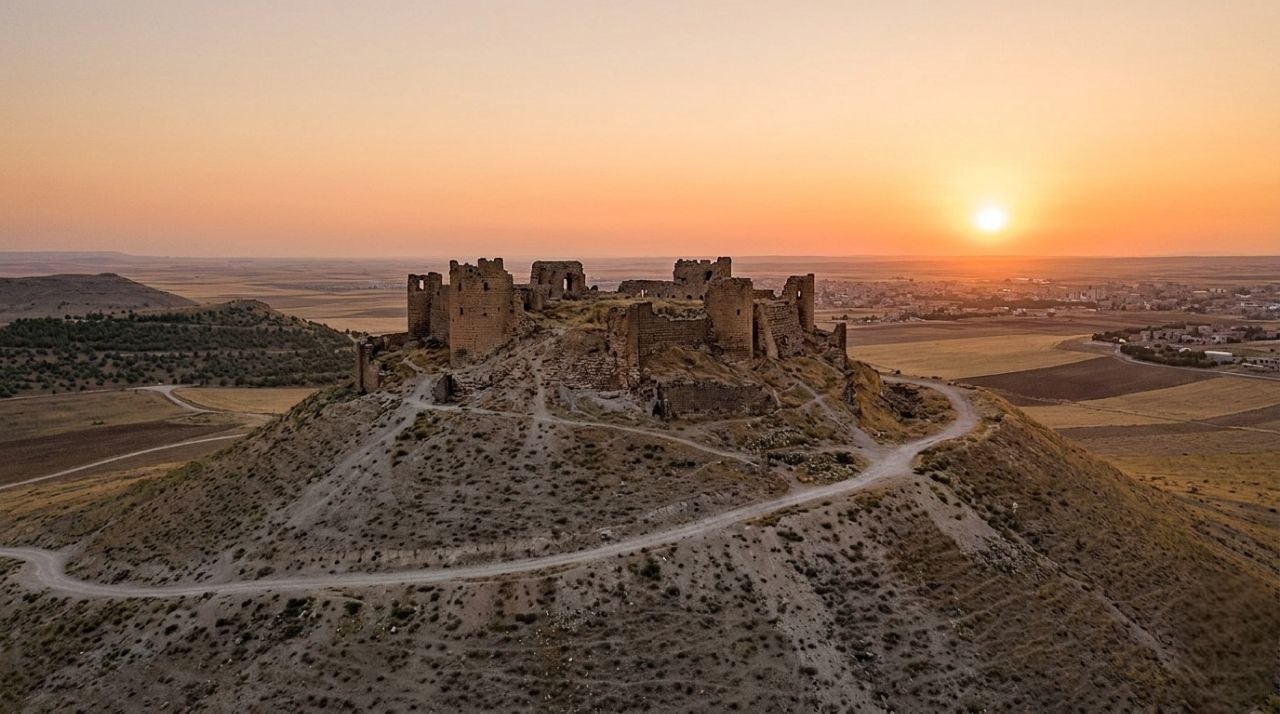
Shmemis Castle (Salamiyah): A Desert Fortress Guarding Central Syria
Location and Strategic Importance of Shmemis Castle
Shmemis Castle rises east of Salamiyah, in the wide open plains of central Syria. The fortress sits on a solitary hill surrounded by flat desert terrain. Because of this elevated position, it offers clear panoramic views across vast distances.
Shmemis Castle overlooks historic inland routes that once connected Salamiyah with major destinations such as Palmyra. These routes played a key role in trade, communication, and military movement. As a result, the castle served as a strategic observation point.
Moreover, the open landscape made it easy to detect approaching القوات. Defenders could monitor movement from far away without obstruction. Therefore, Shmemis Castle functioned as both a defensive structure and an early warning station.
In addition, its central location increased its strategic importance. Controlling this area meant influencing desert crossings and internal trade routes. Consequently, the castle became part of a wider defensive network across inland Syria.
History of Shmemis Castle
Shmemis Castle dates back to the medieval Islamic period. Most historians associate its construction with the rule of Saladin during the 12th century.
At that time, the region experienced continuous military threats. Conflicts between Islamic powers and Crusader forces required strong defensive systems. Because of this, rulers built fortifications across key locations.
Shmemis Castle was not designed as a major royal fortress. Instead, it served as a supporting outpost. It helped monitor desert routes and secure communication between inland regions. Similarly, it worked alongside larger fortified cities.
Furthermore, the castle likely played a role in protecting trade caravans moving between central and eastern Syria. This made it valuable for both economic and military purposes.
However, during the Mamluk period, the importance of smaller fortifications began to decline. Centralized defense systems reduced reliance on isolated castles.
Later, under Ottoman rule, Shmemis Castle lost its function completely. Without maintenance, the structure gradually deteriorated. As a result, it became an abandoned ruin over time.
Architecture of Shmemis Castle
The architecture of Shmemis Castle reflects practicality and adaptation. Builders used local stone to create thick and durable walls. These materials helped the fortress withstand both attacks and harsh environmental conditions.
Unlike symmetrical castles, the layout follows the natural shape of the hill. This design improved both stability and defense. Because of this, the structure appears irregular but highly functional.
The castle likely included watchtowers at key points. These towers provided wide visibility across the surrounding plains. As a result, guards could track movement from long distances.
Inside, the castle remained simple. It contained small rooms for soldiers, storage areas, and open spaces. There were no decorative elements or luxurious halls. Instead, the design focused entirely on function.
Water storage was also essential. Builders likely constructed cisterns to collect rainwater. This ensured a reliable supply in an otherwise dry region.
Today, much of the castle lies in ruins. However, parts of the walls and foundations still remain. These features help visitors understand the original structure and its defensive role.
Why Shmemis Castle Matters Today
Shmemis Castle represents an important yet often overlooked part of Syrian heritage. While larger castles receive more attention, smaller sites like this played key roles in regional defense systems.
In addition, the castle highlights the importance of inland routes in shaping historical developments. It shows how geography influenced military planning and economic activity.
Moreover, the site provides valuable insight into medieval Islamic architecture. It demonstrates how builders adapted to natural landscapes to create effective fortifications.
Today, preserving Shmemis Castle contributes to protecting Syria’s cultural identity. It also supports future tourism opportunities in lesser-known regions.
How to Visit Shmemis Castle
Visitors can reach Shmemis Castle by traveling from Hama toward Salamiyah. From there, local roads lead east into the countryside where the castle is located.
After reaching the area, visitors may need to walk up the hill. The terrain can be uneven, so proper footwear is recommended. In addition, carrying water is essential due to the dry climate.
It is also better to visit during cooler seasons or early in the day. This helps avoid extreme heat and improves the overall experience.
However, travelers should always check local conditions before visiting. Access may vary depending on the situation. Hiring a local guide can provide deeper historical insight and ensure a smoother visit.
Conclusion
In conclusion, Shmemis Castle stands as a quiet witness to Syria’s layered history. Although it is smaller than major fortresses, it played a vital role in monitoring routes and supporting regional defense.
Because of its strategic location near Salamiyah, the castle helped control movement across central Syria. Over time, it lost its importance and fell into ruin.
However, its remains still tell a powerful story. The site reflects resilience, adaptation, and the lasting importance of geography in shaping history.
Today, Shmemis Castle offers a unique opportunity to explore a lesser-known heritage site. It remains a valuable landmark that deserves recognition and preservation.
Frequently Asked Questions (FAQs)
1. Who built Shmemis Castle? While the site has Roman and Byzantine roots, the current structure was primarily built by the Ayyubid ruler Asad al-Din Shirkuh II around 1228 AD.
2. Is Shmemis Castle a volcano? The castle itself is a man-made fortress, but it is built directly on top of the crater of an extinct conical volcano.
3. How far is Shmemis Castle from Hama? It is located about 30 kilometers southeast of Hama, near the city of Salamiyah.
4. Can you visit Shmemis Castle today? Yes, the ruins are accessible to visitors. However, due to the steep terrain and the deep moat, visitors should wear appropriate hiking shoes and exercise caution while exploring the site.
If you enjoyed learning about Shmemis Castle, be sure to share this article and explore our other guides on the incredible historical landmarks of Syria!
Leave a Reply