
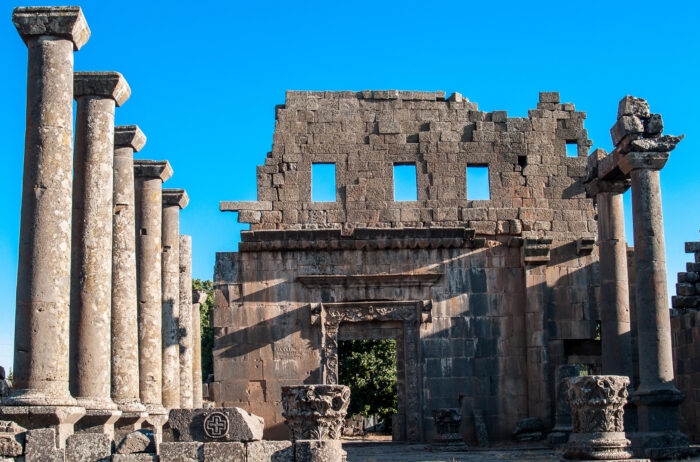
Exploring the Imperial Heritage of Philippopolis – Past and Present of Shahba
Nestled in the volcanic hills of southern Syria, Shahba stands as one of the country’s most remarkable yet often overlooked archaeological treasures. Known in antiquity as Philippopolis (“City of Philip”), Shahba reflects Roman imperial ambition, refined urban planning, and deep local heritage. Located in As-Suwayda Governorate, this ancient city offers visitors a rare opportunity to experience a purpose-built Roman settlement that still shapes the modern landscape.
A geographical and historical overview of Shahba
Shahba lies approximately 87 kilometers south of Damascus in the volcanic plateau of Jabal al-Druze, a region characterized by black basalt rock formations and rolling highlands. In Roman times, this area formed part of the province of Arabia Petraea, which connected Syria to the broader trade networks of the eastern Mediterranean.
The city’s prominence began in the 3rd century AD with the rise of Philip the Arab. Born in Shahba, Philip became Roman Emperor in 244 AD. After ascending to power, he transformed his modest hometown into a grand Roman city renamed Philippopolis. His vision was bold: to create a city that reflected imperial dignity and Roman urban sophistication.
Unlike many ancient settlements that developed gradually, Shahba was constructed according to a deliberate Roman grid plan. Colonnaded streets, civic buildings, and ceremonial spaces were laid out in geometric order, demonstrating the empire’s standardized approach to urbanism.
Roman Urbanism and Architectural Highlights
The Roman city plan remains visible today. Two major streets structured the city:
Cardo Maximus (north–south axis)
Decumanus Maximus (east–west axis)
These intersected at the urban core, forming the framework for public and civic life. Sections of basalt-paved streets still survive and, in some areas, blend into pathways used by local residents.
Key Landmarks in Shahba
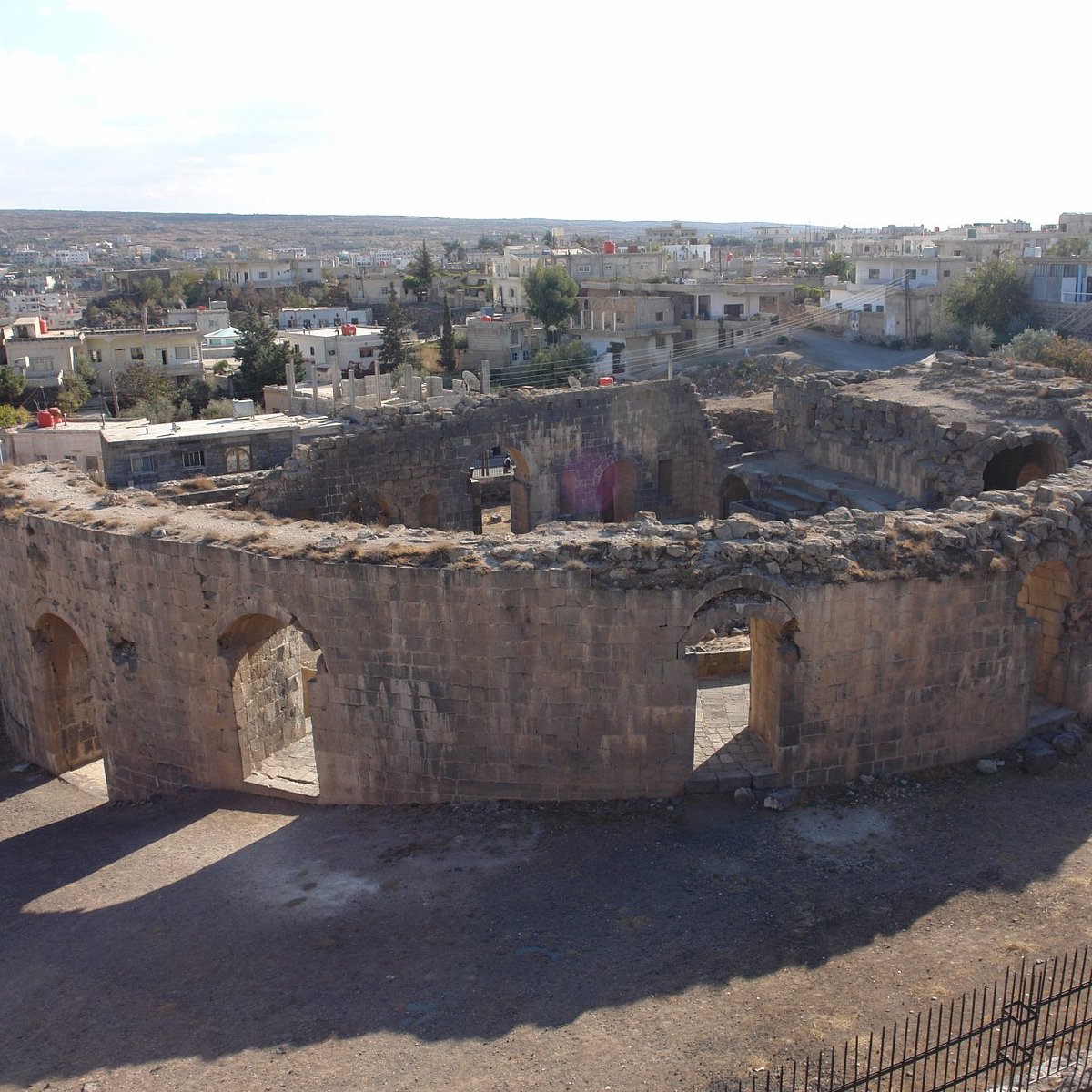
Roman Theater
A compact yet elegant theater carved from basalt slopes, designed for performances and civic gatherings. Its tiered seating and acoustics demonstrate Roman engineering precision.
Temples and Public Baths
Shahba featured temples likely dedicated to Roman and local deities, along with sophisticated bath complexes. These baths included advanced heating and water circulation systems typical of Roman engineering.
City Gates and Ceremonial Structures
Monumental gateways marked formal entrances to the city, reinforcing its imperial character and commemorating Philip’s legacy.
Mosaic Heritage
Excavations uncovered finely crafted mosaics depicting mythological scenes and classical motifs. Many of these mosaics are preserved today in the National Museum of Damascus, showcasing the artistic refinement achieved in this provincial Roman city.
One of Shahba’s most fascinating aspects is how ancient ruins coexist with modern life. Roman stones, streets, and columns remain integrated into the townscape, creating a living dialogue between antiquity and the present.
From Imperial Vision to Quiet Provincial Town
Following the death of Philip the Arab in 249 AD, large-scale development in Shahba slowed significantly. Without continued imperial patronage, the city never fully achieved the grandeur originally envisioned. Nevertheless, its structured grid layout and preserved remains rank among the clearest examples of Roman planned urbanism in Syria.
During the Ottoman period, Shahba functioned as a modest settlement. Its relative isolation contributed to the preservation of many ancient structures, as extensive quarrying for building materials was limited. Over time, Druze communities became predominant in the region, adding cultural layers to Shahba’s identity.
Present-Day Significance
Today, Shahba stands as more than an archaeological site. It serves as a cultural bridge between Syria’s Roman past and its modern communities. Scholars value Shahba for its insight into Roman provincial planning far from Rome itself. Travelers appreciate its quieter atmosphere compared to more famous Syrian heritage sites.
The city’s basalt architecture, clear grid layout, and accessible ruins make it particularly valuable for understanding Roman urban principles beyond the imperial capital.
How to Reach Shahba
Most visitors travel from Damascus, a journey of approximately 1.5 to 2 hours by car. Shahba also lies about 18 kilometers north of As-Suwayda city, making it an easy regional excursion.
Travel Options:
Private Car or Driver: The most flexible way to explore Roman city in Syria and nearby ruins.
Organized Tours: Some operators include Roman city in Syria in broader itineraries across southern Syria.
Public Transport: Buses and minibuses connect Damascus and As-Suwayda, though reaching Shahba directly may require additional local arrangements.
Entrance Fee & Visiting Information (2026)
As of early 2026, official entrance fee details for Roman city in Syria are not consistently published. Larger Syrian heritage sites often charge modest entry fees (commonly between 50,000–100,000 SYP), but smaller archaeological locations like Shahba may have minimal or no formal ticketing system. Visitors should confirm locally before planning their visit.
Visitor Tips
Best Time to Visit: Spring and autumn offer mild temperatures ideal for exploring open-air ruins.
Footwear: Wear sturdy shoes, as basalt terrain and ancient paving stones can be uneven.
Cultural Awareness: The surrounding region has a strong Druze heritage. Modest attire and respectful conduct are appreciated.
Combine Nearby Sites: Consider pairing Shahba with a visit to Qanawat, another Roman-era settlement featuring temples, water systems, and a theater.
Conclusion
Shahba stands as a powerful reminder of how imperial ambition can shape even distant provinces. Conceived by a Roman emperor, constructed in dark basalt stone, and preserved within a living Syrian town, Philippopolis reflects the enduring connection between past and present.
For historians, Roman city in Syria provides rare clarity into Roman city planning. the travelers, it offers tranquility and authenticity away from crowded landmarks. with regard to all visitors, it reveals how civilizations leave lasting imprints on landscapes and communities.
Shahba is not merely a relic of empire — it is a living testament to Syria’s layered and resilient heritage.
Shahba Archaeological Site: All its secrets and mysteries revealed in a video on our YouTube channel
Leave a Reply