
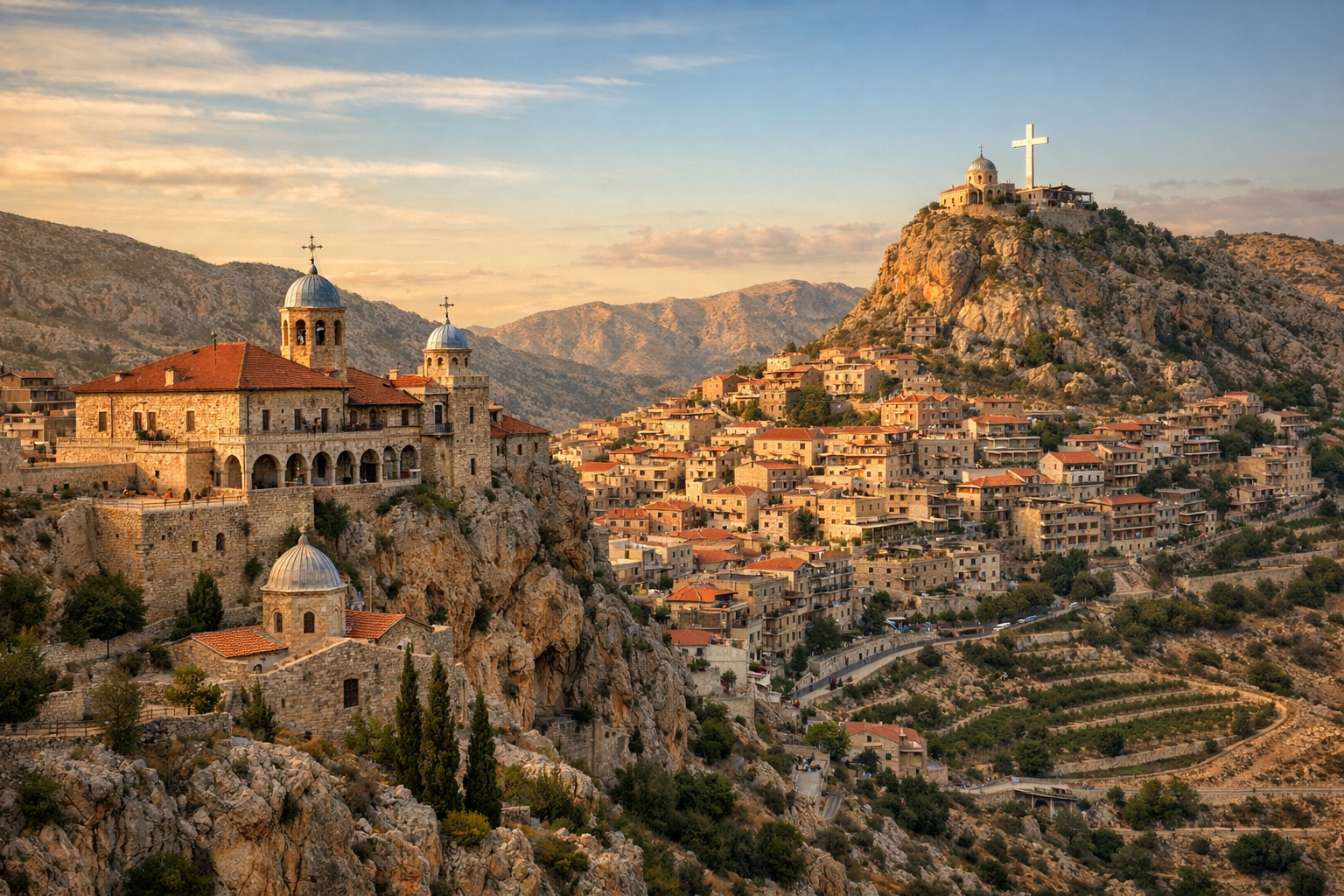
Saydnaya: The Mountain Town Where History, Faith, and Memory Meet
Tucked amid the rugged heights of the Qalamoun Mountains in the northern countryside of Damascus, Saydnaya is a mountain town where ancient tradition and spiritual devotion have endured for centuries. Known for its historic monasteries, long religious legacy, and dramatic scenic setting, Saidnaya stands as one of Syria’s most important cultural and spiritual destinations.
Where Saydnaya Is and Why It Matters
Saidnaya lies approximately 25–30 kilometers (15–19 miles) north of Damascus, rising between 1,350 and 1,500 meters above sea level on the slopes of the Qalamoun Mountains. Its elevated position offers sweeping views of the Barada River valley, fertile plains, and distant mountain ranges. The town enjoys a cool mountain climate, with snowy winters and mild, refreshing summers.
Despite its relatively modest population, which reached around 25,000 residents before the Syrian conflict, Saidnaya holds exceptional cultural and historical importance. Linguistic studies trace the name “Saydnaya” to Syriac and Arabic roots associated with hunting grounds or devotion to “Our Lady,” reflecting the town’s ancient origins and later Christian identity.
A Tapestry of Civilizations and Faiths in Saydnaya
Archaeological evidence confirms continuous human presence in the Saidnaya region since ancient times. The area witnessed successive Aramaic, Greek, Roman, Syriac, and Arab influences, each leaving visible traces in architecture, language, and religious traditions.
Over centuries, Saidnaya developed into an important waypoint along spiritual and commercial routes connecting Damascus with northern Syria and the wider Levant. These routes facilitated cultural exchange and strengthened the town’s reputation as a place of worship, learning, and refuge.

Our Lady of Saydnaya Monastery: The Spiritual Heart of Saydnaya
At the center of Saydnaya’s identity stands the Our Lady of Saydnaya Patriarchal Monastery, founded in 547 AD during the reign of Byzantine Emperor Justinian I. This Greek Orthodox monastery remains one of the oldest continuously active Christian monastic institutions in the Middle East.
Pilgrims from across the region have long visited the monastery to venerate its sacred icon of the Virgin Mary. Christian tradition attributes the icon to Saint Luke the Evangelist, and believers associate it with healing and divine blessing. The monastery’s chapel, adorned with ancient icons and religious artwork, continues to serve as a focal point for prayer and pilgrimage.
Saidnaya hosts more than forty monasteries and chapels representing Greek Orthodox, Syriac Orthodox, and Syriac Catholic traditions. This dense concentration of religious sites places Saydnaya among the most significant Christian monastic centers in the Arab world.
Historic Pilgrimage Routes and Cultural Exchange in Saydnaya
Throughout the medieval period, pilgrims traveling to Jerusalem and other holy sites frequently passed through Saidnaya. Historical travel accounts from both Eastern and Western sources mention the town and its monastery, highlighting its spiritual influence and the miracles associated with the Virgin Mary’s icon.
Local traditions connect Saidnaya to early biblical narratives, including beliefs linking the surrounding mountains to the burial place of Abel, the son of Adam. These shared traditions strengthened Saydnaya’s importance among both Christian and Muslim communities.
Annual religious festivals, especially celebrations dedicated to the Virgin Mary, continue to draw worshippers from Syria, Lebanon, and neighboring regions.
Saydnaya Prison and the Weight of Modern Memory
In modern history, the name Saidnaya became associated with the Saidnaya military prison, located outside the town itself. Over recent decades, reports of severe human rights abuses at this facility drew international attention, deeply affecting the town’s image and collective memory.
While the prison does not form part of Saydnaya’s historical or touristic landscape, its association has created a complex legacy. Many residents and cultural advocates continue efforts to reaffirm Saydnaya’s identity as a place of spiritual heritage, history, and resilience.
Saydnaya Today: Life, Heritage, and Identity
Today, Saidnaya remains a living mountain community where daily life unfolds among centuries-old stone houses, monasteries, and winding streets. Local residents maintain agricultural traditions, livestock grazing, and small businesses alongside religious practices and seasonal pilgrimages.
Despite years of hardship, the people of Saydnaya preserve their cultural and spiritual traditions through religious processions, restoration initiatives, and communal life rooted in shared history. The town continues to balance its ancient legacy with the realities of the present.
How to Reach Saydnaya from Damascus
Travelers can reach Saidnaya easily by road from Damascus. The journey north toward the Qalamoun Mountains covers approximately 25–30 kilometers and usually takes 30 to 45 minutes by car.
Public transportation options include shared taxis and minibuses operating from Damascus to towns in the northern countryside. Schedules may vary depending on season and local demand.
Saydnaya: A video about the historical area on our YouTube channel
Best Time to Visit Saidnaya
Spring and autumn offer the most pleasant weather, with mild temperatures and lush landscapes. Winter brings snowfall and a striking alpine atmosphere, though visitors should prepare for cold conditions and ensure suitable transportation.
Azm Palace Damascus: History and Facts About the Ottoman Palace in Syria
Conclusion: Why Saidnaya Matters
Saydnaya stands at the intersection of history, faith, and memory in Syria. From its ancient monastic foundations to its enduring spiritual traditions and complex modern associations, the town reflects the resilience and depth of Syrian cultural heritage.
Visitors, pilgrims, and historians alike find in Saydnaya a powerful example of continuity, devotion, and identity shaped over millennia. High in the Qalamoun Mountains, Saidnaya continues to tell a story etched in stone, prayer, and lived tradition—one that remains deeply woven into the broader history of the Levant.
Leave a Reply