
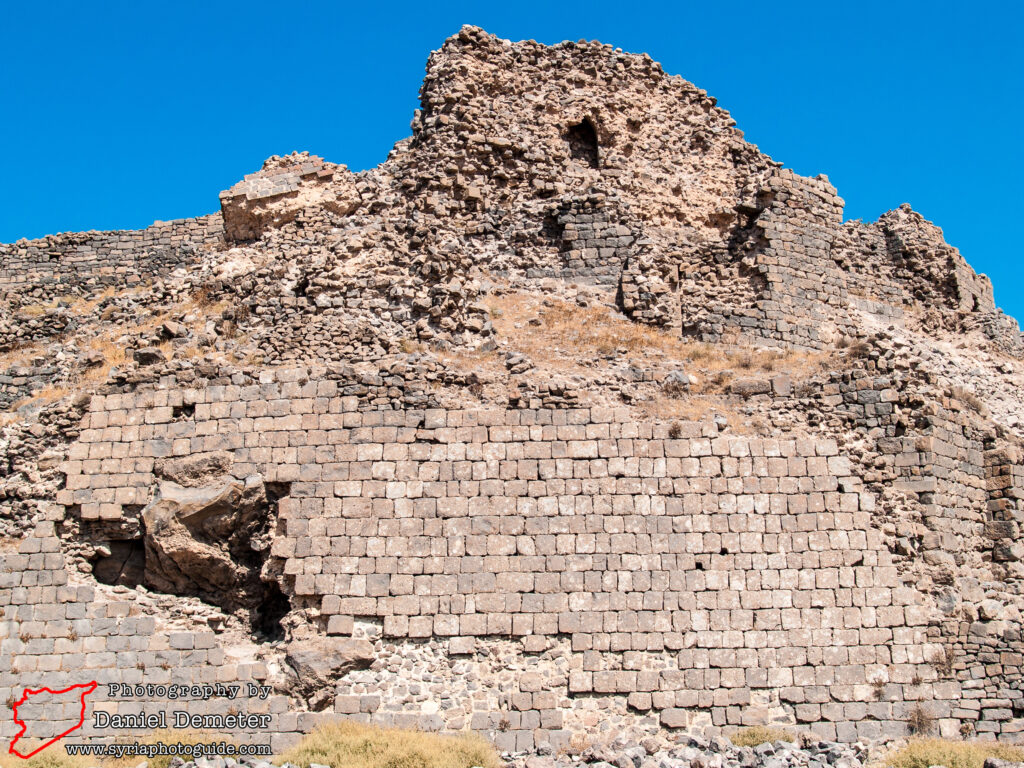
Salkhad Castle: A Volcanic Fortress in Southern Syria
Salkhad Castle, also known as Salhad Castle, is an ancient fortress in southern Syria. It rises above the town of Salkhad on a volcanic hill. This elevated position gave the castle strong natural defenses and clear views of the surrounding region. As a result, it played a vital strategic role for centuries.
Early Fortifications of Salkhad Castle
The first major fortifications of Salkhad Castle appeared in 1073 AD. At that time, Fatimid Caliph al-Mustansir ordered their construction. His goal was to secure the southern frontier of the Islamic state.
Because of its location, the castle quickly became a key defensive outpost guarding important routes in the Hauran region.
Ayyubid Expansion and Military Design
Later, Ayyubid rulers expanded Salkhad Castle between 1214 and 1247 AD. During this phase, builders added strong defensive walls, towers, and internal chambers.
These improvements reflected the advanced military architecture of the Crusader era. Moreover, they transformed the site into a fully developed stone citadel capable of long-term defense.
Mamluk Restoration of Salkhad Castle
After Mongol attacks weakened regional defenses, the fortress required urgent repairs. Therefore, Mamluk Sultan Baibars ordered major restorations in 1277 AD.
Thanks to these reinforcements, Salkhad Castle remained active and secure. It continued to serve as a strong defensive and administrative center in southern Syria.
Life Inside Salkhad Castle
Administrative and Residential Functions
Salkhad Castle served more than military purposes. It also functioned as an administrative and residential center.
Inside its walls were living quarters, storage rooms, a mosque, and underground passages. These features allowed the fortress to operate independently during sieges. Consequently, the castle became a powerful symbol of authority and governance in the region.
Salkhad Castle Through Conflict and Change
Over time, Salhad Castle witnessed repeated conflicts and shifts in control. Various powers ruled the site, including Islamic dynasties, Crusaders, Mongols, Ottomans, and later colonial forces.
In the early 20th century, the castle gained renewed importance during Syria’s struggle for independence. Notably, it became one of the first locations where the Arab Revolt flag was raised on Syrian territory.
However, modern conflicts led to periods of neglect and military use. As a result, access became limited and damage occurred. Even so, the castle’s dark basalt silhouette still dominates the town skyline today.

Layers of Time at Salkhad Castle: From Fatimids to Mamluks
Ayyubid Transformation of Salkhad Castle
After the Fatimid phase, Salhad Castle underwent a major transformation under the Ayyubid dynasty. Between 1214 and 1247 AD, rulers such as Az-Zahir Ayyub converted the site into a formidable stone citadel.
During this period, builders expanded the fortress extensively. They constructed strong defensive walls, internal chambers, and military facilities. As a result, Salkhad Castle became a prime example of sophisticated Islamic military architecture during the Crusader era.
Mamluk Restorations After Mongol Attacks
Later, Mongol invasions devastated much of Syria’s frontier defenses. Consequently, Mamluk Sultan Baibars ordered major restorations at Salkhad Castle in 1277 AD.
These reinforcements strengthened the fortress and ensured its continued strategic importance. Thanks to these efforts, the castle survived as a key defensive stronghold in southern Syria.
Administrative and Civic Role of Salkhad Castle
Throughout its history, Salhad Castle served more than military purposes. In fact, it functioned as a center of administration and local governance.
Inside the fortress were:
Administrative buildings
Residential quarters
A mosque
Networks of hallways and subterranean passages
Together, these features highlight the castle’s role as a lived-in stronghold rather than a purely defensive structure.
Salkhad Castle as a Witness to Conflict and Resilience
Centuries of Conflict and Changing Control
Over the centuries, Salkhad Castle experienced numerous sieges and changes in control. It passed through the hands of Crusaders, Ayyubids, Mongols, Turks, Ottomans, and later European colonial powers.
In the early 20th century, the castle played a symbolic role in Syria’s struggle for independence. Notably, it became one of the first locations where the Arab Revolt flag was raised in Syrian territory, even before King Faisal’s forces entered the country.
Neglect and Militarization in Modern Times
In more recent decades, Salhad Castle suffered from neglect. During periods of internal conflict, it was reportedly used as a military installation.
As a result, public access became restricted. Preservation efforts also declined, leading to visible deterioration rather than conservation.
Nevertheless, the castle’s dramatic silhouette still dominates the skyline of Salkhad town. Today, it stands as a powerful symbol of resilience and layered Syrian history.
The Importance and Cultural Value of Salkhad Castle Today
Why Salkhad Castle Matters
Today, Salhad Castle remains one of the most striking historic ruins in southern Syria. Although less famous than Krak des Chevaliers or the Citadel of Aleppo, it holds immense regional importance due to:
Its strategic role in defending southern Islamic frontiers against Crusader incursions
It ts architectural blend of Fatimid foundations with Ayyubid and Mamluk fortifications
Its cultural value for historians studying Nabataean, Roman, Byzantine, and Islamic layers
Architecture and Volcanic Landscape
The basalt construction of Salhad Castle reflects the unique geology of the Jabal al-Druze region. Ancient lava flows provided the dark volcanic stone used in many local structures.
Moreover, the castle’s elevated position enhanced its defensive strength while reinforcing its visual dominance over the surrounding landscape.
Visiting Salkhad Castle in 2026
Location of Salkhad Castle
Salkhad Castle rises above the town of Salkhad in As-Suwayda Governorate, southern Syria. It lies approximately:
35 km southeast of As-Suwayda city
130–145 km south of Damascus
How to Reach Salkhad Castle
By Road: Visitors usually travel from As-Suwayda by private car or intercity buses.
Local Transport: Microbuses run frequently to Salkhad town. From there, taxis or a short uphill walk lead to the castle.
Entrance Fee (2026)
As of early 2026, there is no widely published official entrance fee for Salkhad Castle. Most visitor reports indicate that access is free or subject to modest local fees.
However, conditions may vary depending on security measures, local authorities, or ongoing restoration projects.
A video about the Salkhad Castle is available on our YouTube channel.
Best Time to Visit:
Thanks to its elevation and climate, Salkhad is cooler in summer than lowland regions and wonderfully scenic in spring and autumn. Winters can be chilly given the altitude, so plan accordingly if you visit between November and February.
As-Suwayda: History, Culture and Facts About Syria’s Mountain City
Why this historic castle Matters
Salkhad Castle is a living testament to the cultural crossroads of the Near East — where Nabataean traders once thrived, Romans governed provinces, Islamic dynasties built fortresses, Crusaders pressed southward, and Mamluk armies maintained regional stability. Its basalt walls echo these eras and remind visitors that history is not just recorded, but built — stone by stone.
Whether you’re a history enthusiast, traveler, or student of medieval military architecture, Salkhad Castle deserves recognition for its rich past and enduring presence in the Syrian landscape.
Old Aleppo Markets Facts: The Largest Covered Souq in the World
Leave a Reply