
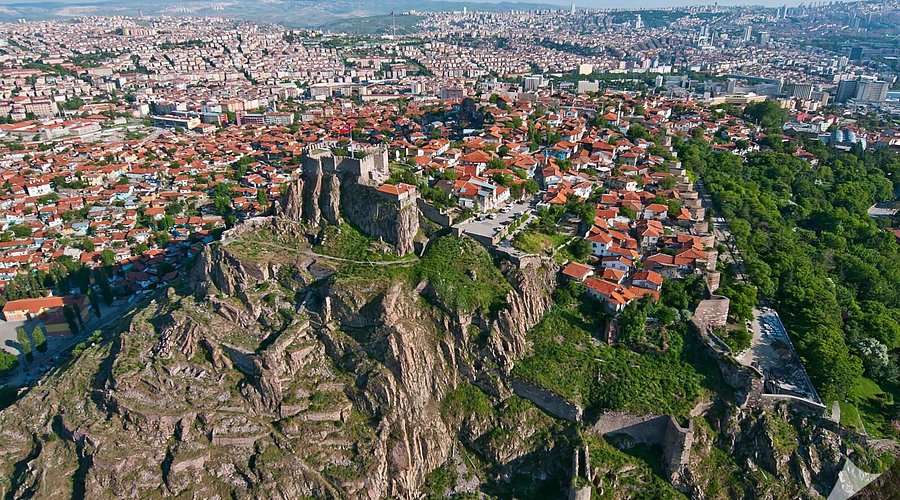
Saladin Castle, also known as Qal’at Salah al-Din, is a famous medieval fortress in western Syria, known for its impressive architecture and strategic mountain location.
Rising dramatically above the lush coastal mountains of northwestern Syria, Saladin Castle stands as one of the most impressive medieval fortresses in the Middle East. Locally known as Qalʿat Ṣalāḥ al-Dīn and historically called Sahyun Castle, Saladin Castle reflects centuries of strategic brilliance, architectural mastery, and cultural conflict carved directly into solid rock.
Moreover, its commanding position and layered history make Saladin Castle a landmark that continues to fascinate historians, travelers, and architecture enthusiasts alike.
Its Strategic Mountain Location
Salah El-Din Castle lies about 30 kilometers east of Latakia, near the town of Al-Haffah, deep within Syria’s coastal mountain range. Importantly, the fortress occupies a narrow rocky ridge bordered by two steep ravines, which naturally strengthened its defenses.
Because of this geography, Salah El-Din Castle controlled vital routes linking the Mediterranean coast to Syria’s interior. As a result, every major power in the region fought to dominate this strategic stronghold.

The Historical Layers of Saladin Castle
Early Byzantine Foundations of Saladin Castle
Historical records show that the Byzantines fortified The historic castle as early as the mid-10th century. In 975 CE, Emperor John I Tzimiskes seized the site and reinforced it to secure Byzantine control over the coastal mountains.
Crusader Expansion at Saladin Castle
Later, during the early 12th century, Crusader forces captured The historic castle and transformed it into a massive stone fortress. They constructed thick defensive walls, towers, chapels, and water cisterns. Consequently, the castle became one of the strongest Crusader fortifications in the Levant.
Saladin’s Conquest of Salah El-Din Castle
In 1188, following his victory at the Battle of Hattin, Saladin personally led the siege of The historic castle. Despite its powerful defenses, his forces captured the fortress after a determined assault. From that moment on, the site proudly carried the name Saladin Castle, marking a decisive shift in regional power.
Architectural Highlights of Salah El-Din Castle
The Legendary Rock-Cut Ditch of Saladin Castle
One of the most remarkable features of The historic castle is its enormous rock-cut ditch. Engineers carved this defensive trench nearly 28 meters deep and over 150 meters long directly into bedrock. Therefore, attackers faced an almost impossible obstacle before even reaching the walls.
Inner Structures Inside Saladin Castle
Inside Saladin Castle, visitors can still see:
Byzantine citadel remains
Crusader church ruins
Massive water cisterns
An Islamic mosque and palace complex
Together, these structures clearly demonstrate how Salah El-Din Castle evolved across different civilizations.
UNESCO World Heritage Status of Salahaldin Castle
In 2006, UNESCO recognized Salah El-Din Castle as part of the World Heritage Site “Crac des Chevaliers and Qal’at Salah El-Din.” This designation highlights the castle’s outstanding value as a masterpiece of medieval military architecture.
Although time has weathered some sections,Salah El-Din Castle still preserves its dramatic form and historical integrity.
Visiting Saladin Castle in 2026
How to Reach Saladin Castle
Visitors usually start from Latakia and travel to Al-Haffah by car or microbus. Afterward, a scenic road or walking trail leads directly to the Castle, offering breathtaking mountain views along the way.
Entrance Fees for Saladin Castle
Entrance fees for the Castle remain affordable. Most estimates suggest prices under $5 USD for foreign visitors, while locals often pay less. However, checking locally before visiting is recommended.
A video about Saladin’s castle is on our YouTube channel.
Best Time to Visit
Spring and autumn provide ideal conditions to explore the Castle, thanks to mild temperatures and clear skies. Consequently, these seasons offer the best photography and walking experience.
Masyaf Castle: History and Facts About the Famous Ismaili Fortress in Syria
Why Still Matters Today
Today, Saladin Castle represents far more than a ruined fortress. It stands as a powerful symbol of Syria’s layered history, where Byzantine, Crusader, and Islamic civilizations intersected.
Ultimately, Saladin Castle continues to inspire awe through its scale, location, and historical depth. For anyone passionate about medieval history, strategic architecture, or dramatic landscapes, Saladin Castle remains an unforgettable destination where every stone tells a story.
Qal’at Simaan (Castle of Saint Simeon): History and Facts About the Ancient Site in Syria
Leave a Reply