
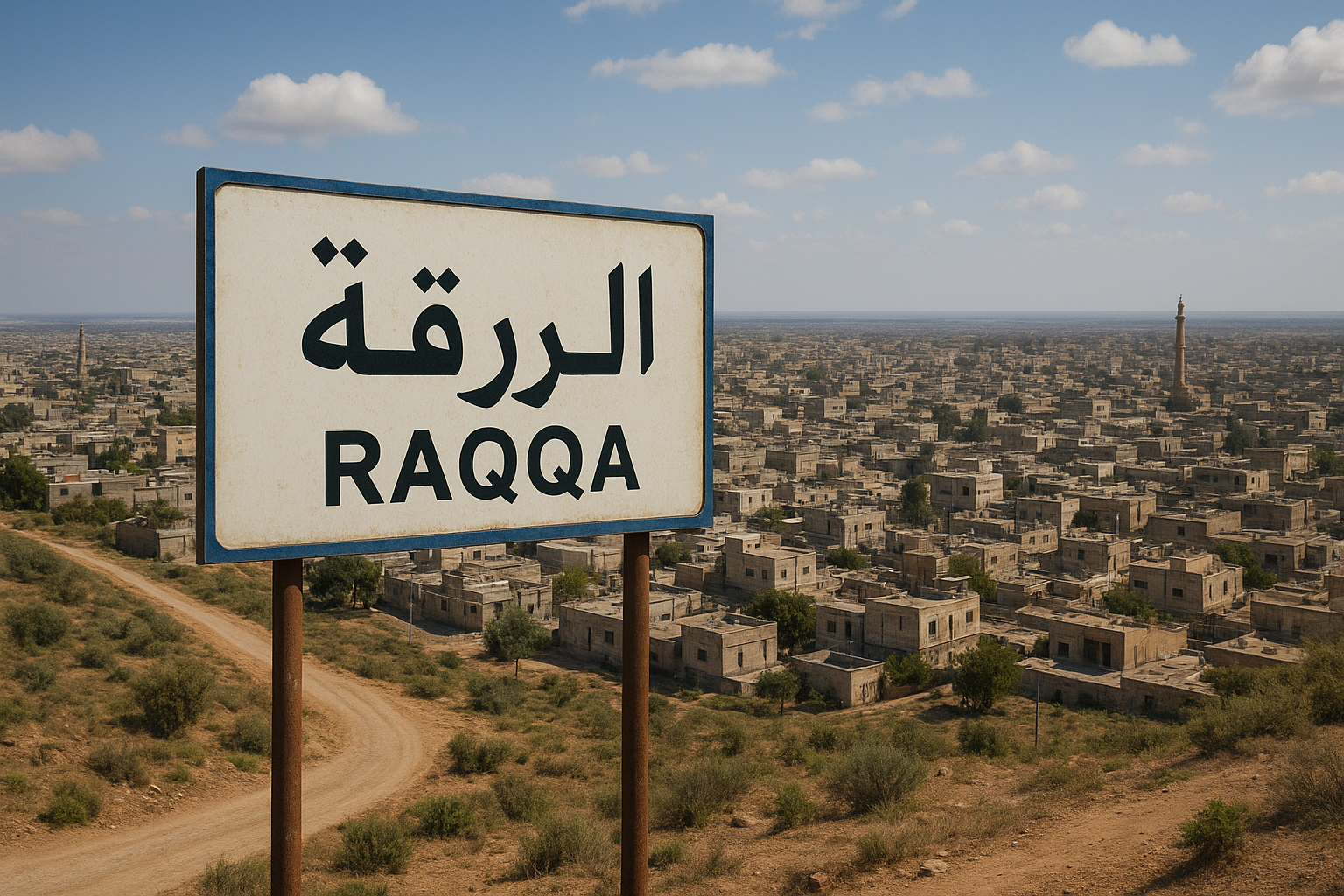
Raqqa is a city in northern Syria located on the Euphrates River, known for its history, agriculture, and strategic location.
In the heart of northern Syria, where the Euphrates River carves a life-giving path through wide plains and golden steppe, lies Raqqa Governorate — a region whose story is inseparable from the story of civilization itself. Long before modern borders existed, Raqqa stood at the meeting point of trade routes, cultures, and armies. From ancient Mesopotamian settlements to Islamic golden-age capitals, from Roman frontiers to Ottoman provinces, this land has continuously shaped and been shaped by history.
Raqqa is not just a place on the map. It is a landscape of memory, layered with the footprints of empires, scholars, merchants, and warriors who crossed its plains for thousands of years.
Geographical Setting: A Land Shaped by Water
Raqqa Governorate is located in northern Syria, stretching along the Euphrates River, one of the most important rivers in human history. The governorate connects Syria’s interior with the Jazira region to the east and northern trade corridors leading toward Anatolia. Its terrain is a mixture of fertile river valleys, open plains, and semi-arid steppe.
The Euphrates is the lifeline of The Euphrates River .Its waters transformed what might otherwise be dry land into an agricultural zone capable of supporting large populations. The river also made Raqqa a natural stop along trade and travel routes linking Mesopotamia with the Mediterranean world.
Nearby tributaries such as the Balikh River further enriched the region, making it one of the oldest continuously inhabited landscapes in the Middle East.
Early Civilizations: The Dawn of Urban Life
Human settlement in the Raqqa region dates back to prehistoric times. Archaeological sites such as Tell Bi’a (ancient Tuttul) reveal that organized urban life existed here as early as the third millennium BCE. Tuttul was a significant city in the ancient Near East, closely connected with the powerful kingdom of Mari on the Euphrates.
These early societies thrived on agriculture, animal husbandry, and trade. The Euphrates acted as a natural highway, enabling the exchange of goods, ideas, and technologies. Raqqa’s location placed it between Mesopotamia and the Levant, making it a cultural bridge where influences blended.
Over centuries, the region fell under the influence of major Mesopotamian powers such as the Akkadians, Babylonians, and Assyrians. Each left its mark on settlement patterns, irrigation systems, and administrative traditions.
Raqqa in classical antiquity: Rome, Persia, and a border city
During the Hellenistic period, following Alexander the Great’s campaigns, Greek influence spread into northern Syria. The city that would later become Raqqa gained new importance under the Seleucids.
Under Roman rule, the city was known as Callinicum. It became a strategic frontier town near the boundary between the Roman (later Byzantine) Empire and the Persian empires to the east. This frontier status meant that Raqqa witnessed repeated military campaigns, fortifications, and shifting political control.
The Romans valued the city for both its defensive role and its position on trade routes. Roads connected it to major urban centers, while the Euphrates allowed movement of goods and troops. The area became a zone where Roman, Greek, Syriac, and Eastern traditions intersected.

The Islamic Era: Al-Rafiqah and a Capital of the Abbasid World
Raqqa’s greatest historical prominence came during the early Islamic period. In the 8th century, the Abbasid Caliph Al-Mansur founded a new garrison city next to the older settlement. This new city was called Al-Rafiqah, meaning “the companion,” as it stood beside the older Raqqa.
Soon after, under Caliph Harun al-Rashid, Raqqa rose to extraordinary importance. Harun al-Rashid, one of the most famous Abbasid rulers, chose Raqqa as a residence and administrative center for part of his reign. For a time, Raqqa functioned as a de facto capital of the Abbasid Caliphate.
During this era, the city became a hub of architecture, scholarship, and military organization. Palaces, mosques, and defensive walls were constructed. The blending of Persian, Arab, and Byzantine influences gave the city a distinctive cultural character.
Raqqa’s location made it ideal for governing the eastern provinces and managing campaigns along the empire’s frontiers. It was not only a political center but also a symbol of Abbasid power and refinement.
Medieval upheavals in Raqqa: The Crusades and the Mongol invasions
In the medieval period, northern Syria became a region of strategic importance during the Crusades. Although The Euphrates River was not always a primary battlefield, its position between key cities meant that it was affected by the shifting balance of power.
Later, in the 13th century, the Mongol invasions swept across the Middle East. Like many cities in the region, Raqqa suffered from the disruption and destruction that accompanied these campaigns. Urban life declined, and the region entered a period of reduced political importance compared to its Abbasid peak.
Raqqa in the Ottoman era: a regional but vital area
Under Ottoman rule, the Euphrates River became part of a vast imperial system that connected Anatolia, the Levant, and Mesopotamia. Although no longer a major capital, the region retained importance as an agricultural zone and a waypoint on caravan routes.
Tribal life, farming communities, and small towns characterized much of the landscape. The Euphrates continued to support cultivation and local trade. Raqqa’s identity during this time was shaped by rural traditions, river-based life, and connections to surrounding regions.
Modern Importance: Agriculture, Water, and Development
In more recent history, Raqqa’s significance has been closely tied to water management and agriculture. Large-scale irrigation projects and dams along the Euphrates, including the nearby Tabqa (Al-Thawra) Dam, transformed the region’s economy. These projects expanded farmland and increased the production of wheat, cotton, and other crops.
The governorate became an essential contributor to Syria’s agricultural output. Its wide plains and access to water made it one of the country’s key food-producing areas.
Urban growth in Raqqa city brought new infrastructure, schools, and institutions, while the countryside remained deeply connected to farming and pastoral life.
Also watch a video about the city of Al-Furat on our YouTube channel.
Raqqa Today: A Landscape of Memory and Resilience
Today, Raqqa Governorate stands as a place where past and present coexist. Ancient tells rise from the plains, Abbasid walls still mark the outlines of early Islamic urban planning, and the Euphrates continues to flow as it has for millennia.
The region’s identity is rooted in continuity. Despite periods of hardship across history, life along the river has always returned. Fields are cultivated, communities rebuild, and historical sites remind visitors of the deep time that defines this land.
Raqqa is a testament to how geography shapes destiny. Its river made it a cradle of settlement, its location made it a crossroads of empires, and its people have carried forward a legacy that stretches back to the dawn of civilization.
Latakia: History, Culture and Facts About Syria’s Coastal City
A City Written by the River
To understand Raqqa is to understand the power of place. Few regions have seen such a succession of civilizations — Mesopotamian, Hellenistic, Roman, Islamic, and Ottoman — each layering new meanings upon the same soil.
Raqqa Governorate remains one of Syria’s great historical landscapes: a meeting point of water and desert, of East and West, of war and culture, of past glory and ongoing life. Its story is not confined to one era but flows, like the Euphrates itself, through the ages.
Leave a Reply