
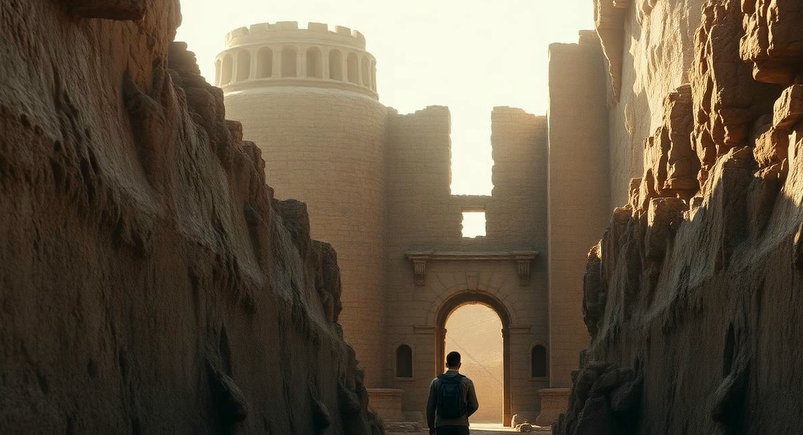
Qal’at Ja’bar: The Historic Fortress Overlooking Lake Assad
Qal’at Ja’bar stands as one of the most impressive medieval castles in Syria. Located on the shores of Lake Assad in Raqqa Governorate, Ja’bar Castle (قلعة جعبر) rises above the Euphrates landscape with dramatic presence. For centuries, this fortress has guarded vital trade routes, protected fertile lands, and symbolized regional power.
Travelers, historians, and architecture enthusiasts continue to explore Qal’at Ja’bar for its strategic history, commanding views, and striking defensive design. The castle combines natural beauty with military ingenuity, making it one of northern Syria’s most remarkable landmarks.
Historical Background of Qal’at Ja’bar
The history of Qal’at Ja’bar stretches back nearly a thousand years. Early fortifications likely existed on the site as early as the 7th century, when local rulers recognized the strategic value of the hill overlooking the Euphrates.
The fortress took its recognizable form in 1168 AD under the leadership of Nur ad-Din Zangi, a powerful Muslim ruler who unified large parts of Syria during the 12th century. He strengthened the site to secure trade routes and defend against regional rivals.
Builders constructed Ja’bar Castle primarily from stone and brick. They reinforced the structure with thick outer walls and multiple towers to withstand prolonged sieges. The design reflects military planning from the medieval Islamic period, when regional conflicts demanded strong defensive architecture.
Over time, various Islamic dynasties controlled Ja’bar Castle, including the Zengids and later the Ayyubids. Each ruling power maintained or modified the structure to serve military and administrative needs. Although parts of the fortress deteriorated over centuries, restoration projects in the mid-20th century preserved large sections of its walls and towers.
Geographical Setting of Qal’at Ja’bar
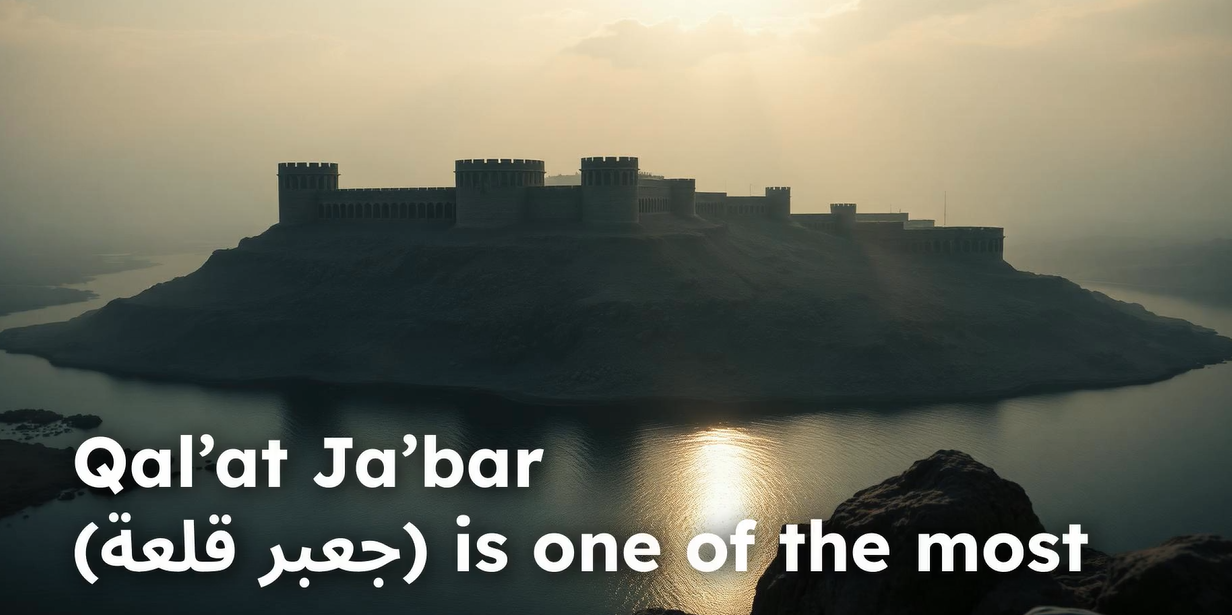
Qal’at Ja’bar occupies a dramatic position along Lake Assad, which formed in 1974 after the construction of the Tabqa Dam on the Euphrates River. Before the dam project, the castle stood on a hill overlooking the river valley. Today, rising waters surround the site and give it the appearance of a small island.
Engineers connected Ja’bar Castle to the mainland through a constructed causeway. Visitors now drive across this narrow road to reach the fortress. This transformation adds a unique visual dimension to the castle, where ancient stone walls reflect against wide, calm waters.
The surrounding landscape enhances the experience. Lake Assad stretches across the horizon, while open skies and distant plains frame the fortress. This combination of history and scenery makes Ja’bar Castle one of Syria’s most photogenic archaeological sites.
Architectural Features of Qal’at Ja’bar
The architecture of Qal’at Ja’bar highlights medieval defensive innovation. Builders designed the fortress with two main rings of fortification. More than 35 towers once strengthened the outer walls. Some towers feature semicircular shapes, while others display polygonal designs that improved defensive angles.
The thick perimeter walls protected interior courtyards, storage spaces, corridors, and living quarters. Soldiers once moved through narrow passageways to monitor approaching threats. Elevated watchpoints allowed defenders to observe movement across the Euphrates region.
Inside Qal’at Ja’bar, visitors can explore remnants of staircases, rooms, and defensive chambers. Although time and conflict have damaged some sections, the structure still communicates its original strength and purpose. The fortress reflects both practicality and craftsmanship, demonstrating how medieval builders balanced functionality with regional architectural style.
Strategic and Cultural Importance of Qal’at Ja’bar
Qal’at Ja’bar served as a critical military outpost for centuries. Its location near the Euphrates enabled rulers to control river trade and monitor regional movement. Merchants transporting goods across northern Syria passed near this fortified zone, making the castle vital for economic security.
During periods of conflict, commanders used Qal’at Ja’bar as a defensive base. The fortress provided protection for surrounding communities and acted as a regional command center. Its elevated position allowed early detection of potential invasions.
Beyond military use, Qal’at Ja’bar gradually became a symbol of cultural identity. The fortress reflects Syria’s layered history and architectural heritage. Even during periods of political instability, the castle remained a visible reminder of the region’s deep historical roots.
Today, many Syrians view Qal’at Ja’bar as a symbol of endurance. Its walls stand as testimony to centuries of change while preserving a tangible link to the medieval past.
Qal’at Ja’bar in the Past and Present
In its active years, Qal’at Ja’bar functioned as a strategic hub. Military leaders organized defenses within its walls. Guards patrolled towers and monitored the Euphrates corridor. Administrators coordinated regional governance from its fortified chambers.
Daily life inside the castle likely included food storage, water management, and communication between defensive posts. The layout reveals a structure designed not only for battle but also for sustained occupation.
Today, Qal’at Ja’bar attracts visitors who seek history, photography, and quiet landscapes. Tourists climb stone stairways, stand atop surviving towers, and enjoy panoramic views of Lake Assad. The contrast between ancient stone and shimmering water creates a powerful visual experience.
In recent years, renewed interest in heritage tourism has drawn both local visitors and international travelers back to Qal’at Ja’bar. The site offers a peaceful atmosphere that contrasts with its military origins.
How to Reach Qal’at Ja’bar
Qal’at Ja’bar lies approximately 53 kilometers west of Raqqa city and around 13 kilometers from Al-Thawrah (Tabqa). Visitors can access the site by road.
From Raqqa: Drive west toward Lake Assad along the main regional road.
From Al-Thawrah: Head toward the northern shoreline of the lake and follow signs directing visitors to Qal’at Ja’bar.
Transportation: Private vehicles provide the easiest access. Local tours may include Qal’at Ja’bar as part of broader regional itineraries.
Travelers cross the causeway connecting the former island to the mainland before reaching the entrance area. The approach itself offers scenic lake views and a dramatic first impression of the fortress.
Entrance Fees and Visitor Information (2026)
Ticket pricing in Syria can vary depending on local tourism authorities. As of 2026, entry fees at archaeological and historical sites generally range between $3 and $8 USD for international visitors. Local visitors often pay reduced rates.
Official ticket prices for Qal’at Ja’bar do not always appear consistently online. Visitors should confirm details locally when planning their trip.
Guided tours remain a popular option. Guides provide historical background, explain architectural features, and highlight sections that visitors might overlook during independent exploration.
Why Qal’at Ja’bar Remains Significant
Qal’at Ja’bar represents more than a medieval castle. The fortress captures centuries of political strategy, economic control, architectural innovation, and cultural continuity. Its commanding position above Lake Assad connects natural beauty with human history.
Qasr al-Banat in Raqqa: History and Facts About the Ancient Palace
From its construction under Nur ad-Din Zangi to its present role as a heritage landmark, Qal’at Ja’bar reflects the layered identity of northern Syria. The castle invites visitors to walk through corridors once filled with soldiers and administrators, while also offering peaceful views of water and sky.
For history enthusiasts, cultural travelers, and photographers, Qal’at Ja’bar offers a distinctive experience. The fortress stands as a reminder that architecture can preserve memory, strength, and identity across generations.
To watch a video about Ja’bar Castle, visit our YouTube channel.
Frequently Asked Questions About Ja’bar Castle
Where is Ja’bar Castle located?
Ja’bar Castle is located in Raqqa Governorate in northern Syria, about 53 km west of Raqqa city near Lake Assad.
Who built Ja’bar Castle?
Nur ad-Din Zangi strengthened and expanded Qal’at Ja’bar in 1168 AD during the 12th century.
Is Ja’bar Castle open to visitors?
Yes, visitors can access the site depending on local conditions. Entry fees usually range between $3 and $8 USD.
Why is Ja’bar Castle important?
Qal’at Ja’bar played a key strategic role in controlling trade routes along the Euphrates River and remains a major historical landmark in Syria.
Leave a Reply