
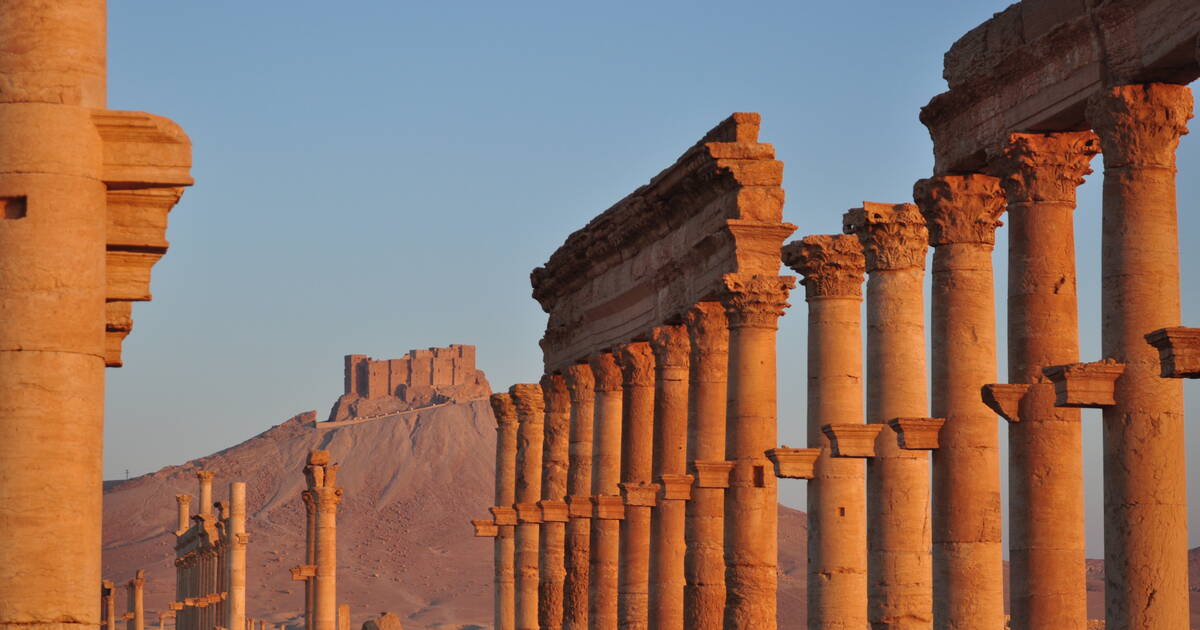
🏰 Palmyra Castle: The Desert Fortress of History — A Deep Journey into Tadmor’s Past and Present
Palmyra Castle, locally known as Qal‘at Fakhr al-Din al-Ma‘ani (قلعة فخر الدين المعني), is one of the most evocative historical landmarks in Palmyra (Tadmor), located in Syria’s Homs Governorate. Rising dramatically atop a rocky hill and overlooking the ruins of the ancient desert city, this medieval fortress has stood guard over centuries of human history — from powerful empires and vital trade routes to modern conflict and renewed hopes for cultural revival.
📍 Location & Geographic Setting
Palmyra Castle is situated in central Syria, near the modern town of Palmyra (Tadmor), approximately 155 km east of Homs city and 210 km northeast of Damascus. The fortress dominates the surrounding Syrian Desert, offering commanding views of the legendary oasis city below.
The castle and the ancient city of Palmyra together form part of the UNESCO World Heritage Site, recognized globally for their outstanding cultural value and historical continuity spanning thousands of years.

🏛️ Historical Background
Ancient Roots of Palmyra Castle
The city of Palmyra dates back to at least the 2nd millennium BCE, with early references found in Mesopotamian records. Its strategic location around a desert oasis transformed it into a crucial hub along ancient caravan routes linking the Mediterranean world with Persia, India, and China.
During the Roman era, particularly between the 1st and 2nd centuries CE, Palmyra flourished as one of the wealthiest cities of the ancient world. Its architecture reflected a unique blend of Greco-Roman design, local traditions, and Persian influences, symbolizing its role as a true crossroads of civilizations.
The Medieval Fortress — Palmyra Castle
Palmyra Castle itself, also called Fakhr al-Din al-Ma‘ani Castle, was constructed in the 13th century, most likely during the Mamluk period, atop a high rocky outcrop overlooking the ruins below. The castle was later associated with the 16th-century Druze emir Fakhr al-Din II, whose name became linked to the fortress through regional tradition.
Designed primarily as a defensive citadel, the castle features thick stone walls and an elevated position that provided excellent visibility and protection against threats approaching across the desert.
⚔️ What the Castle and Palmyra Witnessed
Over the centuries, Palmyra and its fortress bore witness to dramatic historical transformations:
Roman Integration and Prosperity: Palmyra thrived as a wealthy provincial city, playing a central role in long-distance trade across the Roman world and beyond.
Zenobia’s Palmyrene Empire: In the 3rd century CE, Queen Zenobia led a bold revolt against Rome, briefly establishing an independent Palmyrene Empire — one of the most remarkable episodes in Near Eastern history.
Medieval and Mamluk Era: The construction of the castle reflects shifting military strategies and regional power dynamics during the Islamic Middle Ages.
Modern Conflict (21st Century): During the Syrian Civil War, Palmyra suffered extensive damage. Between 2015 and 2017, the site changed hands multiple times, resulting in partial destruction of stairways and defensive elements, though the castle’s main structure survived.
🏺 Cultural and Historical Importance
Palmyra is widely regarded as one of the greatest archaeological treasures of the ancient world. Its monumental ruins once included vast temples, colonnaded streets, theaters, tomb towers, and public buildings that showcased an extraordinary fusion of artistic and architectural traditions.
Overlooking this ancient city, Palmyra Castle stands as a powerful symbol of the layered civilizations that shaped the region — from ancient caravan traders and Roman administrators to medieval Islamic rulers and the challenges of the modern era.
🏙️ Palmyra Castle in the Present Day
Today, Palmyra and its castle remain sites of immense historical importance, though much of the ancient city has been damaged and is still undergoing documentation, conservation, and restoration. Despite the destruction, the site continues to inspire hope for recovery and preservation.
Local authorities, Syrian specialists, and international heritage organizations are cautiously working to stabilize and conserve surviving structures. Tourism, long disrupted by conflict, is gradually and carefully re-emerging under controlled conditions.
🛣️ How to Reach Palmyra Castle
From Damascus:
Travel eastward through central Syria toward Homs, then continue northeast across desert highways to reach Palmyra.
From Homs City:
Drive approximately 150–160 km east through the Syrian desert landscape to Palmyra.
⚠️ Important Safety Note:
Travel conditions may change due to political and security factors. Visitors are strongly advised to consult local authorities or trusted travel services before planning a visit.
🎫 Entrance Fees & Visitor Info (2026 Estimate)
As of now, official ticket prices for Palmyra Castle in 2026 are not reliably published, largely due to ongoing reconstruction and limited tourism infrastructure.
Historically, entrance fees for Palmyra’s archaeological zones ranged roughly between $10–$30 USD (local currency equivalent) for combined site access during stable periods. If tourism fully resumes, a similar pricing structure may apply, depending on official cultural heritage policies and restoration progress.
(This estimate is based on pre-war pricing trends and general regional standards.)
Find out details about Palmyra Castle on our YouTube channel.
Bosra Al-Sham: History, Culture and Facts About Syria’s Ancient City
💬 Summary & Why Palmyra Castle It Matters
Palmyra Castle is far more than a hilltop fortress — it is a profound symbol of human resilience, cultural exchange, and historical continuity. Overlooking one of the world’s most iconic ancient cities, it embodies the rise and fall of empires, the creativity of civilizations, and the enduring value of cultural heritage.
Its dramatic desert setting and layered history continue to inspire scholars, travelers, and all those who seek to understand the shared story of humanity.
Leave a Reply