
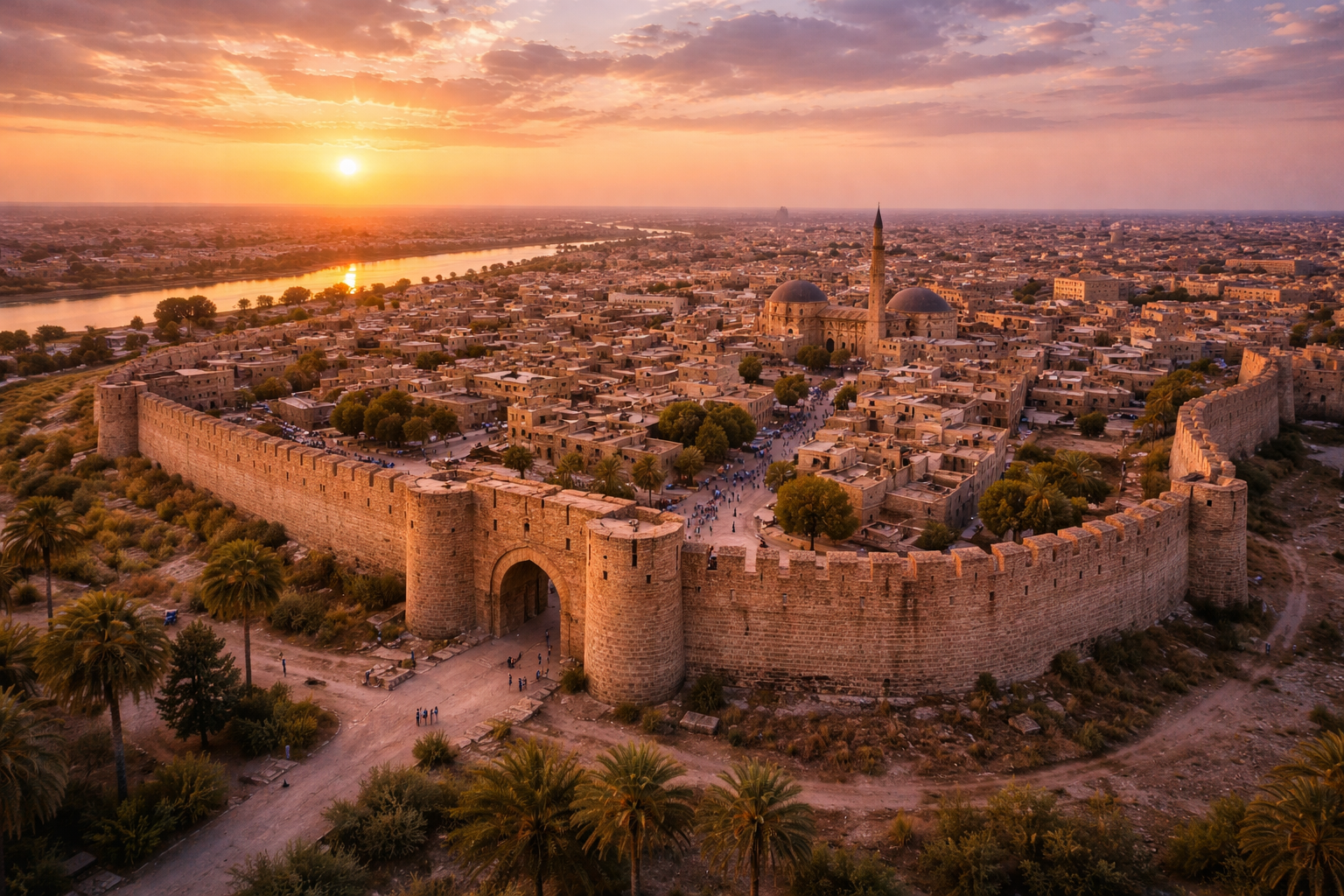
The Old Raqqa City Wall is a historic defensive structure in Raqqa, Syria, built centuries ago to protect the city and its inhabitants from invasions.
Introduction
The ancient city of Raqqa—nestled along the banks of the Euphrates River in northern Syria—was once the beating heart of one of the most remarkable empires in early Islamic history. At the core of this city stood its Old Wall, a defensive monumental structure built more than 1,200 years ago that witnessed empires rise and fall, invasions and reconstructions, human ingenuity and human destruction. Today, although much of it lies in ruins, what remains of the wall still speaks of Raqqa’s glorious past, its sufferings in modern conflict, and the efforts to preserve its legacy.
The Birth of Raqqa and Its Fortified Wall
The story of Raqqa’s wall begins in 772 AD, during the early Abbasid Caliphate—the dynasty that succeeded the Umayyads and ushered in a renaissance of culture, trade, and science across the Islamic world. The Abbasid caliph al-Mansur ordered the construction of a new garrison town called al-Rāfiqah, meaning “the Companion”, strategically located adjacent to the older city of Raqqa. This new town was built to fortify the empire’s frontiers, secure trade routes between Damascus and Baghdad, and guard against Byzantine incursions.
Construction of the wall was a grand architectural enterprise for its time. It stretched roughly 5,000 meters (about 3.1 miles) encircling the core of the town, featuring:
- Thick mudbrick and baked-brick fortifications
- Semi-circular towers placed at regular intervals
- Defensive moats and multiple concentric layers for added security
- Principal gates that served as both ingress points and symbols of power
The wall was not merely defensive; it also signaled the importance of al-Rāfiqah/Raqqa as more than a military outpost—it became an administrative center and later a de facto capital of the Abbasid realm during the reign of Caliph Harun al-Rashid, famed in literary tradition and history alike.
Life Behind the Walls: Raqqa in the Golden Age
In its heyday under Harun al-Rashid (late 8th to early 9th century), Raqqa was a thriving metropolis that rivaled other great cities of the Islamic world. The fortified walls enclosed bustling markets, grand palaces, and residential quarters. Harun himself commissioned intricate water canals, racecourses, and elaborate pottery workshops that produced goods traded throughout the region. Its architectural and cultural footprint still captivates historians today.
The city’s fortified status made it a model for other defensive settlements of the period and anchored its role as both military bulwark and civic hub.
Decline, destruction, and rediscovery of The Old Raqqa City Wall
The prosperity of Raqqa did not last forever. Like many cities of antiquity, it faced political upheaval and invasion. It suffered major destruction by the Mongols in the 13th century, which led to a deep decline. Over subsequent centuries, the city’s walls and structures deteriorated, buried at times beneath newer construction or forgotten behind shifting sands.
Modern archaeological interest in Raqqa’s wall began in the 20th century, with early excavations and conservation efforts. By the 1970s and 1980s, Syrian antiquities departments were undertaking systematic conservation of remaining Abbasid walls, towers, and gates, recognizing their cultural importance long before the present conflicts began.

The Old Raqqa City Wall in Recent Conflict
The 21st century brought new devastation. Raqqa became central to Syria’s civil war, and in 2014 it fell under the control of ISIS (Daesh), which declared it the capital of its so-called caliphate. During battles to retake the city, especially in 2017, the ancient wall again became a strategic military barrier. US-backed Syrian Democratic Forces (SDF) fought fiercely near sections of the wall, which ISIS fighters had mined and fortified. To advance, coalition forces opened narrow breaches in the centuries-old structure, carefully avoiding total destruction.
The fighting inflicted further damage on already fragile sections of The old Raqqa city wall , yet around half of the original 5,000 meters still stood by the early 2020s, albeit fragmented and often eroded.
Restoration and preservation efforts on The Old Raqqa City Wall
In the years following ISIS’s expulsion from Raqqa in late 2017, local and regional authorities have increasingly focused on restoring and protecting the wall and adjacent archaeological sites. The Autonomous Administration of North and East Syria (AANES) and Raqqa Civil Council’s Culture Board have overseen rehabilitation projects to repair collapsed sections and even construct an Abbasid-style gateway to mirror the original architectural language of the site.
These restoration campaigns involve:
- Hand-made mudbrick production using traditional techniques
- Architectural analysis to guide accurate reconstruction
- Conservation of remaining towers and burial foundations
Such work aims to ensure that the wall’s remains continue to tell their story to future generations.
Importance and Legacy
The old Raqqa city wall stands as far more than a relic of ancient warfare. It is:
- A symbol of early Islamic urban planning and Abbasid engineering, connecting us to a time when Raqqa stood at the center of an empire.
- A cultural touchstone for Syrians, linking present-day communities to their deep past despite centuries of upheaval.
- A testament to resilience, having survived invasions, neglect, and modern conflict.
For archaeologists, historians, and visitors alike, the wall is a gateway through time, offering tangible contact with eras that shaped the political, social, and artistic currents of the medieval Middle East.
Discover details about the topic of The Old Raqqa City Wall on our YouTube channel.
Visiting the Old Wall Today
Raqqa remains accessible for travelers with careful planning. Here are practical points:
- Location: The remnants of the wall trace through the historic heart of Raqqa city, often near the old Baghdad Gate and central neighborhoods mapped as the Old City.
- Access: Visitors typically approach on foot through the city’s historic quarter or via local routes that follow the Euphrates waterfront.
- Guidance: Local guides familiar with the city’s archaeology and recent history can enrich the experience and help navigate areas where ruins are scattered.
- Safety: Because Raqqa has seen recent conflict, travelers should verify current conditions and required permits from authorities or reputable tour operators before planning a visit.
Aleppo Citadel: History, Facts and One of the Oldest Castles in the World
Conclusion
The Old Wall of Raqqa may now be fragmented, its towers weathered and its gates silent, but its presence remains monumental. It is a living piece of history—one that tells of Abbasid grandeur, centuries of change, modern upheaval, and the hopeful work of restoration. For anyone interested in the layered histories of Syria and the broader Middle East, this ancient wall stands as both guardian and storyteller, spanning more than a millennium of human experience.
Raqqa: History, Culture and Facts About Syria’s Euphrates City
Leave a Reply