
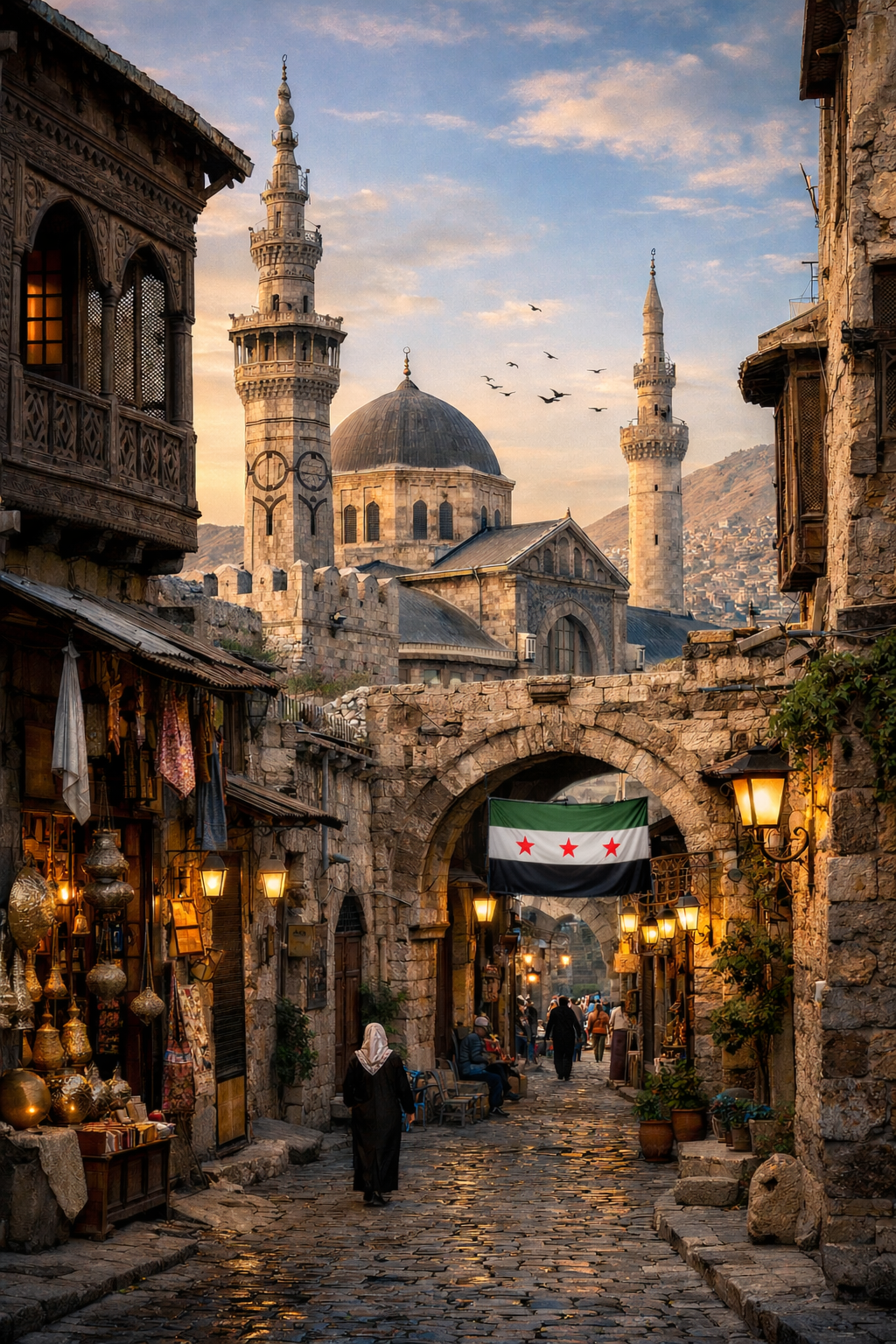
Old Damascus The Eternal Heart of History
Nestled at the crossroads of continents, cultures, and centuries, Old Damascus stands as one of the world’s most extraordinary urban treasures. Often described as the oldest continuously inhabited city on Earth, this historic quarter blends thousands of years of human history into a living environment that still thrives today.
From early civilizations to powerful empires and modern life,Old Damascus offers a rare journey through time that visitors can experience on foot.
Old Damascus Location and Ancient Origins
The Old City of Damascus forms the historic core of Syria’s capital and lies in the southwestern part of the country. The city grew within a fertile oasis fed by the Barada River and protected by the Anti-Lebanon Mountains.
Because of this natural setting, early settlers arrived as far back as 8,000–10,000 BC. Reliable water sources and arable land allowed permanent settlement to flourish. As a result, Damascus became one of the earliest centers of urban life in human history.
Moreover, the Old City sits within ancient defensive walls at a strategic point between Africa and Asia. This location placed Damascus directly on major trade routes, allowing goods, cultures, and ideas to circulate for thousands of years.

Old Damascus Syria and the Layers of Civilization
Walking through Damascus Old City feels like stepping through a living history book. Over time, many civilizations shaped the city’s architecture, culture, and urban layout.
Roman Influence
Roman planning remains visible today. Several city gates and street alignments follow Roman designs. Bab Sharqi (the Eastern Gate), also known as the Gate of the Sun, remains the only largely intact Roman gate.
Christian and Biblical Heritage
Straight Street (Via Recta), mentioned in the New Testament, still cuts through the Old City. This street reflects Damascus’s early Christian role in regional history.
Islamic Golden Age
The Umayyad Mosque stands at the spiritual center of Damascus Old City. Built in the early 8th century, it rose on a site that once hosted a Roman temple and later a Byzantine church. Its mosaics and scale reflect the city’s importance during the Islamic Golden Age.
Ottoman Era
Covered markets such as Souq al-Hamidiyeh and elegant homes like Azm Palace reveal Ottoman influence. These sites highlight daily life, governance, and craftsmanship in later centuries.
Altogether, the Old City contains more than 125 protected monuments spanning many historical periods.
Why Damascus Old City Still Matters Today
The Old City of Damascus is not an open-air museum. It remains a living city. Families reside in historic houses, artisans work in small workshops, and markets continue to serve daily needs.
For this reason, UNESCO designated Damascus Old City as a World Heritage Site in 1979. The site preserves urban life from antiquity to the present in a continuous form.
Today, the Old City matters to historians, pilgrims, travelers, and food lovers alike. It offers an authentic connection to humanity’s shared past.
Top Attractions in Old Damascus
Entering through one of the ancient gates reveals a dense collection of landmarks:
Umayyad Mosque – A masterpiece of early Islamic architecture with vast courtyards and golden mosaics.
Souq al-Hamidiyeh – A lively bazaar filled with spices, textiles, and traditional sweets.
Citadel of Damascus – A medieval fortress that reflects the city’s defensive importance.
Straight Street (Via Recta) – A surviving Roman street linked to early Christian history.
Historic Churches and Mosques – Including the Chapel of St. Ananias and many neighborhood mosques.
Each site adds another layer to Damascus’s complex identity.
How to Reach Damascus Old City
Reaching Damascus Old City is easy from anywhere in the capital:
By Taxi – Ask to stop at Bab Touma, Bab Sharqi, or Bab al-Sreijeh.
On Foot – Walking is the best way to explore once inside the walls.
Public Transport – Buses and shared taxis stop near main entrances.
In addition, regional travelers often arrive via cross-border routes from neighboring countries such as Jordan.
Damascus Old City Entrance Fees (2026)
Walking through most parts of Damascus Old City is free. It functions as a public urban space. However, some attractions require tickets.
According to the 2026 pricing framework by Syria’s Directorate-General of Antiquities and Museums:
First-grade heritage sites: 100,000 SYP (≈ USD 10)
Second-grade heritage sites: 50,000 SYP (≈ USD 5)
These fees usually apply to museums and palaces, not public streets.
An exciting video about Old Damascus is available on our YouTube channel.
Visitor Tips for Damascus Old City
Dress modestly when entering mosques or churches.
Wear comfortable shoes for uneven stone streets.
Bargaining is common in traditional markets.
Carry cash, as many places do not accept cards.
Ebla Syria: Ancient City and Archaeological Site Guide
Damascus Old City: A Living Legacy
From the echoing call to prayer at the Umayyad Mosque to the scent of spices drifting through the souks, Damascus Old City remains deeply alive.
It is not just a relic of the past. Instead, it is a city where history and daily life continue side by side. For travelers seeking authenticity, depth, and timeless culture, Damascus Old City offers an unforgettable experience etched in stone, sound, and memory.
Al-Subaybah Castle (Nimrod Fortress): History and Facts About the Ancient Castle
Leave a Reply