
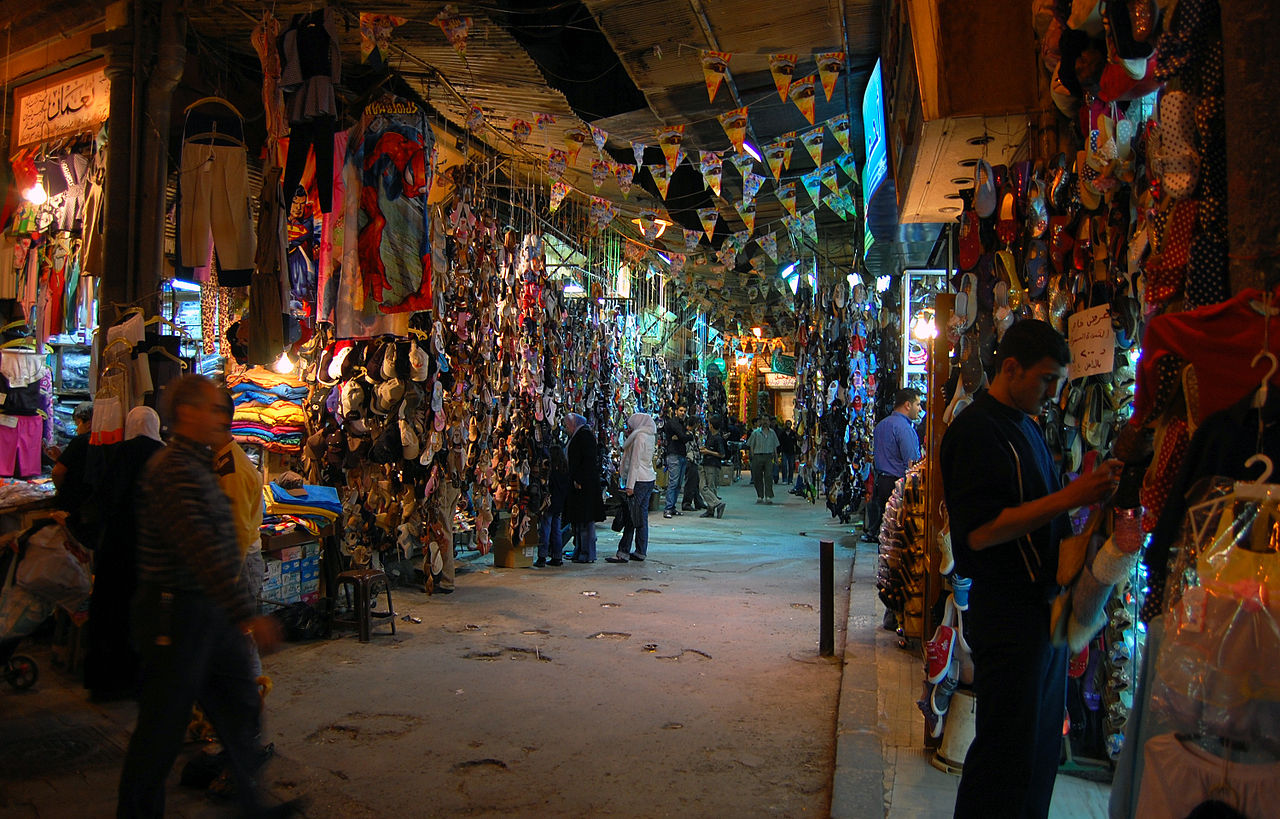
The Old Aleppo Markets, also known as the Aleppo Souqs, are among the oldest and largest covered markets in the world, located in the historic city of Aleppo, Syria.
For more than two millennia, the ancient city of Aleppo has stood as one of the great crossroads of the Middle East. Throughout its long history, the city functioned as a meeting point where cultures, goods, and ideas converged. At the very heart of this historic urban fabric lay Aleppo’s bazaars — a dense network of vaulted markets that shaped not only commerce, but also social life, traditions, and identity.
These ancient souks formed the daily rhythm of the city. Merchants, craftsmen, travelers, and residents met beneath stone arches to trade silk, spices, soap, metals, and stories. Even today, despite the devastation of recent years, Aleppo’s bazaars remain a powerful symbol of endurance — preserving not just architecture, but the living soul of a city that has refused to fade.

A Labyrinth of Commerce: Aleppo’s Old Markets Through History
At the core of Aleppo’s Old City stretches Al-Madina Souq, widely recognized as the longest historic covered market in the world. Extending for nearly 13 kilometers, this immense bazaar winds through a complex maze of narrow lanes and vaulted passages. While its present form dates largely to the Mamluk period of the 14th century, archaeological evidence confirms that commercial activity thrived here centuries earlier.
Rather than existing as a single street, the market developed as an interconnected system of specialized souks. Each section focused on a particular trade: wool merchants, spice sellers, silk traders, jewelers, leatherworkers, and metal craftsmen all occupied their own dedicated spaces. Alongside them stood khans (caravanserais), where traveling merchants found lodging, storage, and security for their goods.
Old Aleppo Markets owed their prosperity to geography. Positioned along major trade routes linking Asia, Anatolia, Mesopotamia, and the Mediterranean, the city served as a gateway between East and West. Goods arrived from India, Persia, and Central Asia, then moved onward to European ports. Long before modern globalization, Aleppo’s bazaars functioned as a truly international commercial hub.
Social Life and Culture Inside Old Aleppo Markets
Beyond trade, Aleppo’s souks acted as vibrant social spaces. Daily life unfolded among the stalls through bargaining rituals, shared coffee breaks, conversations, and the exchange of news. Many shops remained in the same families for generations, transforming each storefront into a living archive of memory, craft, and local identity.
The architecture of the bazaars reinforced this sense of continuity. Vaulted stone ceilings protected merchants from heat and rain. Basalt arches framed narrow corridors, while small domed skylights — known as qumriyas — filtered daylight into the markets below. Heavy wooden doors, iron locks, and carved stone details reflected centuries of accumulated craftsmanship.
Nearby khans such as Khan al-Qadi, Khan al-Burghul, and the Venetians’ Khan served as hubs for international traders. Within their courtyards, languages mixed, cultures met, and long-distance commerce shaped Aleppo’s cosmopolitan character.
War and Ruin: The Impact of Conflict on Aleppo’s Bazaars
Beginning in 2012, the Syrian conflict inflicted devastating damage on Aleppo’s historic markets. Fighting within the Old City led to fires, shelling, and structural collapses that destroyed large sections of the souk. Stone vaults fell, wooden shops burned, and centuries-old commercial corridors turned into fields of rubble.
Estimates suggest that nearly one third of the historic bazaar suffered complete destruction, while many remaining sections sustained severe damage. Where vibrant trade once filled the air with color and sound, silence and debris took hold.
This loss extended far beyond physical destruction. Entire family businesses vanished overnight. Crafts passed down through generations faced extinction. For many Aleppians, the damage to the souks felt like the loss of collective memory and identity, not merely economic infrastructure.
Restoration and Revival: Breathing Life Back Into Old Aleppo Markets
Despite the scale of destruction, restoration efforts began soon after major fighting subsided. Local authorities, international organizations, and heritage institutions joined forces to rescue what remained. UNESCO, the Aga Khan Trust for Culture, and United Nations agencies supported debris removal, documentation, and training programs for traditional craftsmen.
Sections such as Souk al-Saqatiya reopened following careful restoration. Craftsmen rebuilt vaults using traditional stonework methods, while artisans returned to renovated shops. Slowly, life began to reappear beneath the arches.
Restoration efforts focus not only on rebuilding structures, but also on restoring social and economic life. Workshops train young artisans, support family businesses, and encourage residents to return to the Old City. In this way, revival initiatives aim to restore continuity, not just walls.
Experiencing Aleppo’s Old Markets Today
Today, visitors can walk through restored sections of Aleppo’s historic bazaars and witness living heritage in action. Copper is still hammered by hand. Textiles are folded in narrow stalls. Small cafés and cultural spaces now appear beside traditional shops, blending past and present.
Although scars from conflict remain visible, the souks continue to tell powerful stories — stories of trade routes that spanned continents, of resilience amid destruction, and of a community determined to reclaim its historic heart.
Qal’at Simaan (Castle of Saint Simeon): History and Facts About the Ancient Site in Syria
Location and accessibility to the Old Aleppo markets
Aleppo’s old markets lie within the Old City, surrounding the iconic Citadel of Aleppo, which towers above the bazaar network.
Getting there:
The Old City is walkable from central Aleppo.
Taxis and local buses serve areas near Bab al-Faraj and Al-Jdeideh.
Once inside the historic walls, exploring the souks on foot offers the most immersive experience.
A video about Old Aleppo Markets is on our YouTube channel.
Conclusion:Old Aleppo markets as Memory and Future
Aleppo’s bazaars represent far more than commercial spaces. They embody centuries of exchange, craftsmanship, and shared urban life. From their rise as the world’s longest covered market, through eras of prosperity and devastation, to their gradual revival today, these souks mirror the fate of the city itself.
Within their stones lie memories of generations. Within their reopening lies hope — that even after profound loss, heritage can endure, communities can rebuild, and the heartbeat of an ancient city can begin to pulse once more.
Apamea (Afamia): History and Facts About the Ancient City in Hama Countryside
Leave a Reply