
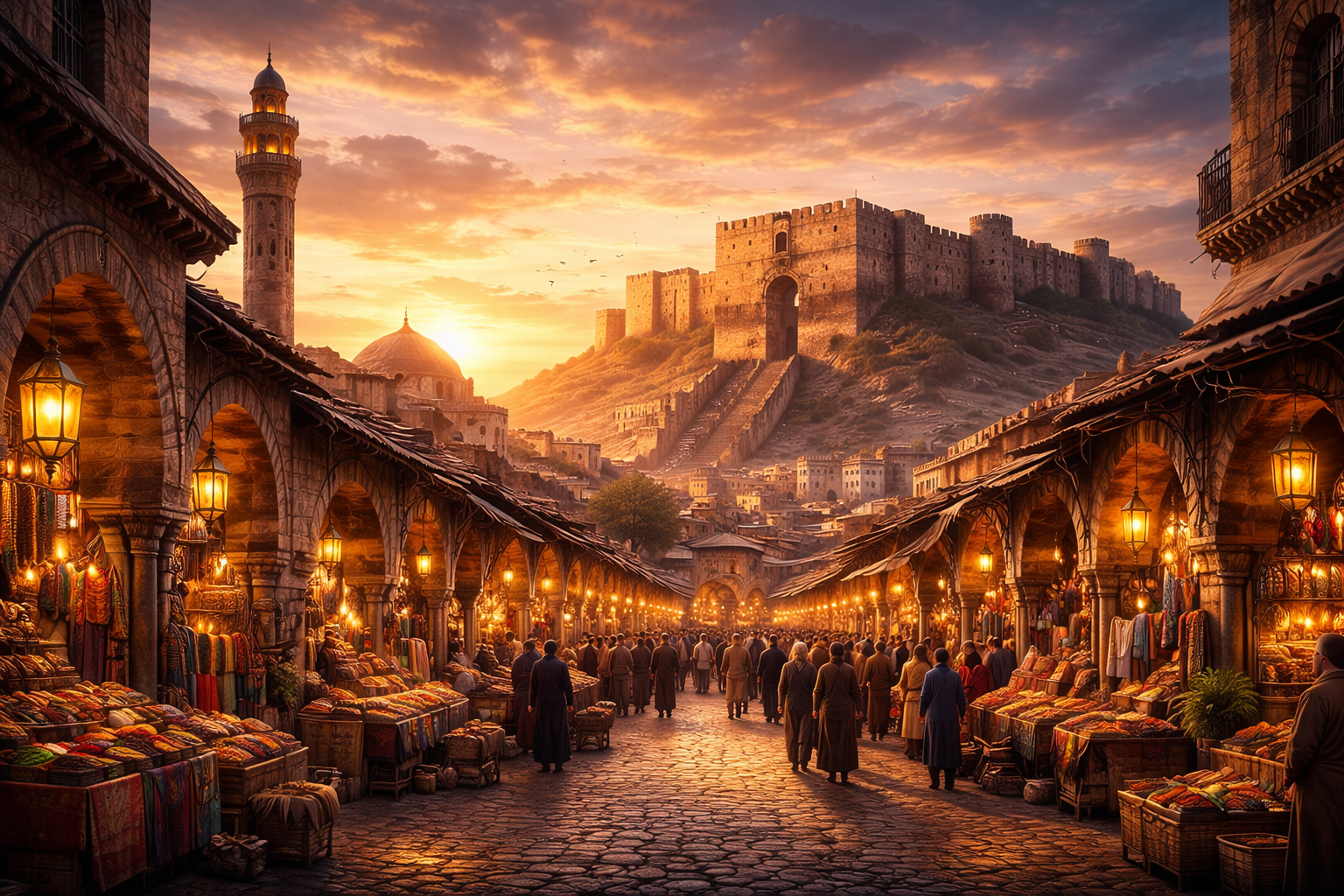
Old Aleppo: A Timeless City at the Crossroads of Civilization
Old Aleppo stands among the oldest continuously inhabited urban centers in the world. Located in northern Syria, Old Aleppo shaped trade networks, cultural exchange, religious scholarship, and architectural innovation for thousands of years. Generations of rulers, merchants, craftsmen, and scholars built the city layer by layer, creating one of the richest historic urban landscapes in the Middle East.
For centuries, Old Aleppo thrived as a commercial powerhouse and intellectual center. Caravans crossed deserts and mountains to reach its markets. Pilgrims and students traveled long distances to study in its mosques and madrasas. Armies fought to control its strategic position. Even after conflict and natural disasters damaged large parts of the city in recent years, Old Aleppo continues to symbolize resilience, identity, and continuity.
The Strategic Location of Old Aleppo
Old Aleppo forms the historic heart of the modern city of Aleppo. The city occupies a strategic position between Anatolia, Mesopotamia, and the Mediterranean coast. This location placed Old Aleppo along major land routes that later connected with the broader Silk Road trade network.
Merchants used these routes to transport silk from Asia, spices from India, textiles from Persia, and precious metals from across the Mediterranean. As goods moved through Old Aleppo, so did ideas, languages, artistic styles, and religious traditions. This constant exchange shaped the city’s cosmopolitan character.
Over time, powerful civilizations ruled Old Aleppo. The Hittites, Assyrians, Persians, Greeks, Romans, Byzantines, Arabs, Mongols, Mamluks, and Ottomans all controlled the city at different periods. Each power contributed to the architecture and cultural identity of Old Aleppo. The result is a layered urban fabric that reflects thousands of years of human history.
In 1986, UNESCO inscribed Old Aleppo on the World Heritage List in recognition of its outstanding historical and architectural value. The designation highlighted the city’s citadel, mosques, caravanserais, madrasas, traditional houses, and vast covered souk.
Early History and Urban Development of Old Aleppo
Archaeological evidence traces settlement in The Old City of Aleppo back to at least the 3rd millennium BCE. Early communities likely settled around a natural hill that later became the site of the citadel. The elevated position provided defensive advantages and visibility across the surrounding plains.
During the Bronze Age, Aleppo played a key role in regional politics and trade. Rulers recognized its strategic value and fortified its center. Over centuries, builders expanded residential districts around the citadel, forming the dense urban core that defines Old Aleppo today.
Islamic dynasties later transformed the city’s layout. They constructed mosques, schools, markets, and bathhouses that integrated religious, commercial, and social life into a compact urban environment. Ottoman administrators added caravanserais, khans, and courtyard houses that reflected both functionality and elegance.
Old Aleppo developed organically. Narrow streets curved around buildings. Residential quarters formed tight-knit neighborhoods. Stone walls and wooden doors defined private spaces while markets and courtyards encouraged social interaction.
The Citadel of Old Aleppo: Symbol of Power and Identity
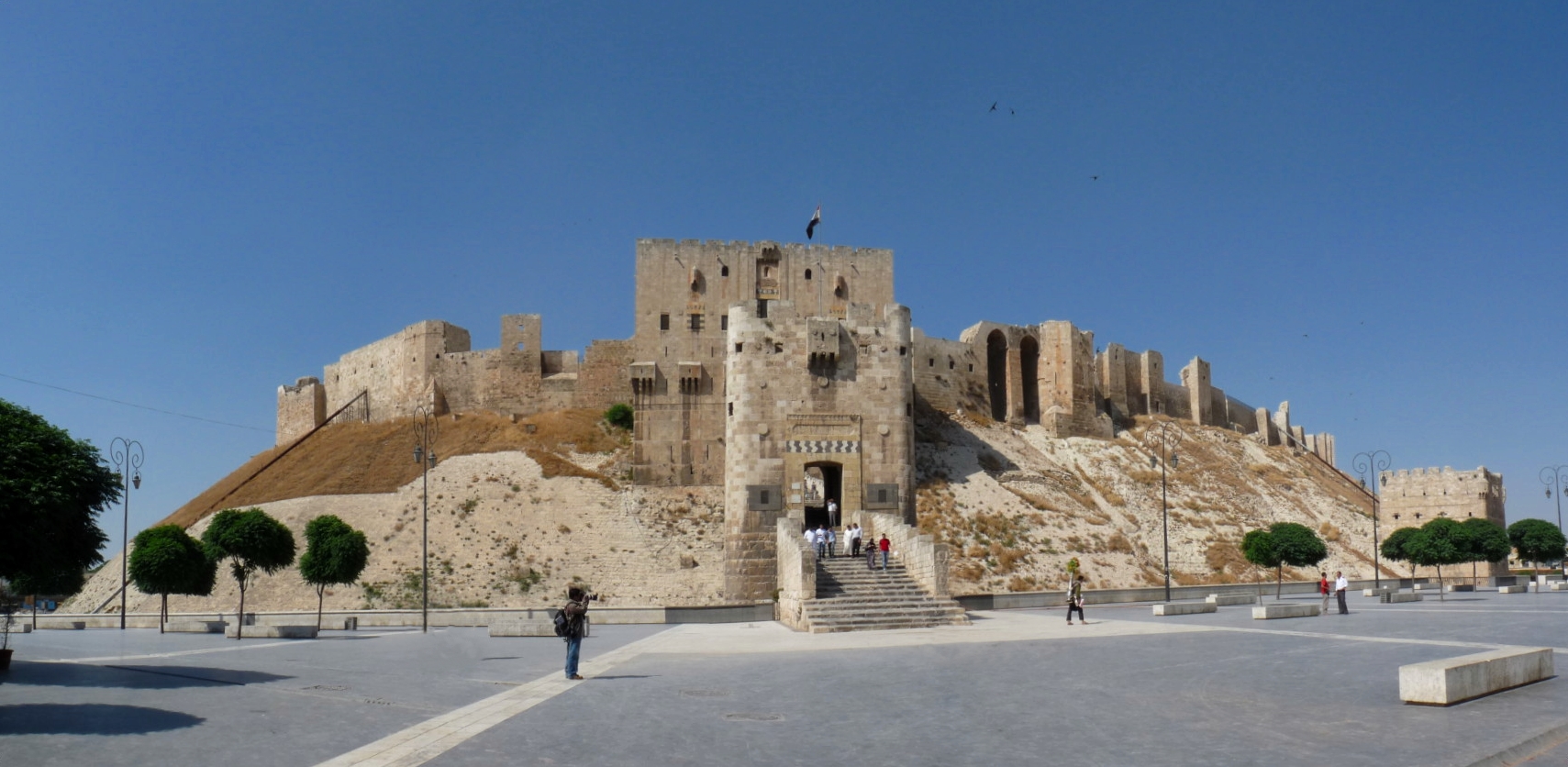
The Citadel of Aleppo dominates the skyline of Old Aleppo. This massive fortress rises on an artificial mound at the city’s center. Builders strengthened and expanded the citadel across many centuries, especially during the Ayyubid period in the 12th and 13th centuries.
Rulers used the citadel as a military stronghold, royal residence, and administrative headquarters. Engineers designed its monumental entrance with a long stone bridge, defensive towers, and angled passageways that slowed invaders. Thick walls and elevated vantage points allowed defenders to protect the city effectively.
Inside the citadel, structures once included palaces, mosques, storage areas, and water systems. The fortress not only protected Old Aleppo but also symbolized authority and stability. Its silhouette remains one of the most recognizable landmarks in Syria.
Even after suffering structural damage during recent conflict and earthquakes, the citadel continues to represent the enduring spirit of Old Aleppo.
Religious and Educational Life in Old Aleppo
Religion shaped daily life in The Old City of Aleppo for centuries. Mosques anchored neighborhoods and served as centers of worship, education, and community gathering.
The Great Mosque of Aleppo stood as one of the most important religious landmarks in the city. Its courtyard, prayer hall, and minaret reflected centuries of architectural development. Scholars delivered lectures there, and worshippers gathered for daily prayers and major religious celebrations.
Madrasas across Old Aleppo trained students in theology, law, language, and science. Teachers attracted pupils from across the region. These institutions strengthened Aleppo’s reputation as a center of learning within the Islamic world.
Christian communities also contributed to the city’s spiritual and cultural life. Churches and monasteries reflected the religious diversity that characterized The Old City of Aleppo for generations.
The Souks of Old Aleppo: Economic Heart of the City
The covered souk of The Old City of Aleppo once ranked among the largest historic markets in the Middle East. Stone-vaulted corridors stretched for kilometers, creating a network of specialized sections dedicated to textiles, spices, jewelry, soap, and metalwork.
Families operated shops in the same locations for decades, sometimes centuries. Craftsmen passed skills from one generation to the next. The scent of spices mixed with the sound of bargaining voices and the rhythm of daily commerce.
The souk functioned as more than a marketplace. It created social bonds, economic opportunity, and cultural continuity. Merchants welcomed traders from distant lands, reinforcing Old Aleppo’s reputation as a global crossroads.
Caravanserais, known locally as khans, provided lodging and storage for traveling merchants. These large courtyard buildings supported long-distance trade and strengthened the city’s commercial infrastructure.
Traditional Houses and Urban Character of the Ancient City of Aleppo
Residential architecture in The Old City of Aleppo reflects climate adaptation, privacy, and social values. Builders designed traditional houses around interior courtyards. Thick stone walls helped regulate temperature during hot summers and cool winters.
Families decorated courtyards with fountains, plants, and carved stone details. Wooden balconies and mashrabiya screens provided ventilation and privacy. These homes formed intimate environments within the larger urban fabric of Old Aleppo.
Neighborhood life fostered strong social ties. Residents shared public baths, bakeries, and small local shops. The design of The Old City of Aleppo encouraged interaction while preserving family privacy.
Conflict, Earthquakes, and the Challenge of Preservation
Beginning in the early 2010s, armed conflict caused extensive destruction across the Ancient City of Aleppo. Fighting damaged residential quarters, mosques, markets, and sections of the historic souk. Fires destroyed parts of the vaulted market corridors. Explosions weakened centuries-old structures.
UNESCO placed the Ancient City of Aleppo on the World Heritage in Danger list to emphasize the urgent need for protection and restoration.
In addition to war-related damage, major earthquakes caused further structural instability in some historic buildings. Cracks appeared in walls, and weakened foundations required urgent stabilization.
Despite these challenges, local authorities, engineers, craftsmen, and heritage organizations continue to restore Old Aleppo step by step.
Restoration and Renewal in Old Aleppo
Restoration efforts focus on stabilizing damaged structures, rebuilding collapsed sections of the souk, and reviving traditional crafts. International organizations such as UNESCO, UN-Habitat, and the Aga Khan Trust for Culture support rehabilitation projects in partnership with local communities.
Shopkeepers have reopened parts of the souk. Residents have repaired homes and returned to their neighborhoods. Craftsmen have resumed work in restored workshops. These actions signal gradual recovery in Old Aleppo.
Reconstruction in Old Aleppo represents more than architectural repair. It restores identity, memory, and economic life. Each reopened shop and repaired courtyard strengthens the city’s social fabric.
Visiting Old Aleppo Today
Old Aleppo lies in northern Syria near the Turkish border. Travelers can reach the city by road from major Syrian hubs such as Damascus and Latakia, depending on current travel conditions.
Visitors usually approach the Ancient City of Aleppo through modern districts before entering the historic core. The Citadel stands as the main landmark and orientation point. Guided tours, when available, help visitors understand the complex layers of history embedded in the city’s streets.
Anyone planning to visit the Ancient City of Aleppo should review updated travel advisories and local regulations. Conditions may vary depending on restoration progress and infrastructure development.
Old Damascus Syria: History, Culture and Tourism Guide
Why Old Aleppo Continues to Matter
Old Aleppo represents endurance across millennia. The city survived invasions, economic shifts, political change, and modern conflict. Its citadel, mosques, souks, and homes reflect human creativity and adaptability.
Preserving Old Aleppo protects more than stone and mortar. It safeguards collective memory and cultural identity. As restoration continues, Old Aleppo stands as a reminder that cities can recover and rebuild.
Through its resilience, Old Aleppo continues to inspire scholars, travelers, and future generations who seek to understand the depth of human history in the Levant.
Video on the topic of Old Aleppo on our YouTube channel
Azaz Castle: History and Facts About the Ancient Fortress in Northern Syria
Leave a Reply