
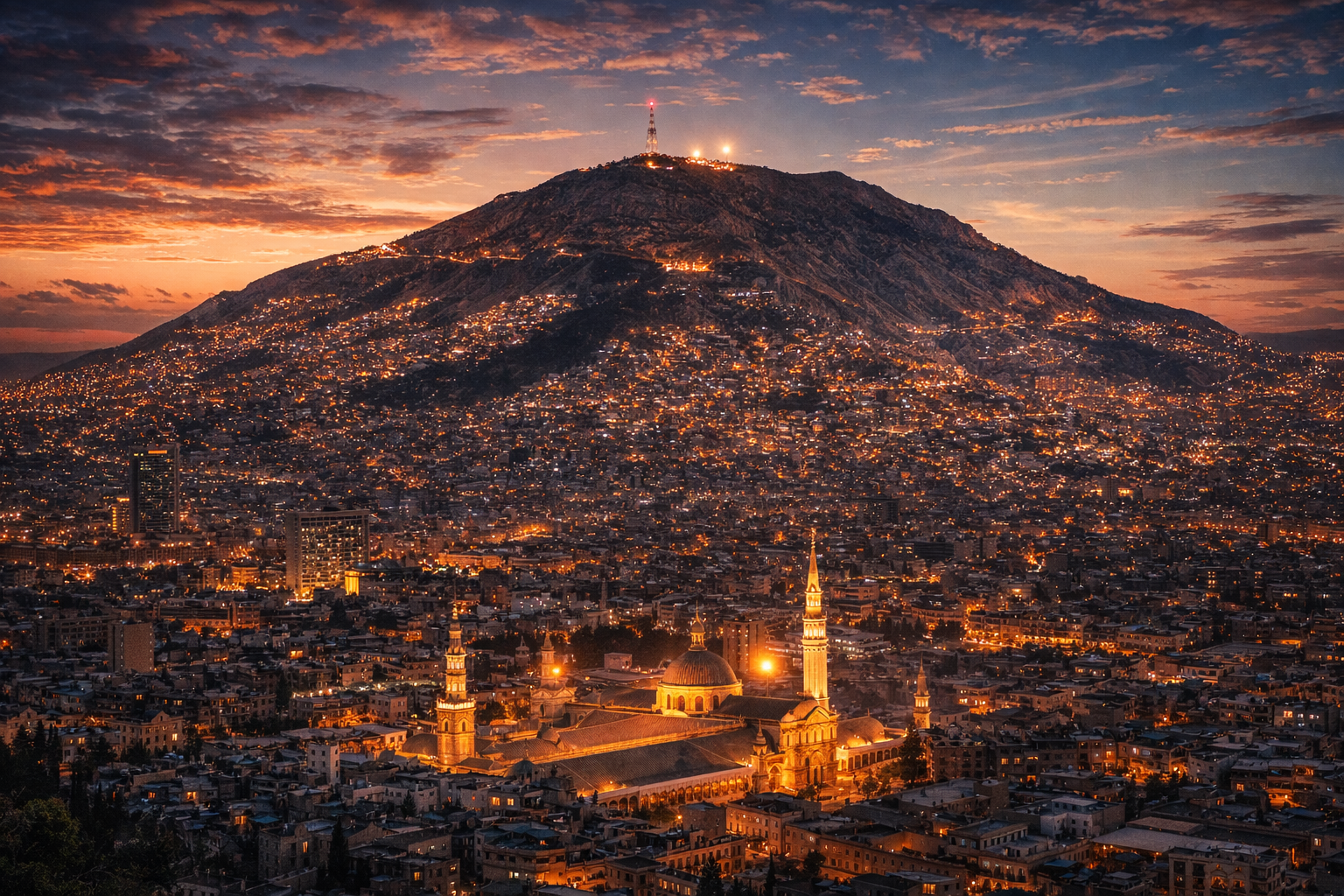
Mount Qasioun: The Timeless Sentinel of Damascus
Perched high above Damascus, Mount Qasioun rises to approximately 1,151 meters and dominates the skyline of one of the world’s oldest continuously inhabited cities. For centuries, this mountain has shaped the identity of Damascus. It overlooks the capital with a constant presence that has inspired poets, historians, rulers, and families who gather along its slopes to reflect, celebrate, and remember.
Mount Qasioun is not simply a geographic elevation west of the city. It stands as a cultural landmark, a spiritual reference point, and a witness to the layered history of Syria’s capital.
The Historical Roots of Mount Qasioun
The story of Mount Qasioun stretches deep into antiquity. Linguists trace the name “Qasioun” to Syriac origins, possibly meaning “hard” or “dry,” a description that matches the mountain’s rocky limestone terrain and sparse vegetation.
Classical Arab writers described Mount Qasioun as a sacred and elevated place where scholars and mystics sought retreat. Over time, it became associated with spiritual contemplation and legendary narratives that intertwined religious traditions and local folklore.
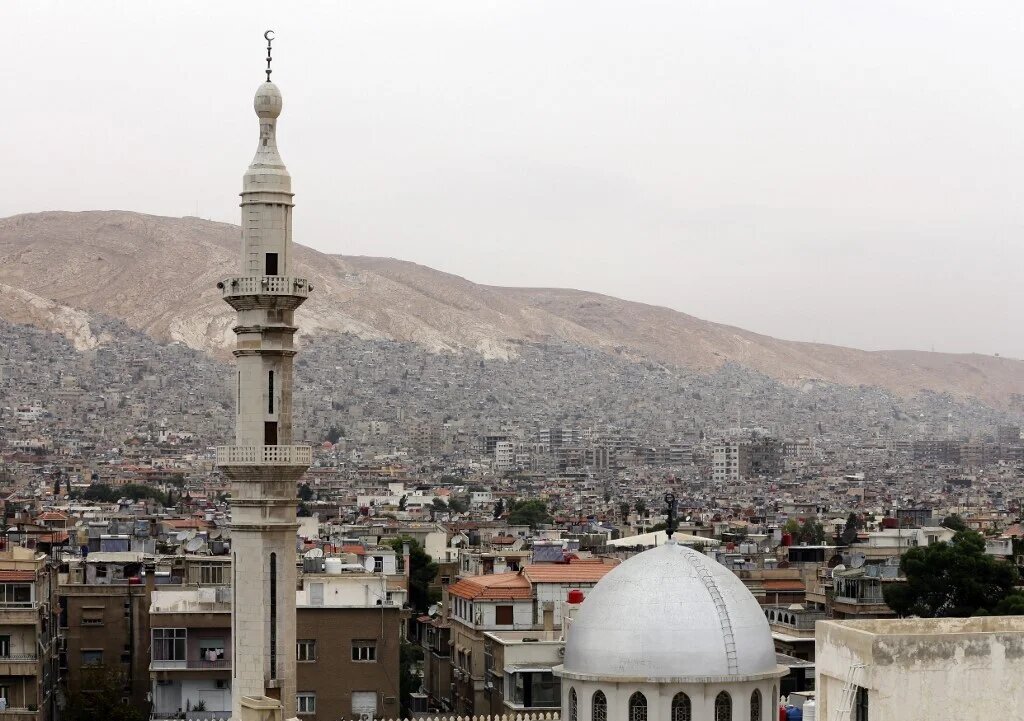
Because of its height and location, Mount Qasioun naturally became linked to the broader story of Damascus itself. From its slopes, one can observe the ancient urban fabric, the winding paths of the Barada River, and the architectural layers that reveal Roman, Byzantine, Islamic, and modern influences.
Sacred Legends of Mount Qasioun
Mount Qasioun occupies a unique position in regional spiritual tradition. Numerous legends connect the mountain to prophetic stories and sacred memory.
The Cave of Blood (Maghārat al-Dam)
One of the most famous sites on Mount Qasioun is the Cave of Blood. According to popular tradition rooted in Biblical and Quranic narratives, this cave marks the place where Cain killed his brother Abel. The story has made the cave a symbolic site of reflection on humanity, morality, and repentance.
Throughout history, rulers and citizens reportedly visited this cave to pray during times of drought or hardship, seeking divine mercy.
Maqam al-Arba’in (Shrine of the Forty Saints)
Another important landmark on Jabal Qasioun is Maqam al-Arba’in, often referred to as the Shrine of the Forty Saints. Tradition holds that forty righteous figures gather there in prayer each night. The site’s green dome stands out against the rocky slopes and remains an important spiritual stop for visitors.
Other Caves and Traditions
Folk narratives also associate Mount Qasioun with ascetics, hermits, and even the story of the Seven Sleepers. Whether historical or symbolic, these stories reinforced the mountain’s reputation as a sacred landscape that transcends a single era or tradition.
Strategic Importance of Jabal Qasioun
Beyond legend and spirituality, Mount Qasioun has long held strategic significance. Its elevation provides a commanding view over Damascus and the surrounding plains. Throughout medieval and modern history, controlling Mount Qasioun meant controlling a crucial vantage point.
During the Syrian conflict that began in 2011, Jabal Qasioun became heavily militarized. Government forces established defensive positions and restricted civilian access. For many residents, the mountain’s identity temporarily shifted from a recreational and cultural symbol to a reminder of conflict.
However, in late 2024, authorities reopened Mount Qasioun to the public after years of limited access. Families and visitors began returning to its viewpoints, restoring its role as a gathering place rather than a restricted zone.
Mount Qasioun Today: A Place of Community and Reflection
Today, Mount Qasioun once again serves as one of Damascus’s most beloved destinations. Residents climb its winding roads to enjoy panoramic views of the city, especially at sunset, when golden light spreads across rooftops and minarets.
From this elevated vantage point, visitors can admire landmarks such as the historic districts of Old Damascus and, in the distance, the grand silhouette of the Umayyad Mosque.The visual connection between Jabal Qasioun and the city below reinforces the mountain’s symbolic relationship with Damascus’s heritage.
Local cafés and viewpoints along the upper road provide spaces where families drink tea, share meals, and celebrate milestones. The atmosphere blends nostalgia with renewal, as residents reconnect with a landmark that shaped generations.
Cultural Significance of Mount Qasioun
Mount Qasioun appears frequently in Syrian poetry, songs, and literature. Writers describe it as the guardian of Damascus, a silent witness to centuries of transformation. Its silhouette has become inseparable from the identity of the capital.
For many Damascenes, Jabal Qasioun represents resilience. It has observed conquests, earthquakes, political transitions, and social change. Yet it remains physically and symbolically present, anchoring the city’s skyline.
The mountain also functions as a space of memory. Families recall childhood picnics, school outings, and celebrations held on its slopes.Even during years of restricted access, the image of Mount Qasioun remained deeply ingrained in the collective imagination.
Indeed, it continued to symbolize the enduring spirit and history of Damascus for both residents and visitors.
How to Reach Mount Qasioun
Reaching Mount Qasioun is relatively simple for visitors in Damascus.
By Car
A main road ascends the western slopes from neighborhoods such as Salihiya. As drivers climb, the city gradually unfolds below, offering increasingly dramatic views.
By Foot
Adventurous visitors can hike parts of Jabal Qasioun. Some routes lead toward spiritual landmarks like the Cave of Blood or Maqam al-Arba’in. Terrain conditions vary, so proper footwear and local guidance help ensure a safe experience.
Best Time to Visit
Sunset remains the most popular time to visit Mount Qasioun. The fading light creates a panoramic scene that highlights Damascus’s historic architecture and natural surroundings. Early evenings often attract families and small gatherings seeking cooler air and scenic beauty.
Visitors should therefore check local updates before planning a trip, because infrastructure projects or administrative decisions can occasionally affect access routes. Additionally, staying informed helps avoid unexpected delays or detours.
Bab Touma Damascus: Historic Gate and Christian Quarter Guide
Mount Qasioun as a Symbol of Damascus
Mount Qasioun stands as more than a mountain overlooking Damascus. It embodies centuries of history, belief, strategy, and daily life. Just It connects ancient legend with modern identity. It bridges sacred memory with social gathering.
When visitors stand on Jabal Qasioun and look across Damascus, they witness layers of civilization stretching back thousands of years. The mountain frames that view and gives it meaning.
In many ways, Jabal Qasioun reflects the spirit of Damascus itself — enduring, complex, and deeply rooted in history.
Leave a Reply