
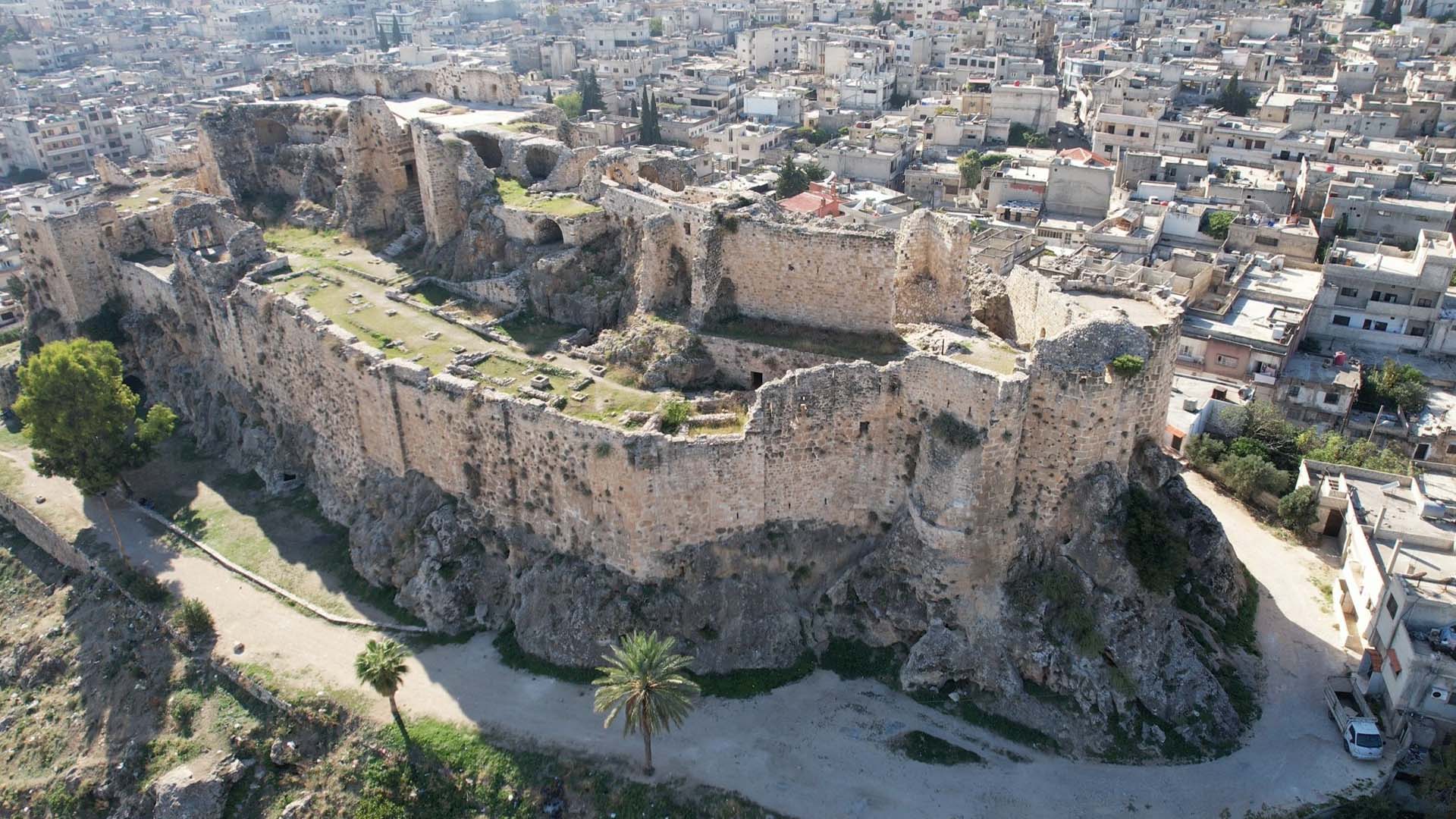
🏰 Masyaf Castle: The Legendary Fortress of the Hama Countryside
Perched atop a rocky outcrop overlooking the fertile plains of the Orontes Valley, Masyaf Castle is one of Syria’s most intriguing medieval fortresses. Moreover, its commanding position and layered history have transformed the site into a lasting symbol of power, mystery, and strategic control in western Syria.
📍 Location and Natural Setting
The fortress rises above the town of Masyaf in the Hama countryside, approximately 40 kilometers west of Hama city. In addition, its elevated position allowed defenders to observe movement across the surrounding plains and secure key routes linking the coast with inland regions.
As a result, the site became ideal for surveillance and defense long before the medieval period.

🏛️ Historical Background
Archaeological evidence indicates that the earliest fortifications date back to the Byzantine era. However, the site gained its greatest historical importance during the 12th century, when it became the main stronghold of the Nizari Ismailis.
During this period, the fortress evolved into a political and strategic center rather than a simple military outpost.
🗡️ The Ismaili era, regional conflicts, and their impact on Masyaf Castle
Under the leadership of Rashid al-Din Sinan, often known as the “Old Man of the Mountain,” the stronghold reached the height of its influence. Consequently, Masyaf emerged as the headquarters of an extensive network that relied on diplomacy as much as military strength.
Although Saladin attempted to capture the fortress in 1176, the siege ended without success. Instead, negotiations followed, reinforcing the castle’s legendary reputation across the region.
🧱 The architecture and defensive design of Masyaf Castle
The architectural layout reflects centuries of adaptation to both terrain and political change. For example, thick stone walls, watchtowers, and inner courtyards were positioned to exploit the natural rock formations.
Furthermore, underground passages, storage rooms, and water systems allowed inhabitants to endure prolonged sieges. These features highlight the advanced defensive planning employed by successive rulers.
🔄 Later History and Preservation
In the 13th century, Mongol forces briefly seized the fortress. Soon afterward, however, the Mamluks regained control and reinforced the defenses. Over time, the site gradually lost its military relevance under Ottoman rule.
In the early 21st century, restoration efforts helped stabilize the ruins and reveal hidden architectural elements. As a result, interest in the site’s historical and cultural value increased significantly.
🌍 The cultural and historical importance of Masyaf Castle
Today, the fortress represents more than military stonework. Instead, it stands as a reminder of medieval political complexity, religious diversity, and strategic innovation in the Levant.
Moreover, its association with legends and historical narratives continues to attract scholars and travelers alike.
Maarrat al-Numan Castle: History and Facts About the Ancient Fortress in Syria
🚗 Visiting Information and Travel Tips
Reaching the site is straightforward. From Hama, visitors can travel by road to Masyaf town and then walk uphill toward the ruins. Additionally, local guides can provide valuable context and ensure a more meaningful visit.
Spring and autumn offer the most comfortable weather conditions. Therefore, planning visits during these seasons is highly recommended.
A video about Masyaf Castle is on our YouTube channel.
Conclusion: The Enduring Legacy of Masyaf Castle
Masyaf Castle remains a powerful landmark overlooking the Orontes Valley. Through centuries of conflict, diplomacy, and change, the fortress has preserved its aura of mystery and resilience. Ultimately, it offers visitors not just panoramic views, but also a deep connection to Syria’s layered past.
Hama Water Wheels (Norias): History and Facts About Syria’s Famous Landmark
Leave a Reply