
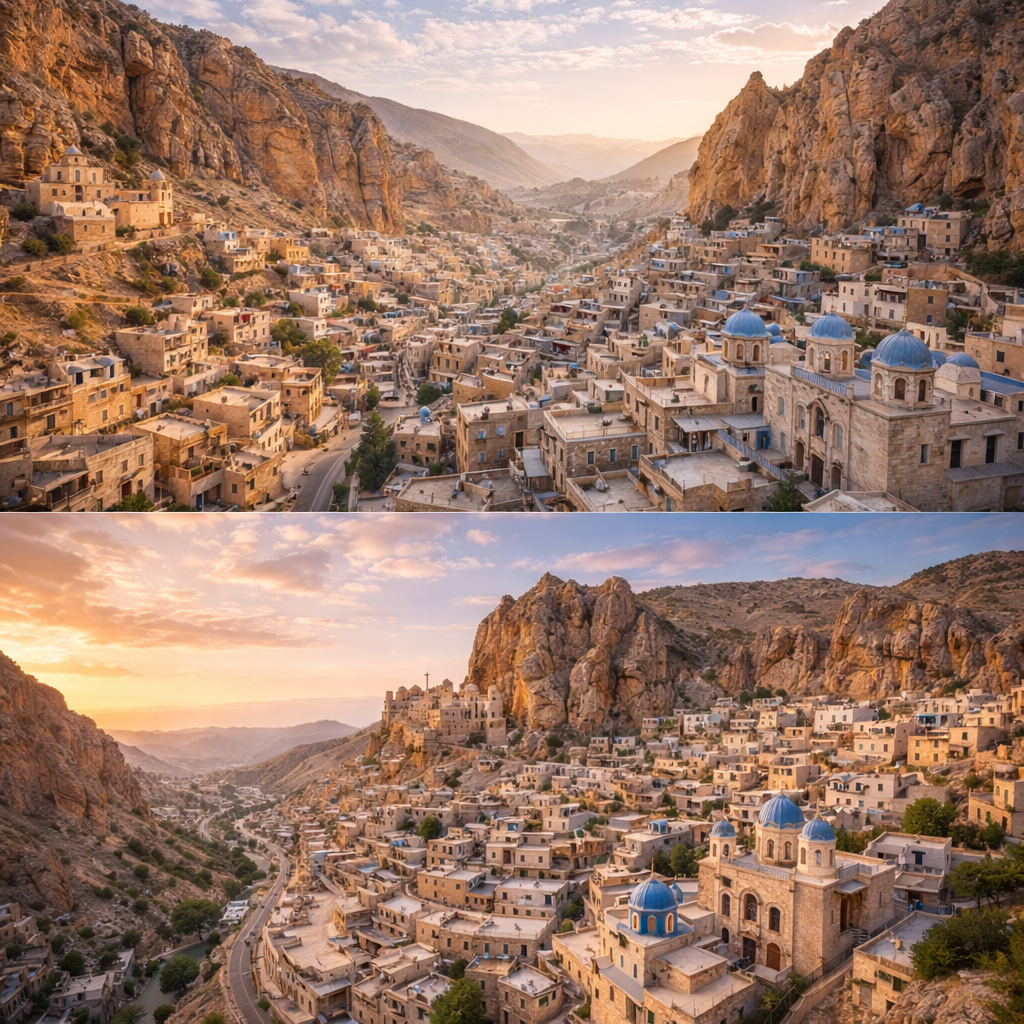
Maaloula is an ancient mountain town in Syria, famous for its Christian heritage and for being one of the few places where the Aramaic language is still spoken.
Maaloula preserves one of the world’s rarest cultural treasures. The village protects an ancient Christian heritage and keeps alive the Aramaic language in daily life.
Moreover, the village rises high in the rugged Qalamoun Mountains, about 56 km northeast of Damascus. This dramatic location gives the village both natural protection and timeless beauty. As a result, history remains part of everyday life rather than a distant memory.
A Village Between Cliffs and Time
The Aramaic name “Maaloula” means entrance or pass. This meaning reflects the village’s position between steep limestone cliffs.
In addition, the houses cling to the mountainsides and follow the natural shape of the rock. Narrow stone paths connect homes, churches, and monasteries. Therefore, visitors often feel as if time itself has slowed down.

A Living Language Still Spoken Today
the village stands out because its people still speak Western Neo-Aramaic. This language once spread across the Near East and served as a common tongue during the time of Jesus.
Today, elderly residents teach Aramaic to younger generations. As a result, the village remains one of the last living bridges to an ancient linguistic world.
Faith, Conflict, and Resilience
For centuries, the village has played a central role in Christian spiritual life. However, the village suffered heavy damage during the Syrian conflict in 2013.
After government forces regained control, local communities started rebuilding churches, homes, and roads. Meanwhile, many families returned slowly, determined to protect their heritage despite ongoing challenges
Conflict, Damage, and Resilience
Maaloula suffered greatly during the Syrian conflict. In 2013, armed extremist groups briefly took control of the village, causing damage to homes, churches, and monasteries.
After government forces regained control, restoration efforts began. Roads, buildings, and religious sites were partially repaired, though the impact of war and displacement remains visible.
Today, Maaloula’s population is smaller than before the conflict. Many families emigrated, yet the village endures — its stone walls, churches, and Aramaic voices standing as symbols of resilience.
Cultural importance outside of Syria of Maaloula
Maaloula holds exceptional cultural value. For linguists, historians, and religious scholars, it represents a rare survival of ancient language and tradition.
In 1999, Maaloula was placed on UNESCO’s Tentative World Heritage List, recognizing its unique linguistic, historical, and cultural significance.
Before the conflict, the village welcomed hundreds of thousands of visitors each year, drawn by its scenery, monasteries, and living heritage.
How to Reach Maaloula
Despite its mountain location, the village is relatively easy to reach from Damascus:
By car or taxi: Around 45–60 minutes via the Damascus–Homs highway, exiting near Al-Nabek.
By minibus: Local minibuses depart from Damascus, especially from areas near Qasaa and Zablatani.
Guided tours: Many day tours include the village along with nearby sites such as Saidnaya or Deir Mar Musa.
Spring and autumn are the best seasons to visit, offering mild weather and stunning mountain views.
Visiting Maaloula Today
Visiting the village feels like stepping into a living museum. Visitors can walk along stone paths, explore rock-carved churches, and hear echoes of Aramaic spoken by locals.
Despite modern challenges, Maaloula remains a place of deep spiritual reflection and cultural memory — where history is not forgotten, but lived.
Saladin Castle Facts: One of the Most Impressive Castles in the Middle East
Conclusion:Maaloula is Timeless Syrian Treasure
A video related to Maaloula is on our YouTube channel.
Maaloula is one of Syria’s most evocative destinations. Its dramatic mountains, ancient monasteries, and living Aramaic language make it a powerful symbol of cultural survival.
For travelers seeking authenticity, history, and meaning, the village offers a rare journey into humanity’s shared past — a place where language, faith, and landscape continue to endure against all odds.
Leave a Reply