
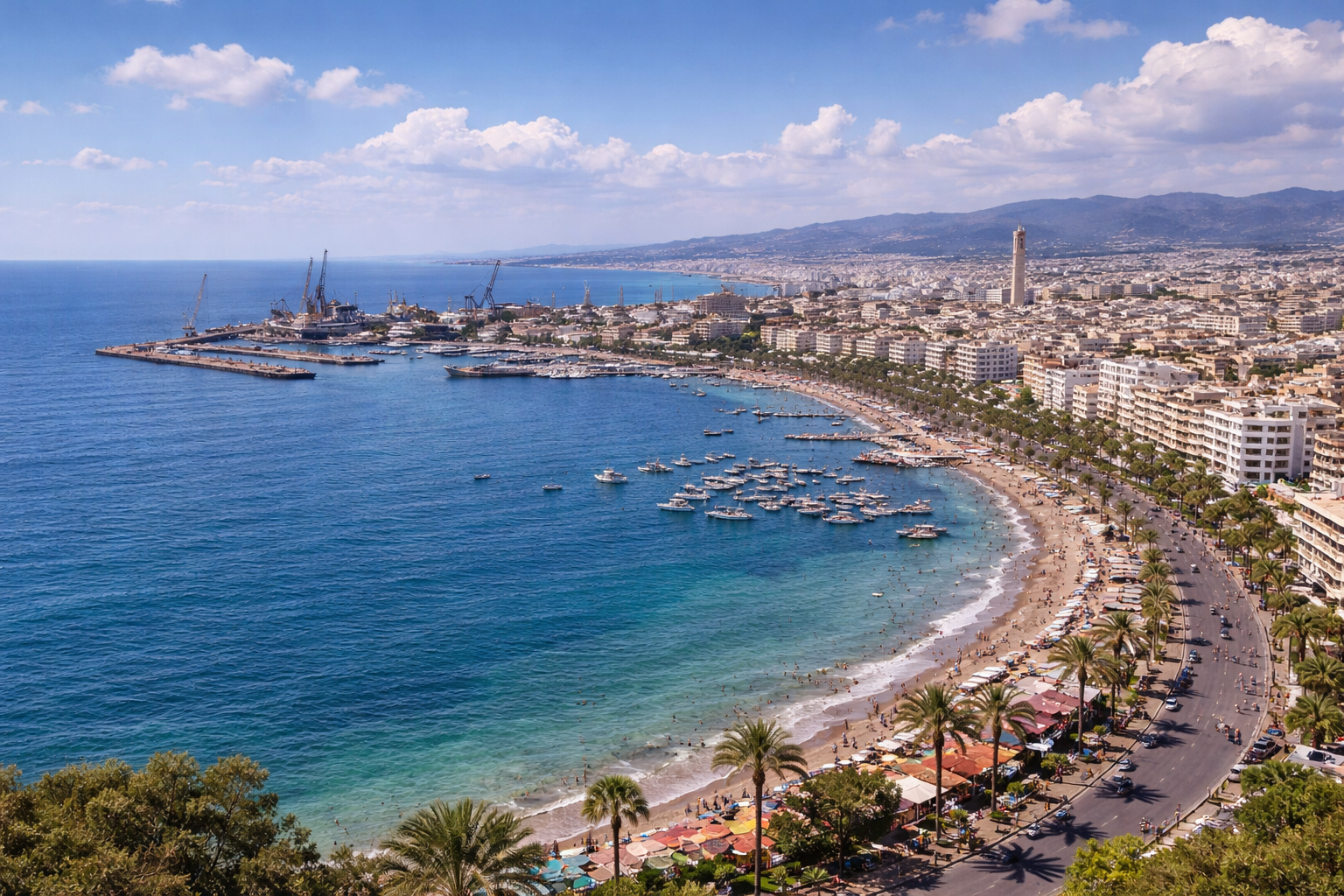
Latakia Governorate: The Crossroads of Civilization — From Ancient Ports to Modern Struggles
Latakia Governorate in northwestern Syria is a land where history, geography, culture, and conflict have intertwined for millennia. Stretching from the sparkling Mediterranean coastline into the rugged foothills of the Syrian Coastal Mountains, Latakia has been both a prize and a crossroads — coveted by empires, shaped by trade and agriculture, and marked by the tides of war and peace. This detailed article explores Latakia’s location, historical legacy, wartime experiences, economic and cultural significance, and its role both in the past and present of the wider Middle East.
Where Latakia Is — Geography and Strategic Position
Latakia Governorate lies in the northwest corner of Syria, hugging the southeastern edge of the Mediterranean Sea. It borders Türkiye to the north, Idlib Governorate to the northeast, Hama Governorate to the east and southeast, and Tartous Governorate to the south. The Mediterranean forms its western frontier, giving the region a long, fertile coastal plain backed by the Jebel Ansariye mountain range to the east.
Administratively, Latakia is divided into four districts: Latakia, Al-Haffa, Al-Qardaha, and Jablah. Its coastline has supported rich agricultural plains, while mountain slopes and plateaus have provided natural defenses and cultural diversity over centuries.
Ancient and Classical Heritage: A Legacy From Ugarit to the Romans
The human imprint on Latakia stretches back to some of the earliest coastal civilizations. Just north of the modern city lies the archaeological site of Ugarit (Ras Shamra), one of the earliest urban centers in history that flourished around 1400–1300 BCE. Ugarit is famous for yielding one of the earliest known alphabetic writing systems, deeply influential in the development of later scripts.
Following Ugarit’s decline in the late Bronze Age, a new settlement emerged where the modern city of Latakia now stands. Known to ancient Phoenicians as Ramitha and to Hellenistic Greeks as Leuke Akte, the settlement later became Laodicea during the Hellenistic period — named for the mother of the Seleucid ruler Seleucus II in the 3rd century BCE. During this era, Latakia grew into a major port of commerce and culture, integrating Mediterranean trade networks with inland Syria.
Under the Roman Empire, Latakia continued to flourish. One of the surviving architectural reminders of this period is the Latakia Tetraporticus, a monumental triumphal arch constructed in honor of Emperor Septimius Severus in the early 3rd century CE. This Roman structure still stands in the heart of the city and symbolizes the deep classical roots of the region.
Medieval Contests and Empires: Crusaders, Saladin, and Ottoman Rule
After the Arab-Muslim conquests of the 7th century, Bride of the Syrian coast became part of the expanding Islamic world. Over the centuries, control over the area shifted between Christian and Muslim powers.
In the 12th century, during the height of the Crusades, European crusader forces captured parts of the Syrian coast and inland fortifications, including nearby medieval castles such as Bani Qahtan Castle and Mahalibeh Castle. Crusader domination was eventually rolled back by Muslim leaders, most famously Saladin, who reclaimed the territory in the late 1180s.
Later centuries brought the region under the sway of the Ottoman Empire, which governed much of the Levant from the 16th century until the early 20th century. Latakia remained a provincial coastal hub throughout this period, connecting trade routes between the Mediterranean and the interior.
Modern Times: Mandates, Nations, and Strategic Ports
After the end of World War I and the collapse of the Ottoman Empire, Latakia entered a new political phase. Beginning in 1920, the city fell under the French Mandate of Syria and Lebanon, which reshaped much of the coastal region’s political and social structure. During this period, French authorities established the Alawite State, a move that deliberately emphasized divisions among Syria’s religious and ethnic communities.
As a result, the coastal Alawite population became administratively separated from the predominantly Sunni Muslim interior regions. Moreover, this policy reinforced Latakia’s distinct demographic identity and influenced its political alignment in the decades that followed. Consequently, the legacy of the mandate era played a lasting role in shaping the city’s modern social fabric and its place within the Syrian state.
Following Syria’s independence, Latakia retained its strategic importance within the modern Syrian Republic. Most notably, the city developed into Syria’s primary commercial port, serving as the country’s main maritime gateway. Through this port, Syria has handled significant volumes of imports and exports, including metals, machinery, food products, and raw materials. Therefore, Latakia has remained essential to national trade and economic stability.
In recent years, the port has also attracted renewed international attention. In 2025, the Syrian government signed a 30-year concession agreement with the French shipping company CMA CGM to modernize and expand Latakia’s port infrastructure. This agreement, in turn, signaled long-term confidence in the port’s economic potential. Ultimately, it reaffirmed Latakia’s role not only as a national asset, but also as a strategically significant hub in the eastern Mediterranean.

Culture, Identity, and Economic Life
Bride of the Syrian coast is not just a battlefield or crossroad — it is a region of diverse communities and cultural exchange. Historically comprised of Alawite, Sunni Muslim, Christian, and other communities, the area has long been a meeting point of traditions and identities.
Video about the city of Latakia on our YouTube channel
Economically, aside from its port activity, Latakia’s fertile coastal plains support agriculture — especially tobacco, cotton, cereals, and fruit — which have been central to rural life for generations.
In peacetime, the Mediterranean beaches and landscapes also made parts of Latakia a destination for tourism, both domestic and regional — a sector that, like much of Syria, has suffered due to conflict, sanctions, and economic disruption.
Homs Guide: History, Culture and Top Facts
Latakia’s Place in Syria’s Past and Present
From its earliest days near ancient Ugarit, to its role as Laodicea in Hellenistic and Roman times, through medieval struggles between Crusaders and Muslim empires, to its place in modern Syrian national life — Bride of the Syrian coast has been shaped by its strategic location and rich cultural tapestry.
Today, it remains a pivotal region: a commercial lifeline via its port, a cultural home for diverse communities, and a landscape marked by both resilience and the scars of war. As Syria continues its long journey toward recovery and stability, Latakia’s history offers profound lessons about coexistence, conflict, and continuity in a land that has truly seen the sweep of civilization.
Leave a Reply