
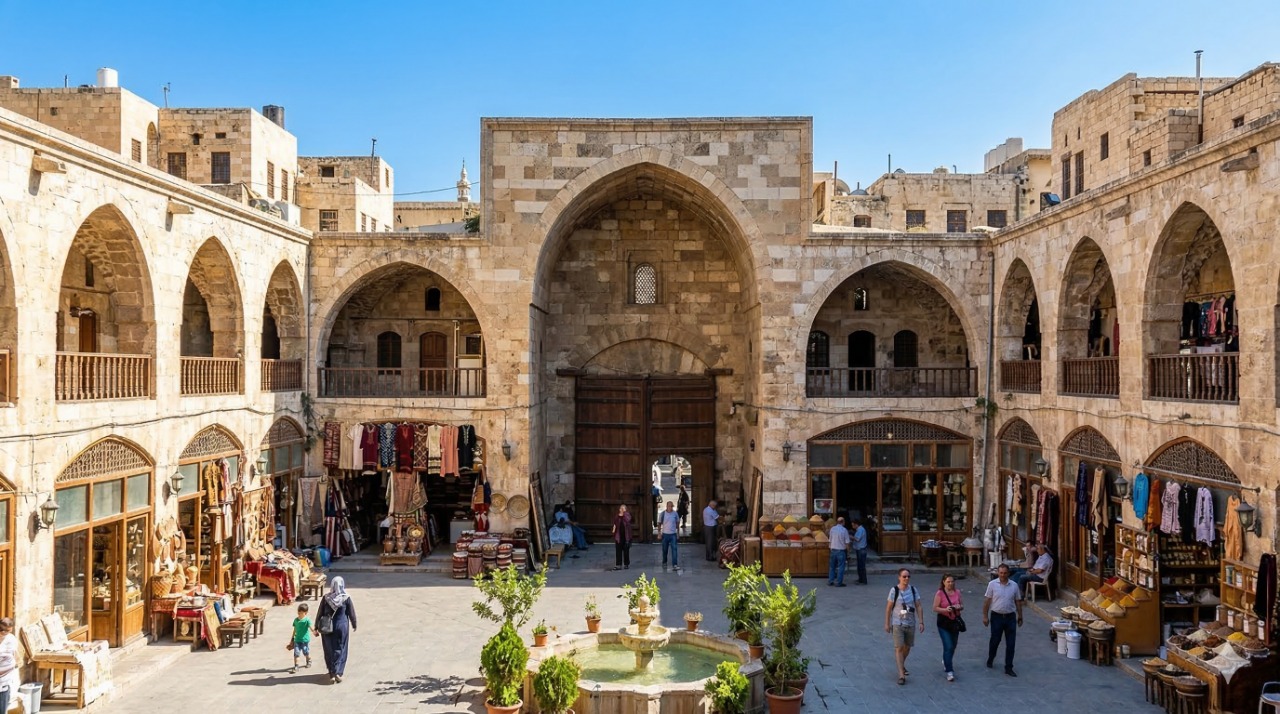
Khan al-Shuna: A Historic Craft Market in the Heart of Aleppo
Introduction to Khan al-Shuna
Khan al-Shuna is one of the most important historic caravanserais in the Old City of Aleppo. The khan sits near the famous Citadel of Aleppo, making it part of the central commercial district that once powered Aleppo’s economy.
For centuries, Khan al-Shuna served merchants, craftsmen, and travelers who visited Aleppo along major trade routes across the Middle East. Today, the site represents a living example of Aleppo’s cultural heritage and traditional crafts.
History of Khan al-Shuna
Ottoman Origins
Builders constructed Khan al-Shuna in the mid-16th century during the Ottoman period. Historical records indicate that construction took place between 1546 and 1548 under the supervision of Khosrow Pasha.
At that time, Aleppo stood as one of the most important commercial centers in the Ottoman Empire. Merchants traveling from Persia, Anatolia, and the Mediterranean frequently passed through the city.
Caravanserais like Khan al-Shuna provided travelers with lodging, storage spaces, and secure courtyards where merchants could unload goods and conduct business.
Architectural Features of Khan al-Shuna
Traditional Caravanserai Design
Khan al-Shuna reflects the architectural traditions of Ottoman commercial buildings in Syria.
The structure includes:
Central Courtyard
A spacious stone courtyard forms the center of the complex. Merchants used this area to unload goods and allow animals to rest during long journeys.
Stone Arcades and Galleries
Rows of stone arcades surround the courtyard. These shaded walkways protected merchants and merchandise from heat and sun.
Vaulted Storage Rooms
The rooms surrounding the courtyard served as warehouses, workshops, and trading spaces for merchants.
Local Syrian stone gives the khan its distinctive appearance and reflects the craftsmanship common in Aleppo’s historic architecture.
Traditional Crafts in Khan al-Shuna
In modern times, Khan al-Shuna has become a center for traditional Syrian handicrafts. Nearly fifty artisan workshops operate within the complex.
Visitors can find craftsmen producing:
Traditional Aleppo soap
Wood and bamboo crafts
Mosaic and tile artwork
Handloom textiles and weaving
Arabic calligraphy
Pottery and glasswork
Decorative metalwork
These workshops help preserve artistic traditions passed down through generations of Aleppo artisans.
Damage and Restoration Efforts
The Syrian Civil War caused widespread damage across the historic markets of Aleppo. Many sections of the Old City suffered destruction during intense fighting between 2012 and 2016.
Despite these challenges, restoration projects have gradually revived several historic sites, including Khan al-Shuna.
Local authorities and cultural organizations have worked to restore parts of the structure and encourage artisans to reopen workshops.
Cultural Events and Festivals
In recent years, Khan al-Shuna has hosted cultural initiatives designed to revive Aleppo’s heritage.
One example is the Aleppo Nights, which brings music, performances, and artisan exhibitions back to the historic complex.
These events attract residents and visitors who want to reconnect with the cultural traditions of Aleppo.
Location of Khan al-Shuna
Khan al-Shuna sits in the historic commercial district of Aleppo’s Old City.
Important nearby landmarks include:
Citadel of Aleppo
Khusruwiyah Mosque
The historic covered markets of the Old City
Because of this central location, the khan served as an important hub connecting traders, craftsmen, and travelers throughout the city.
Visiting Khan al-Shuna Today
Exploring the Old City
Most visitors reach Khan al-Shuna by walking through the narrow streets of the Old City. The citadel area often serves as the main starting point for exploring nearby markets.
Best Time to Visit
Late afternoon and early evening offer a pleasant time to visit. At sunset, the stone buildings glow with warm colors, and cooler temperatures make walking through the historic corridors more enjoyable.
During festivals or cultural events, the courtyard becomes lively with performances and artisan exhibitions.
Why Khan al-Shuna Is Important
Khan al-Shuna represents an important symbol of Aleppo’s cultural identity.
First, the building preserves traditional Ottoman caravanserai architecture.
Second, the site supports artisans who continue practicing centuries-old crafts.
Finally, restoration efforts demonstrate the resilience of Aleppo’s historic heritage after years of conflict.
Today, Khan al-Shuna offers visitors a rare opportunity to experience the living traditions of one of the world’s oldest cities.
Leave a Reply