
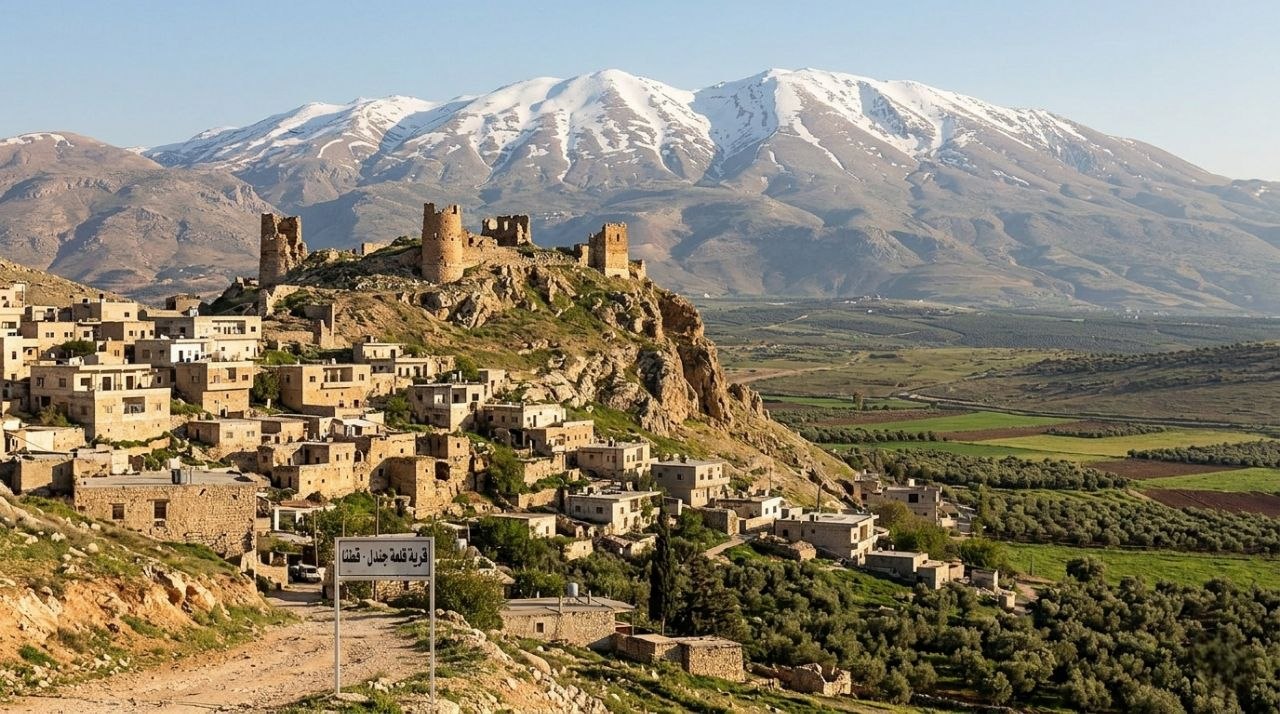
Jandal Castle (Qatana): A Hidden Fortress in Southern Syria
Jandal Castle Location and Strategic Importance
Jandal Castle stands in the mountainous countryside near Qatana, southwest of Damascus. The castle rises within the Anti-Lebanon mountain range. This high position gave it a strong defensive advantage.
The surrounding terrain is rugged and elevated. This made access difficult for attackers. At the same time, it allowed defenders to monitor nearby valleys and mountain passes. These routes connected inland Syria with western regions. Controlling Jandal Castle meant controlling key movement across this area.
History of Jandal Castle
Jandal Castle dates back to the medieval period. Most sources place its construction in the 12th century. This was a time of continuous conflict in the Levant. Crusader forces and Muslim rulers competed for control over strategic territories.
The castle formed part of a defensive network. Muslim leaders built and reinforced fortresses across southern Syria. These sites protected approaches to Damascus and secured regional routes. Jandal Castle played a supporting role in this system.
During the Ayyubid period, military organization improved. Fortresses like Jandal served as observation and defense points. They helped monitor enemy movement and protect nearby settlements.
In the Mamluk period, the castle remained in use for some time. However, its importance gradually declined. Political and military priorities shifted. Over time, the fortress was abandoned and fell into ruin.
Architecture of Jandal Castle
Jandal Castle reflects practical military design. Builders used local stone to construct thick defensive walls. These walls followed the natural shape of the hill. This improved both strength and efficiency.
The castle likely included several towers. These towers provided wide views of the surrounding landscape. This made surveillance easier and improved defense.
Inside, the layout was simple. The structure included small courtyards and basic rooms. These spaces supported soldiers and small garrisons. Storage areas for food and supplies were essential during times of conflict.
The castle did not include decorative elements. Its design focused on function rather than appearance. Today, parts of the walls and towers still remain. These ruins reveal the original structure and defensive layout.
Why Jandal Castle Matters Today
Jandal Castle is an important example of lesser-known heritage sites in Syria. It shows how smaller fortresses supported larger المدن and regional defense systems. These sites formed a network that protected trade routes and communication lines.
The castle also reflects the history of medieval conflict in the region. It connects the period of Crusader wars with Islamic military architecture. Even in ruins, it provides valuable insight into historical strategy.
Preserving such sites helps complete the historical picture. It highlights the importance of locations that are often overlooked.
How to Visit Jandal Castle
Visitors can reach Jandal Castle by traveling from Damascus toward Qatana. From there, local roads lead into the mountainous area where the castle is located.
The final part of the journey may require walking. The terrain is uneven due to the highland setting.
Travelers should check local conditions before visiting. Access may vary depending on infrastructure and safety. A local guide can provide helpful direction and historical context.
Conclusion
Jandal Castle stands as a quiet symbol of Syria’s medieval past. It was not a large fortress, but it played an important defensive role. Its location and structure made it effective in protecting regional routes.
Today, the ruins reflect centuries of history. The site offers insight into military strategy and regional life. Visiting Jandal Castle provides a deeper understanding of Syria’s hidden heritage beyond its famous landmarks.
Harem Castle Syria: History of the Ancient Fortress in Idlib
Leave a Reply