
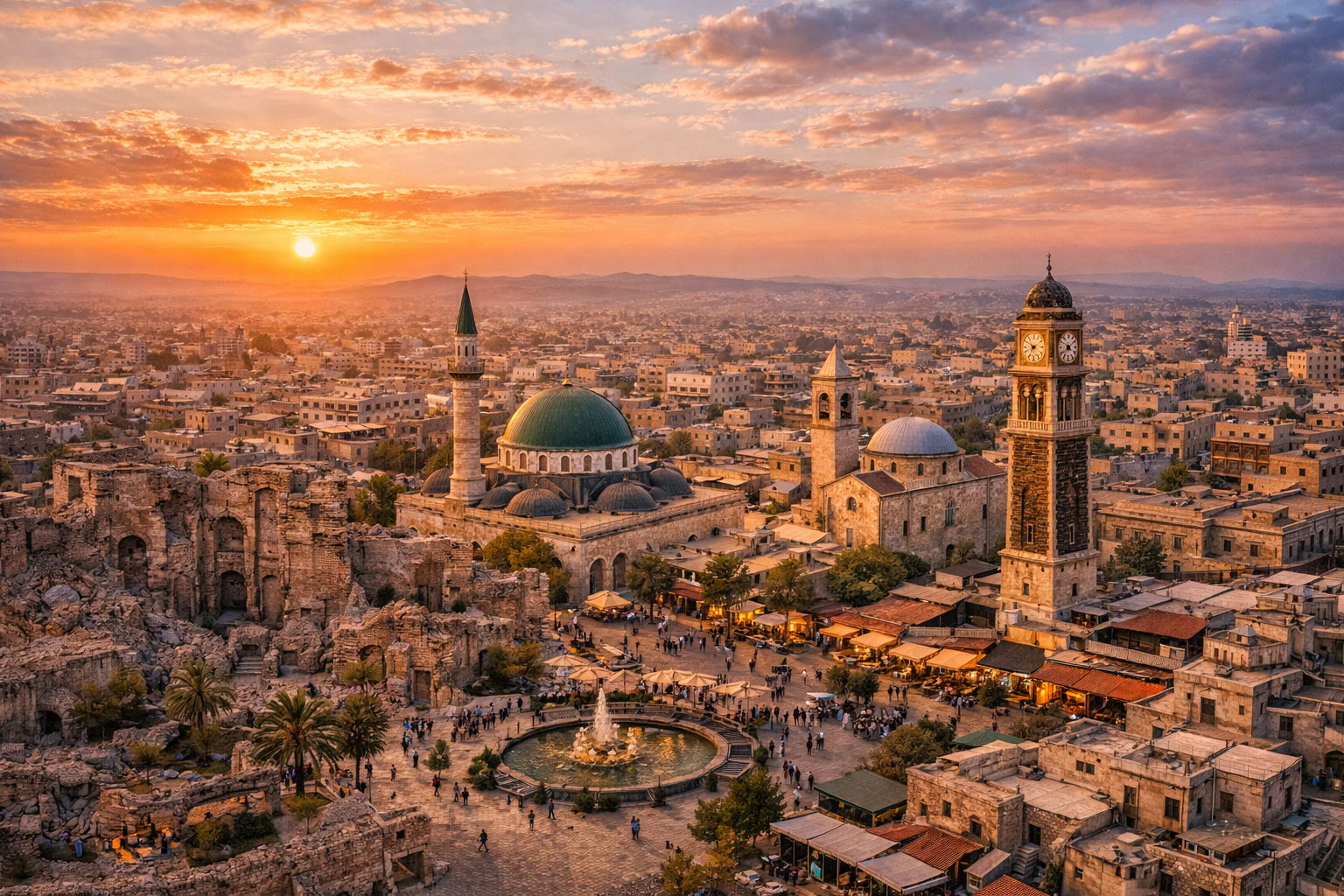
Idlib: Crossroads of Civilizations in Syria’s Green Northwest
Tucked into Syria’s fertile northwest, Idlib province is a region where geography and history have shaped one of the most culturally layered areas in the Near East. Known for its rolling olive groves, ancient ruins, and strategic location between inland Syria and the Mediterranean world, it has served for thousands of years as a meeting point of peoples, empires, trade routes, and ideas. From Bronze Age kingdoms to classical cities, medieval fortresses, and modern agricultural towns, its story represents a condensed history of the eastern Mediterranean.
Location – Where Plains Meet Mountains
Idlib province lies in northwestern Syria, bordering Turkey to the north. Its varied landscape has shaped both its economy and historical importance. To the west rise the coastal mountain ranges, while the east opens toward the plains of Aleppo. Moreover, the Orontes River basin and several valleys contribute to the region’s agricultural richness. As a result, the province has long been one of Syria’s traditional breadbaskets.
Its position between Aleppo, Latakia, and Hama makes it a natural corridor linking inland Mesopotamian-influenced cultures with Mediterranean civilizations. For millennia, armies, merchants, pilgrims, and scholars have passed through this region.
Idlib in Antiquity – Kingdoms Beneath the Soil
Human settlement in the region dates back to deep prehistory. However, it rose to major prominence during the Bronze Age. One of the most important archaeological sites is Ebla (Tell Mardikh), located south of modern Idlib city. Ebla was the capital of a powerful kingdom around 2500–2300 BCE and is one of the most significant discoveries in Near Eastern archaeology.
Thousands of clay tablets revealed an advanced administrative system, diplomatic relations, and an early Semitic language. Consequently, these records transformed modern understanding of ancient Syria and demonstrated that urban civilization here was as sophisticated as in Mesopotamia and Egypt.
After Ebla’s fall, the region came under successive powers including the Akkadians, Amorites, Hittites, and Arameans. Each civilization left traces, turning the province into a mosaic of layered cultures.
Hellenistic and Roman Idlib – Cities of Stone
Following the conquests of Alexander the Great, the region entered the Hellenistic world and later became part of the Roman and Byzantine Empires. This era produced some of the most visible remains, known as the Dead Cities.
Across the limestone massif of northwestern Syria are hundreds of abandoned settlements such as Serjilla, al-Bara, and Ruweiha. These towns once thrived on agriculture, especially olives and wine, and on trade routes linking Antioch with inland Syria. The architecture reflects a blend of Roman engineering and local traditions. Basilicas, monasteries, and villas show a prosperous countryside during late antiquity. Their decline likely resulted from earthquakes, economic shifts, and changes in trade routes.
Medieval Struggles – Fortresses and Frontiers
During the medieval period, the region again became strategically important. In the early Islamic era, it integrated into networks linking Syria with Iraq and Anatolia. Later, during the Crusades, northwestern Syria became a frontier zone between Crusader states and Muslim territories. Castles and fortified sites controlled routes between Aleppo, Antioch, and the coast.
Under the Ayyubids and later the Mamluks, stability returned. The countryside remained an agricultural heartland supported by caravan routes and rural production, while villages grew around springs and fertile soils.
Ottoman Era to Modern Times
With Ottoman incorporation in the 16th century, the province became part of a vast imperial system. Rural life centered on farming, animal husbandry, and local trade. Olive oil, grains, and fruits formed the backbone of the economy. Many towns that exist today took shape during this period.
In the 19th and early 20th centuries, improved roads and administration connected the region to wider markets. After the formation of the modern Syrian state, the province developed as an important agricultural and commercial center, with its capital city serving as an administrative hub.
Agricultural Importance – The Land of Olives
One of the defining characteristics of the province is its agricultural wealth. It is famous for olive groves, many of which are centuries old. Olive oil production has long supported local livelihoods and trade. In addition, farmers cultivate wheat, barley, figs, almonds, and vegetables.
The Mediterranean climate, fertile soils, and rolling terrain have supported farming since antiquity. The prosperity of Roman-era towns and medieval villages was built on the same agricultural base that sustains communities today.

Cultural and Historical Significance
The province holds exceptional cultural importance. Bronze Age archives reshaped knowledge of ancient diplomacy and languages. Roman and Byzantine rural architecture survives in remarkable detail. Layers of pagan, Christian, and Islamic history coexist in ruins and living traditions. Trade routes linked inland and coastal civilizations for thousands of years.
For historians and archaeologists, the region is an open-air archive. Each hill may conceal a buried city, and each ruined church or village reflects changing economies, beliefs, and technologies.
Idlib Today – Continuity and Presence
Today, history and daily life exist side by side. Modern towns often stand near ancient ruins, and farmers still harvest olives from landscapes shaped by past generations. Markets, schools, and workshops reflect contemporary Syrian life, while the stones of forgotten cities overlook the valleys.
A video about the city of Idlib is available on our YouTube channel.
Despite many challenges, the continuity of settlement remains striking. The same geographical advantages that attracted ancient kingdoms continue to define the region’s role.
Damascus: The Fragrant City Where History Never Sleeps
A Living Crossroads
The province is not merely a backdrop to history. It is an active stage where civilizations rose, adapted, and endured. From Ebla’s archives to Roman churches, medieval frontiers, and modern villages, the region has preserved a strong connection to its land.
Walking through its countryside feels like traveling through time. In this green corner of northwestern Syria, the past is not distant. It stands in stone, grows in orchards, and lives in the memory of the land itself.
Leave a Reply