
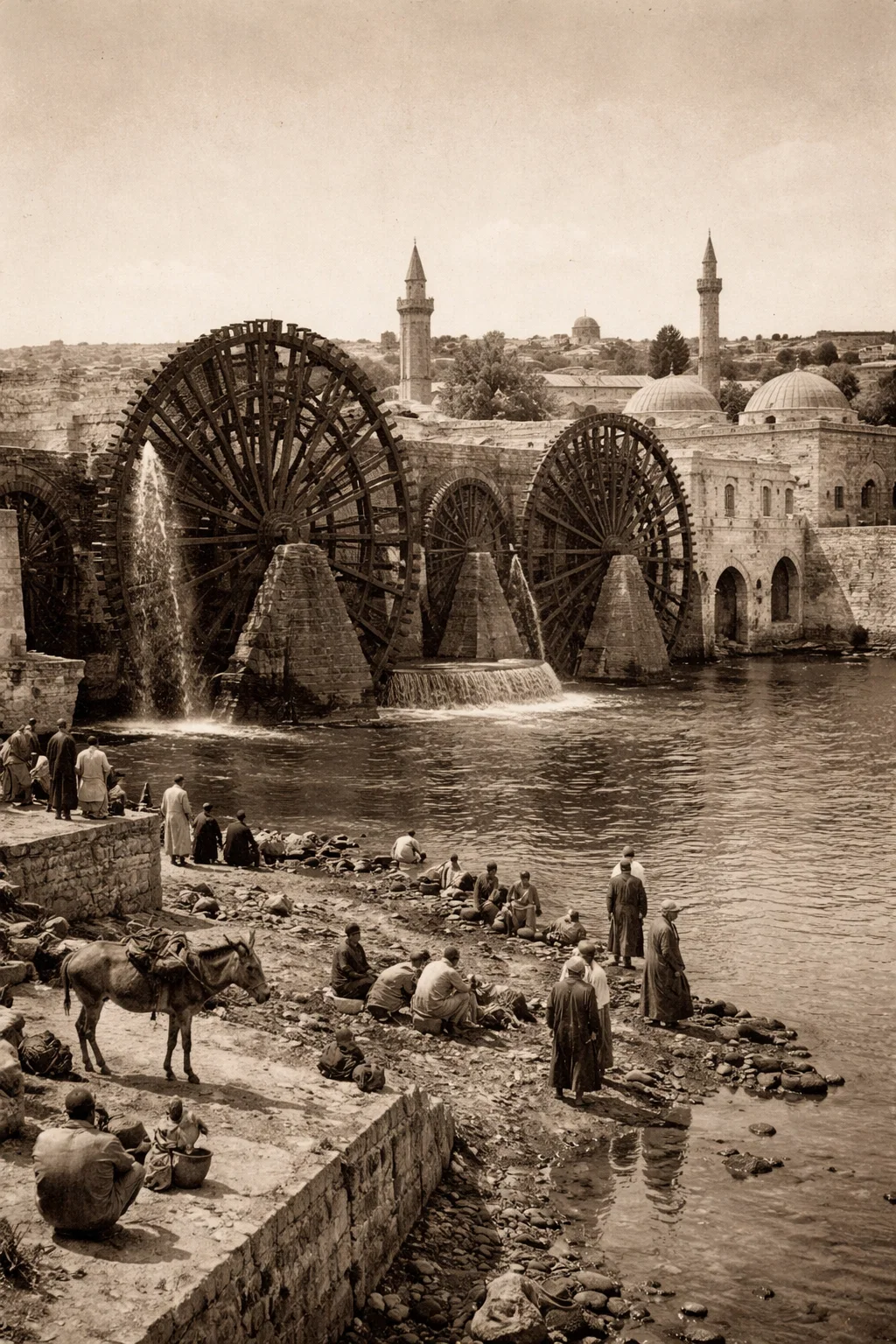
Hama Water Wheels (Norias) — Timeless Waterwheels of History, Culture, and Engineering
The Hama Water Wheels, locally known as Norias, rank among the most remarkable historic landmarks in Syria and the Middle East. For centuries, these towering wooden structures have defined the identity of the city of Hama. Rising along the calm flow of the Orontes River, they represent both practical ingenuity and cultural heritage.
Although the norias once served essential agricultural and domestic purposes, today they stand as powerful symbols of Syria’s ancient engineering traditions. As a result, they continue to attract visitors fascinated by history, technology, and timeless craftsmanship.
Location and Natural Setting
Hama lies on the banks of the Orontes River (Al-Asi) in central Syria, approximately 210 kilometres north of Damascus. The river winds through the heart of the city, dividing it into distinct quarters. More importantly, it provides a vital water source in an otherwise semi-arid region.
Along these riverbanks, the norias rise prominently above the water. Some wheels reach nearly 21 metres in diameter, making them among the largest historic waterwheels ever constructed.
The most famous norias stand in the city centre, near old stone bridges, gardens, and public parks. Consequently, many are easily visible from riverside walkways and cafés. This setting makes the Orontes riverfront a popular gathering place for both locals and tourists.
What Are Norias?
Meaning and Origin of the Name
The word noria comes from the Arabic nāʿūra (plural nawāʿīr), which means “the groaning one.” This name reflects the deep, rhythmic sound produced as the wooden wheel slowly turns with the river’s current.
Over time, this sound became inseparable from the identity of Hama itself. Even today, the creaking rhythm evokes memories of the city’s past.

Historical Evolution of the Hama Water Wheels (Norias)
Early Origins of Hama Water Wheels in Antiquity
The origins of waterwheels along the Orontes River date back many centuries. In fact, evidence suggests that Hama Water Wheels (Norias) existed as early as the Roman and early Islamic periods.
Notably, mosaics discovered in nearby Apamea depict waterwheel designs dating to around 350 CE, indicating early use of similar technology near Hama.
Medieval Development of the Hama Norias
However, the surviving Hama Water Wheels can be dated with greater certainty to the medieval period. Two of the most famous examples still standing today are:
Noria al-Muhammadiya — constructed in 1361 CE during the Mamluk era. It is among the largest norias, measuring about 21 metres in diameter.
Noria al-Ma’muriyya — built in 1453 CE during the early Ottoman period. It matches the Muhammadiya in both scale and importance.
For nearly five centuries, these massive wheels were the tallest waterwheels in the world. As a result, they demonstrate the advanced hydraulic engineering achieved by medieval Muslim societies.
Ottoman Peak of the Hama Water Wheels System
During the Ottoman era, the Hama Water Wheels (Norias) reached their peak. At that time, dozens of wheels lined the Orontes River.
In fact, historical records indicate that over 100 norias once operated across the Hama governorate. Together, they supplied water for agriculture and urban life.
Role of the Hama Water Wheels: Past and Present
Historical Role of Hama Water Wheels
Historically, the Hama Water Wheels were essential to daily life. They supplied water for:
Irrigating farmland and orchards
Supplying mosques and public bathhouses
Providing water to riverside homes and gardens
Moreover, Ottoman-era travel accounts describe communities organized around the rhythms of the Hama Norias, including maintenance teams and scheduled water access.
Transition to Modern Times
With the arrival of modern irrigation pumps in the 20th century, the role of the Hama Water Wheels gradually declined.
A major turning point came in 1960 with the construction of the Rastan Dam upstream. Consequently, water levels in the Orontes dropped, reducing the wheels’ effectiveness.
By the 1970s, many norias were no longer operational. Nevertheless, restoration efforts later in the century preserved several wheels, transforming them into cultural landmarks rather than functional infrastructure.
Cultural Significance of the Hama Norias
The Hama Water Wheels (Norias) are deeply embedded in the city’s identity. Locals often refer to Hama as “Umm al-Nawa’ir” — the Mother of Waterwheels.
Additionally, the norias appear in local art, poetry, photography, and folklore.
Their slow rotation and creaking wood create a unique sensory experience. Over time, they have even appeared on Syrian stamps, symbolizing harmony between humans and nature.
Hama Water Wheels Today: Tourism and Visitor Experience
Surviving Hama Norias Along the Orontes River
Today, around 17 historic Hama Water Wheels remain. Although they no longer irrigate fields, they are carefully preserved as heritage monuments.
Popular norias include:
Noria al-Muhammadiya — the largest and most iconic
Noria al-Ma’muriyya — located near the old stone bridge
Smaller wheels such as Al-Jisriyya and Al-Bishriyya
The best time to visit is early morning or late afternoon, when the light is soft and the river is calm.
How to Reach the Hama Water Wheels (Norias)
Access and Transportation
By Air: Fly to Damascus or Aleppo, then travel by car or bus to Hama.
By Road: Hama is well connected by national highways.
Local Transport: Taxis and guided tours commonly include the Hama Norias as a main attraction.
Once in the city, most waterwheels are within walking distance of the riverfront.
Practical Information for Visiting Hama Water Wheels in 2026
Entry and Tickets
Currently, there is no official entrance fee to visit the Hama Water Wheels (Norias). Most travel guides describe them as free public heritage sites.
However, some guided tours may include optional paid services such as cafés or photography sessions. Walking along the river and viewing the norias remains free.
Video about the waterwheels of Hama on our YouTube channel
If you are joining a tour package from abroad, there may be combined tour fees covering transport, guides, and access to multiple sites — but these are separate from specific noria entry fees.
Qasr al-Banat in Raqqa: History and Facts About the Ancient Palace
Conclusion: Why Hama Water Wheels (Norias) Matter
Hama Water Wheels are not just historical machinery; they are living symbols of human ingenuity, representing a time when engineers solved vital water challenges with simple, elegant mechanisms. They connect visitors to centuries of Syrian history, rural life, and engineering skill.
Today, these waterwheels continue to draw travellers curious about ancient technologies, architectural beauty, and the cultural heart of Hama. Standing beside them, one hears not just the echoes of flowing water, but centuries of human life shaped by nature, knowledge, and community.
Leave a Reply