
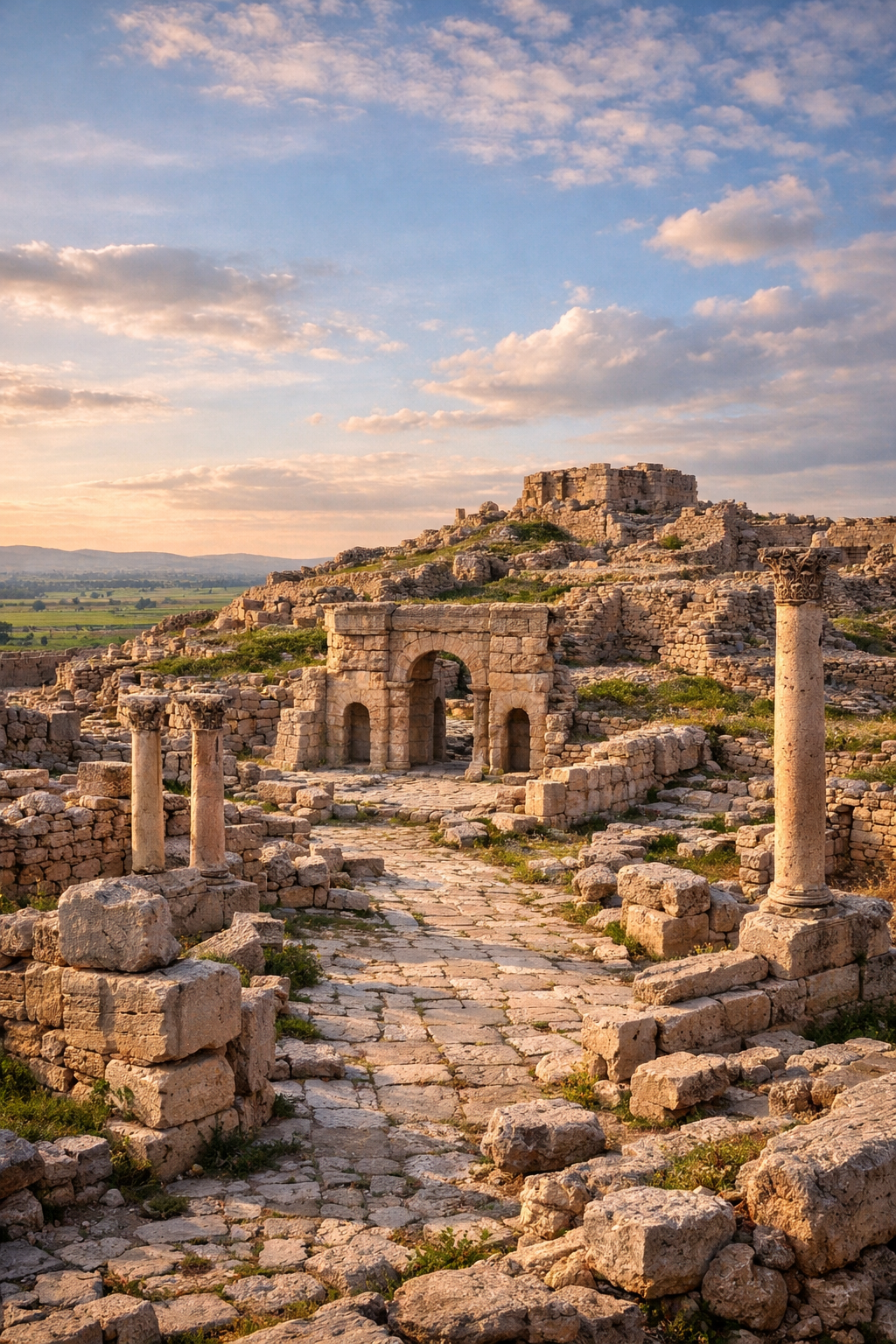
Ebla is an ancient city in northern Syria, located near Idlib. Ebla is famous for its archaeological discoveries, including thousands of ancient clay tablets that reveal the history of early civilizations in the Middle East.
Introduction: A Lost City Rediscovered
Nestled in the rolling plains of northwestern Syria lies one of the most remarkable archaeological treasures of the ancient Near East — Ebla. Known in modern times as Tell Mardikh, this ancient city once ruled much of northern Syria and beyond during the third millennium BCE. Its ruins and clay tablets have transformed our understanding of early urban civilization in the Levant, illuminating a chapter of history that had long been obscured by time.
Where Ebla Is and Why It Matters
Ebla is located in the Idlib Governorate of northwestern Syria, approximately 50–55 kilometers southwest of Aleppo and near the village of Mardikh. Positioned atop a promontory rising from the fertile plain, this strategic location made the city a hub of commerce, culture, and power in the ancient world. Its name — possibly meaning “white rock” — reflects the limestone base upon which the city stood.
Long before Syria became known for modern political struggles, it was home to some of the earliest and most influential civilizations on Earth. Ebla stands out not only for its scale and complexity but also for the sheer volume of written records unearthed there — a discovery that would shake the foundations of Bronze Age history.

The Rise of a Bronze Age Power (c. 2600–2240 BCE)
Ebla rose to prominence in the mid-3rd millennium BCE, flourishing as a powerful city-state that dominated trade, politics, and culture across northern Syria, parts of Mesopotamia, and Lebanon. It enjoyed commercial and diplomatic ties with far-reaching centers such as Egypt, Iran, and Sumer, making it one of the most cosmopolitan and influential powers of the early Bronze Age.
Agriculture in the fertile surrounding plains sustained the city economically, producing grains, olives, grapes, and flax. Textiles, especially linen and wool — including high-quality damask cloth — were manufactured here, making Ebla a bustling industrial hub. Other important activities included metalworking (with gold, silver, copper, tin, and lead), woodworking, and the production of olive oil, wine, and beer.
The Discovery That Changed History: The Ebla Tablets
The most breathtaking discovery at Ebla came during Italian-led excavations beginning in 1964. In 1975, archaeologists uncovered the Royal Ebla Archive, a cache of more than 17,000 clay cuneiform tablets dating back to around 2350 BCE. These tablets, written in Eblaite and Sumerian, include administrative records, letters, tax lists, inventories, diplomatic treaties, and lexical lists — offering an unprecedented window into the political, economic, cultural, and social life of an early urban civilization.
Far from being merely random documents, these texts reveal an advanced system of governance, trade networks stretching across regions, and even evidence of education through student exercises and bilingual word lists. The depth of information they provide has made Ebla one of the richest archaeological sources for understanding the ancient Near East.
Ups and Downs: Wars, Destruction, and Rebirth
Ebla’s history is marked by cycles of conquest, destruction, and recovery over the centuries. Around 2240 BCE, the city was likely destroyed by forces connected with the Akkadian Empire. It later enjoyed a revival under an Amorite dynasty, only to be finally razed around 1600 BCE during widespread regional upheaval.
Despite these setbacks, the ruins that remained — defensive walls, palace complexes, drainage systems, and ceremonial structures — have continued to tell the story of a powerful and sophisticated society. Today, archaeological work has begun anew, as teams carefully assess damage from recent conflicts and restore what they can, including part of the “Sanctuary of the Deified Ancestors.”
Modern Significance and Cultural Legacy
Ebla is far more than a pile of ancient bricks. It represents:
- One of the earliest known urban civilizations in the Levant.
- A major center of early literacy and administration, thanks to its vast library.
- A source of linguistic insight, revealing the existence of the previously unknown Eblaite language.
- A key to understanding Bronze Age politics, trade, law, economy, and religion.
Artifacts uncovered at Ebla — especially the clay tablets — are housed and studied in institutions including the Idlib Museum, which plays a modern cultural role in preserving Syria’s ancient heritage. Despite war-related damage and looting, efforts continue to protect and display these treasures.
How to Reach Ebla Today
Visiting Ebla as a tourist requires careful planning due to ongoing security issues in Syria. Here’s a general idea of how the site might be approached — always subject to change due to local conditions and international guidance:
- Fly into Syria via major cities like Damascus or Aleppo (when international flights resume).
- Travel by road southwest from Aleppo toward Idlib Governorate and then east toward the village of Mardikh. The ancient site sits near modern roads but requires local guidance.
- Hire local guides or tour operators experienced in archaeological travel and current safety conditions.
Also watch a video about the ancient city of Ebla on our YouTube channel.
Due to political and security complexities, many visitors choose to reach the area with professional tour support that understands local regulations and can offer safe access, accommodations, and transportation. Prior travel advisories from foreign ministries are essential before planning a trip.
Dura-Europos: History and Facts About the Ancient Desert City in Syria
Conclusion: Why Ebla Still Matters
Ebla stands as both a window into the distant past and a symbol of cultural resilience. From its heyday as a powerful Bronze Age city to its rediscovery in the 20th century, Ebla has profoundly shaped modern understanding of ancient civilization in the Levant. Its vast archives, strategic prominence, and long-lasting influence make it an indispensable piece of world history — and a testament to humanity’s enduring hunger to connect with our earliest roots.
Maarrat al-Numan Castle: History and Facts About the Ancient Fortress in Syria
Leave a Reply