
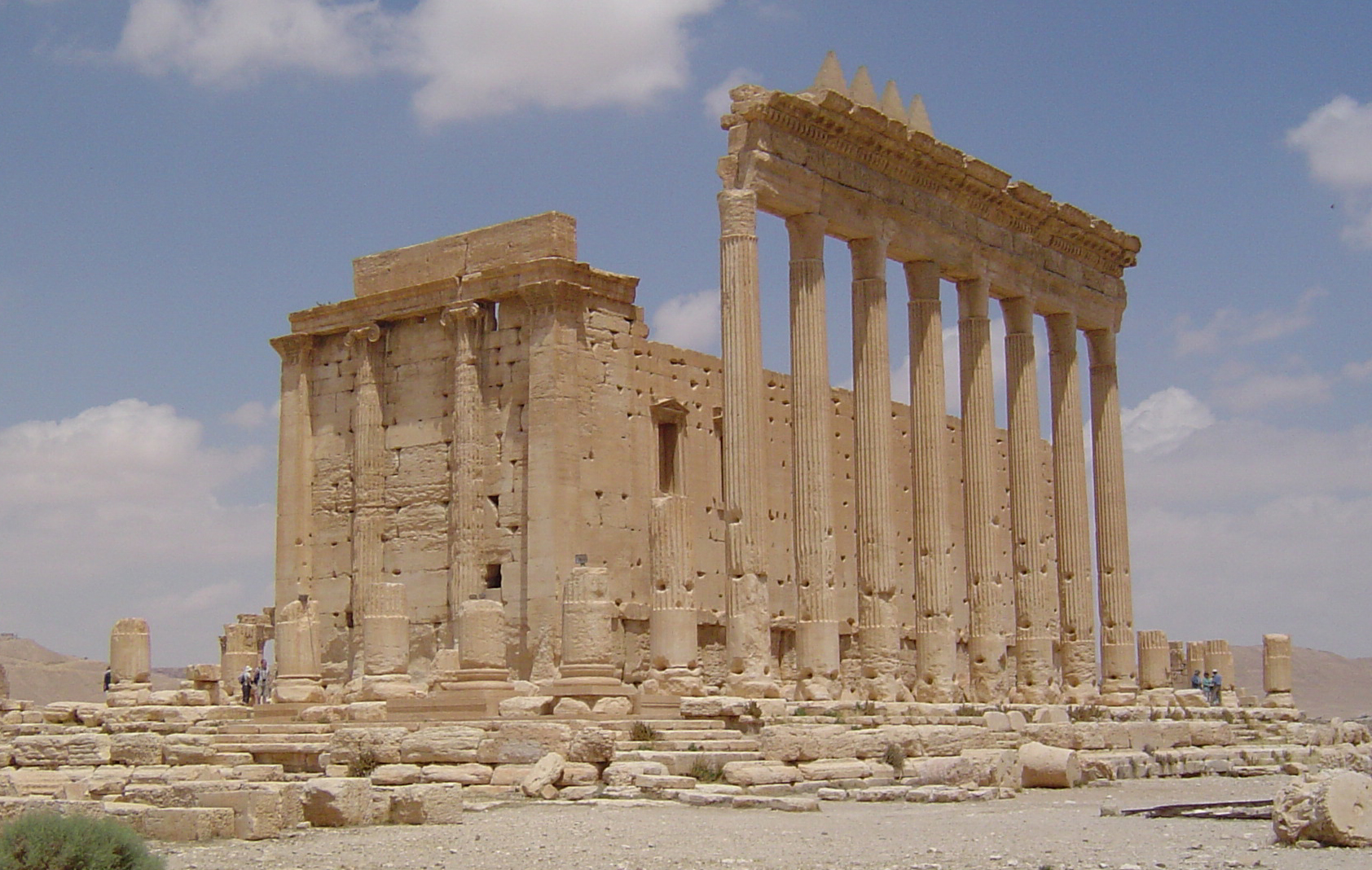
Dura-Europos is an ancient city in eastern Syria, located near the Euphrates River, famous for its Roman, Parthian, and early Christian and Jewish heritage.
Rising above the Euphrates River in eastern Syria, Dura-Europos represents one of the most revealing archaeological sites of the ancient world. Rather than showcasing imperial grandeur alone, the city preserves intimate details of everyday life where cultures, languages, and religions met on the edge of empires.
📍 Geographic Setting and Strategic Importance
The ruins lie within today’s Deir ez-Zor Governorate, positioned on a plateau nearly 90 meters above the riverbank. Because of this elevated terrain, the settlement enjoyed natural defenses on three sides while maintaining direct access to river trade.
As a result, the city developed into a key frontier outpost linking Mesopotamia with the Mediterranean world.
🏛️ Foundation and Imperial Transitions
Seleucus I Nicator founded the city around 300 BCE as part of the Seleucid Empire. Over time, however, control shifted repeatedly. The settlement prospered under Parthian administration before Roman forces incorporated it into their eastern frontier during the 2nd century CE.
Eventually, a Sasanian assault in the mid-3rd century led to its abandonment. Consequently, wind-blown sand sealed streets and buildings, unintentionally preserving them for future discovery.

🏘️ Daily Life and Religious Diversity
What makes this site exceptional is not monumental scale, but cultural detail. Excavations uncovered homes, military quarters, and religious buildings that reveal a remarkably pluralistic society.
Among the most significant finds are:
A richly painted synagogue illustrating biblical scenes
An early Christian house church adapted from a private residence
A Mithraic temple linked to Roman soldiers
Shrines dedicated to Greek and local Semitic deities
Together, these discoveries demonstrate how diverse communities coexisted within a single urban landscape.
🔍 Archaeological discoveries and research in Dura-Europos
For centuries, the city remained hidden beneath desert soil. In 1920, however, British troops accidentally exposed wall paintings while digging trenches. Soon after, French and American archaeologists launched systematic excavations.
Thanks to these efforts, scholars gained rare insight into urban life on Rome’s eastern border, including military routines, artistic traditions, and multilingual inscriptions.
🌍 Historical and Scholarly Significance Dura-Europos
In antiquity, the city functioned as a meeting ground rather than a barrier between civilizations. Trade, belief systems, and artistic styles blended naturally, creating a unique cultural environment.
Today, historians value the site as a key reference point for understanding religious coexistence and cultural exchange in the ancient Near East. Many artifacts now preserved in museums continue to shape academic research worldwide.
⚠️ Modern Challenges and Preservation
Unfortunately, recent decades have brought serious threats. During the Syrian conflict, looting and destruction caused extensive damage to the site. Moreover, security conditions currently prevent regular tourism access as of 2026.
Nevertheless, prior documentation and museum preservation ensure that much of its legacy survives despite these losses.
🚗 Access and Visitor Information
Under stable conditions, travelers once reached the site by road from Deir ez-Zor or via long overland journeys from Damascus. At present, however, access remains restricted, and visits require coordination with local authorities and experts.
A video about Dura-Europos is on our YouTube channel.
🎟️ Dura-Europos Entrance Fees (2026 Forecast)
Since the site is not officially open to the public, no confirmed entrance fees exist for 2026. Any future reopening would likely introduce regulated ticketing through national heritage authorities.
Salkhad Castle (Salhad): History and Facts About the Ancient Castle in Syria
Dura-Europos: Timeless Lessons from Lost Walls
Although much of this ancient city now exists only in fragments, photographs, museum collections, and academic literature, Dura-Europos stands as a powerful testament to ancient cultural exchange. Its history reflects the movement of peoples and ideas across worlds that once seemed divided by turbulence and empires, yet were bound together through trade, belief, and daily life.
Whether as a subject of historical study or an aspirational destination for future travellers, Dura-Europos continues to chart a compelling journey across time — reminding us that even lost cities can illuminate the human story.
Deir ez-Zor: History, Culture and Facts About Syria’s Euphrates City
Leave a Reply