
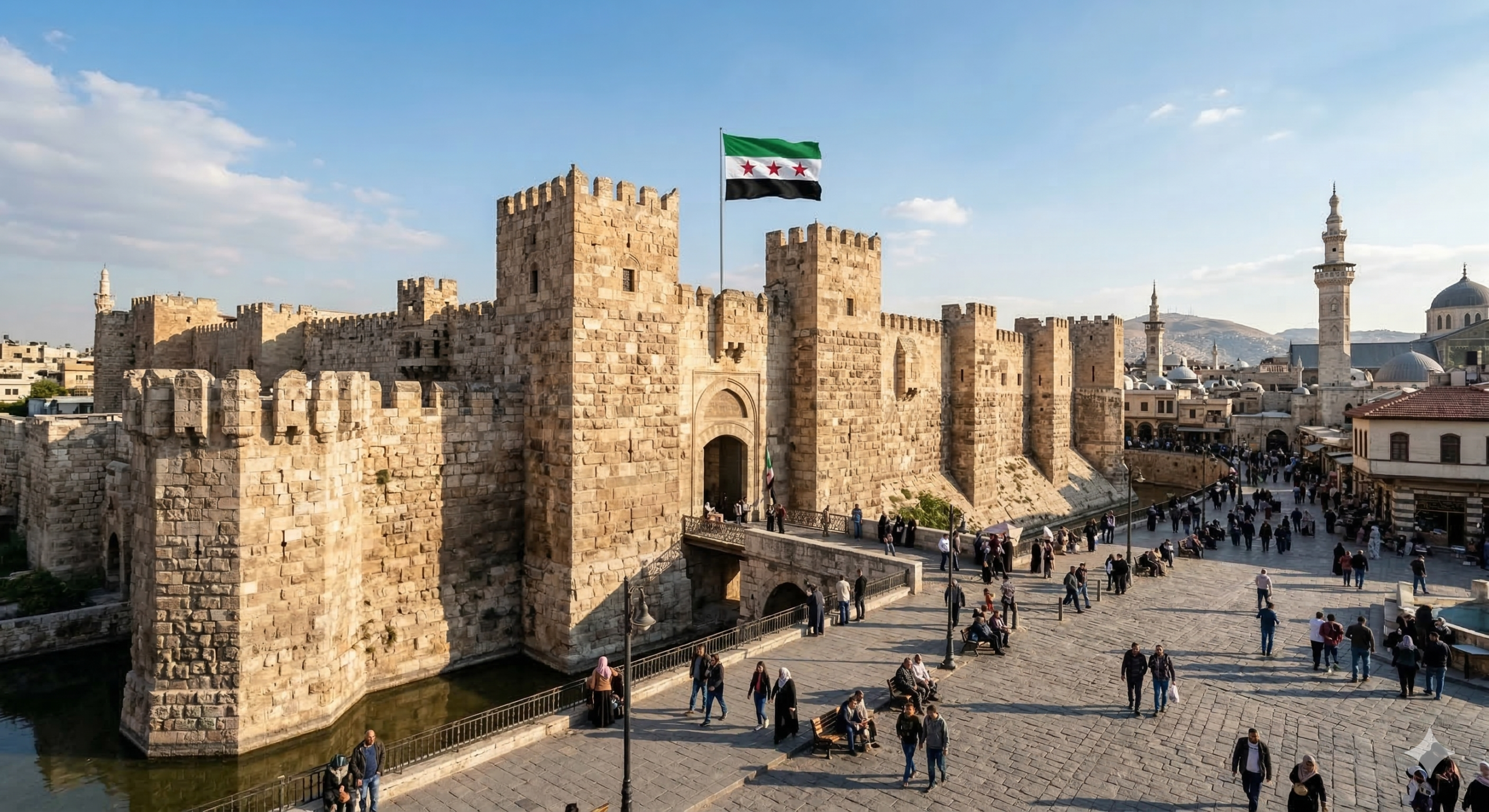
Citadel of Damascus: The Historic Fortress at the Heart of the Ancient City
Introduction
The Citadel of Damascus (Arabic: قلعة دمشق) is one of the most important historical landmarks in the Syrian capital. Located in the northwestern corner of the Old City of Damascus, the fortress has stood for centuries as a symbol of military strength and urban protection.
Because of its strategic location near the ancient city walls and markets, the citadel played a central role in defending Damascus and controlling important trade routes. Today, it remains a powerful reminder of the city’s long and complex history.
Location and Strategic Setting
The Citadel of Damascus stands along the northern edge of the Old City, close to the historic markets and major city gates. As a result, the fortress once guarded the most important entrances to Damascus.
The citadel is located near the famous Bab al-Faradis and Bab al-Jabiyah, two historic gates that connected Damascus with surrounding regions.
Moreover,Builders constructed the citadel close to the Barada River. which helped supply water to the city and strengthened the defensive position of the citadel.
Because of this strategic setting, the citadel became one of the most important military sites in medieval Syria.
Origins and early history of the Citadel of Damascus
The origins of the Citadel of Damascus date back to the Seljuk period in the 11th century. However, earlier fortifications likely existed on the same site during previous eras.
Later,Nur ad-Din Zengi rebuilt and expanded the fortress during his rule, an important Muslim leader who strengthened the city’s defenses in the 12th century.
Afterward, the citadel underwent major reconstruction under Saladin and the Ayyubid dynasty. They transformed the fortress into a powerful military complex with towers, thick walls, and defensive gates.
These improvements made the citadel a key stronghold in protecting Damascus during periods of conflict and political change.
Architecture and Defensive Design
The Citadel of Damascus was designed as a large rectangular fortress with massive stone walls and several defensive towers.
In addition, the structure included fortified gates, guard rooms, and inner courtyards. These features allowed soldiers to defend the city while controlling movement around the walls.
The fortress was surrounded by defensive walls and once connected directly to the larger fortifications of the Old City.
Furthermore, builders used strong limestone blocks to construct the towers and walls. This durable design helped the citadel survive centuries of warfare and natural aging.
Historical Role Through the Centuries
For many centuries, the Citadel of Damascus served as the military headquarters of the city.
During the Ayyubid and Mamluk periods, it functioned as a strategic fortress protecting the capital of the region.
Later, under the Ottoman Empire, the citadel continued to serve administrative and military purposes. Although its role gradually changed, it remained an important landmark inside the city.
Over time, parts of the fortress were damaged by earthquakes and conflicts. However, several sections of the original structure still survive today.
The Citadel of Damascus Today
Today, the Citadel of Damascus remains one of the most important historical monuments in the city.
Although access to some parts of the fortress is limited, the structure still dominates the northern edge of the Old City skyline.
In recent years, historians and archaeologists have worked to preserve and study the site. These efforts aim to protect the citadel as part of Damascus’s cultural heritage.
The fortress also forms part of the broader historic landscape of Ancient City of Damascus, which is recognized as one of the oldest continuously inhabited cities in the world.
How to Reach the Citadel of Damascus
Visiting the Citadel of Damascus is easy because it lies within the historic center of the city.
On Foot
Most visitors reach the citadel by walking through the narrow streets of the Old City. The fortress is located near traditional markets and historic districts.
From the Umayyad Mosque
The famous Umayyad Mosque is located only a short distance away. From there, visitors can walk through the old markets toward the northern city walls.
Local Transport
Taxis and local transport can bring visitors close to the Old City entrances. After that, the citadel is only a short walk away.
Why the Citadel of Damascus Matters
The Citadel of Damascus is more than just an old fortress.
First, it represents centuries of military architecture and urban defense.
Second, it reflects the political and cultural history of Damascus through different Islamic dynasties.
Finally, it stands as a symbol of the endurance of one of the world’s oldest cities.
Despite wars, earthquakes, and the passage of time, the citadel remains a powerful landmark that connects modern Damascus with its medieval past.
Leave a Reply