
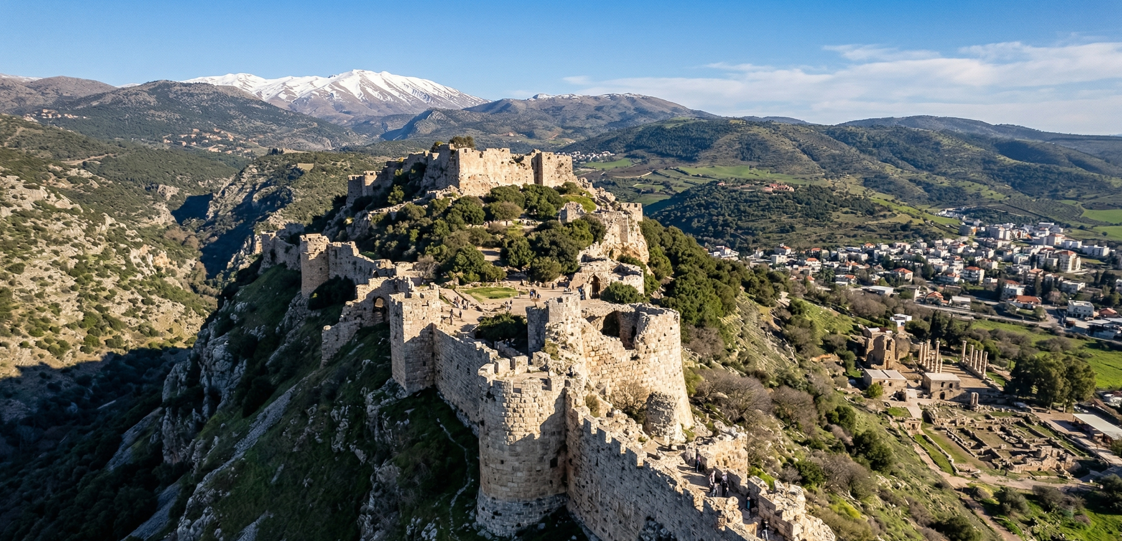
Baniyas Castle: A Coastal Fortress Guarding the Syrian Shore
Location and Strategic Importance of Baniyas Castle
Baniyas Castle stands above the coastal city of Baniyas on the Mediterranean shoreline of western Syria. The fortress overlooks the narrow coastal corridor that connects the ports of Latakia and Tartus with inland regions.
Because of this strategic position, Baniyas Castle controlled one of the most important coastal routes in the region. This corridor has served trade caravans, travelers, and armies for centuries. As a result, the castle became a key defensive position along the Mediterranean frontier.
The surrounding terrain provided strong natural defenses. The castle stood on elevated ground near the sea, allowing wide views of both land and coastline. Therefore, guards could monitor maritime activity as well as inland movement.
In addition, the fortress formed part of a broader coastal defense network. This chain of castles protected ports, trade routes, and agricultural lands along the Mediterranean shore.
History of Baniyas Castle
Baniyas Castle dates back to the medieval period, when the eastern Mediterranean became a major frontier during the Crusades. The coastal region of Syria was one of the most contested areas between Crusader states and Islamic dynasties.
During the 12th century, coastal fortresses gained enormous strategic value. Control of ports and sea routes determined regional power. Because of this, Baniyas Castle became part of a defensive system that protected coastal cities and inland trade routes.
Over time, the fortress changed hands between competing powers. Both Crusader forces and Islamic rulers recognized the importance of the site and strengthened its defenses.
During the Ayyubid and Mamluk periods, coastal defenses were reorganized and reinforced. These dynasties worked to secure the shoreline and protect trade networks from maritime threats.
By the Ottoman era, the importance of medieval fortresses declined. Advances in military technology reduced the defensive role of such castles. As a result, Baniyas Castle gradually lost its strategic function and fell into disrepair.
Architecture of Baniyas Castle
The architecture of Baniyas Castle reflects adaptation to a coastal environment. Builders used local stone to construct thick defensive walls designed to withstand both land and sea threats.
The layout likely followed the natural contours of the terrain. This approach strengthened the fortress by using elevation and slopes as natural barriers.
Watchtowers and defensive positions allowed guards to observe the coastline and surrounding countryside. These features helped detect approaching ships or armies from long distances.
Inside the fortress, the design remained practical and functional. The castle likely included barracks, storage rooms, and open courtyards for daily military life.
Water storage systems were essential. Builders constructed cisterns to collect rainwater, ensuring a stable supply during sieges or isolation.
Today, remnants of the walls and foundations still indicate the original scale of the fortress.
Baniyas Castle and the Coastal Defense Network
Baniyas Castle operated as part of a larger defensive system along the Syrian coast. Coastal fortresses communicated through visual signals and shared responsibility for protecting the shoreline.
When guards spotted approaching ships or armies, they could alert nearby castles. This early warning system strengthened regional security and protected coastal cities and trade routes.
The castle also supported nearby agricultural and fishing communities. Protecting these resources ensured economic stability for the region.
Understanding this network helps historians reconstruct how medieval societies defended long coastlines using interconnected fortresses.
Why Baniyas Castle Matters Today
Baniyas Castle represents an important part of Syria’s maritime and coastal heritage. Although less famous than larger Crusader castles, it played a vital role in protecting the Mediterranean frontier.
The site demonstrates how geography shaped military strategy. Builders used elevation, coastline, and visibility to create effective defenses.
In addition, the castle offers insight into medieval life along the Syrian coast. It reflects the relationship between trade, defense, and regional development.
Preserving Baniyas Castle helps protect Syria’s cultural heritage and supports the growth of historical tourism.
How to Visit Baniyas Castle
Visitors can reach the castle by traveling to Baniyas along the Mediterranean highway connecting coastal cities.
From the city, local roads lead toward the elevated area where the castle stands. The final approach may involve walking on uneven terrain, so comfortable footwear is recommended.
Carrying water and sun protection is important, especially during summer. The coastal climate can be warm and humid.
Spring and autumn provide the best visiting conditions, offering moderate temperatures and clear views of the Mediterranean coast.
Visitors should always check local conditions before traveling. A local guide can provide additional historical context and improve the experience.
Conclusion
Baniyas Castle stands as a reminder of the defensive systems that once protected Syria’s Mediterranean shoreline. Its strategic position allowed guards to monitor both land and sea routes.
Over centuries, the fortress lost its military importance and became a ruin. However, its remains still tell a powerful story of coastal defense and regional history.
Today, Baniyas Castle offers visitors a chance to explore a lesser-known heritage site with stunning coastal views. It remains a cultural landmark worthy of preservation and appreciation.
Leave a Reply