
Bab Sharqi: The Timeless Eastern Gate of Damascus — A Gateway Through History
Introduction to Bab Sharqi
In the heart of Damascus — one of the oldest continuously inhabited cities in the world — stands Bab Sharqi, literally meaning “The Eastern Gate.” For nearly two thousand years, Bab Sharqi has welcomed traders, pilgrims, conquerors, and residents into the ancient city. More than a physical entrance, Bab Sharqi represents a living monument to the civilizations that shaped Damascus across Roman, Byzantine, Islamic, and modern eras.
This article explores the history, architecture, cultural significance, and modern presence of Bab Sharqi, offering insight into why it remains one of the most remarkable landmarks in Syria.
🏛️ The Roman Origins of Bab Sharqi
Bab Sharqi was constructed around 200 AD during the Roman period, when Damascus flourished as a major urban center in the eastern provinces of the Roman Empire. At that time, the gate was associated with solar symbolism and sometimes referred to as the “Gate of the Sun.”
The structure formed part of the city’s defensive walls and marked the beginning of the Decumanus Maximus — the principal east–west street of Roman Damascus. This grand avenue became known historically and biblically as the “Street Called Straight,” a road that connected Bab Sharqi in the east to Bab al-Jabiya in the west.
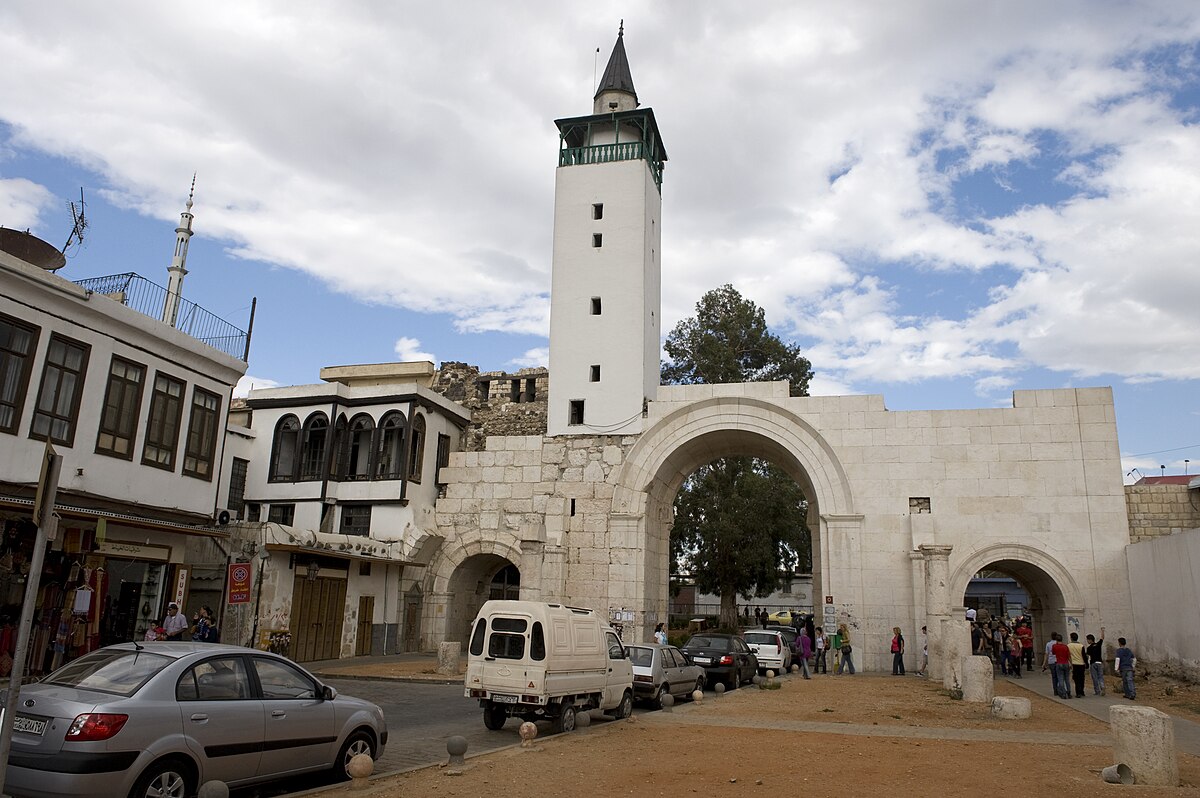
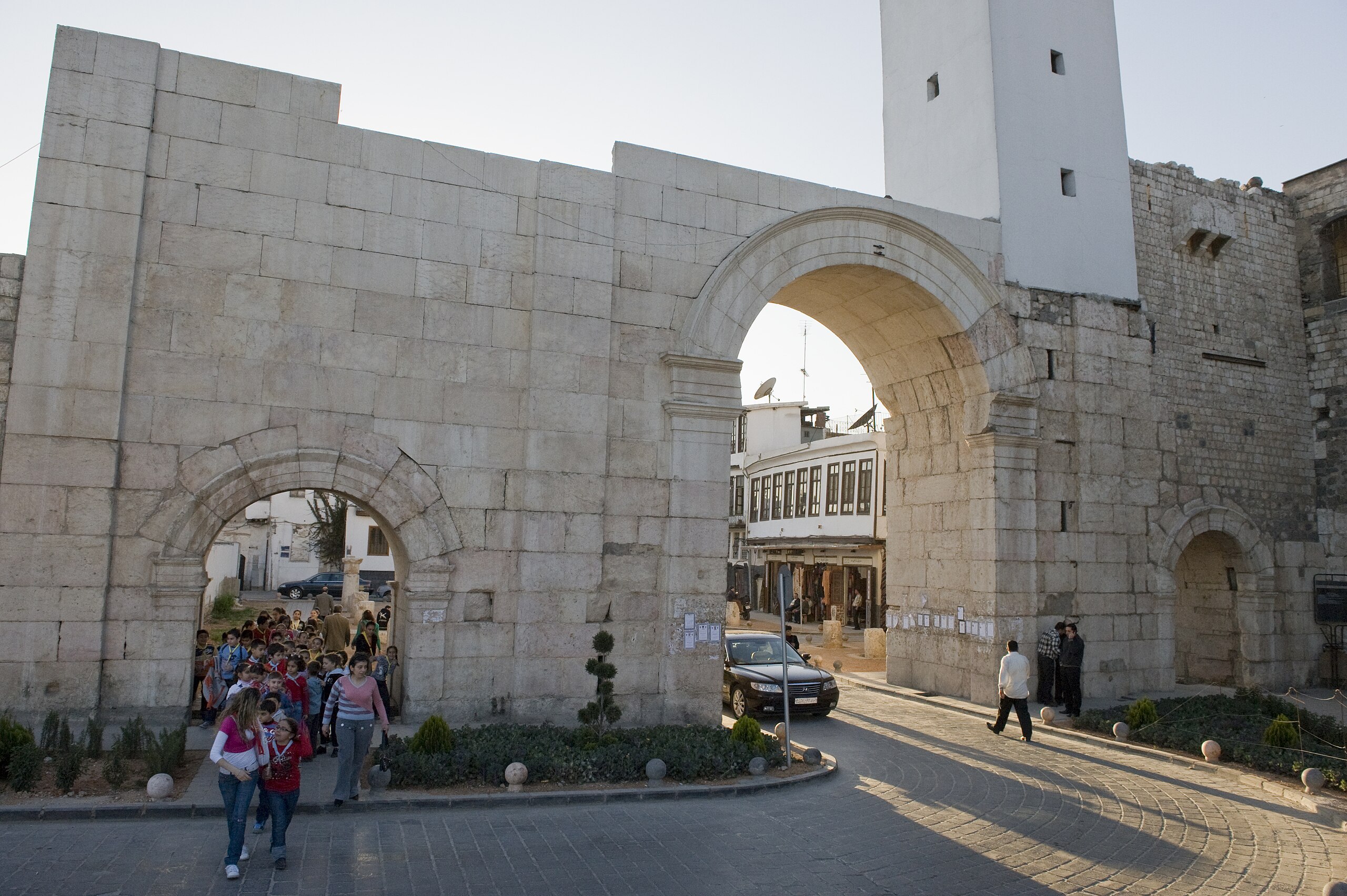
Architecturally, Bab Sharqi stands out as a rare surviving example of a triple-arched Roman city gate:
A large central arch designed for carts and caravans
Two smaller side arches intended for pedestrians
Today, Bab Sharki remains the only Roman gate in Damascus that still preserves its original triple-arched design, making it unique not only in Syria but across much of the ancient Near East.
⚔️ Bab Sharqi During the Early Islamic Conquest
In 634–635 AD, during the early Islamic expansion, the Muslim general Khalid ibn al-Walid reportedly entered Damascus through Eastern Gate of Damascus. This event marked a significant historical turning point, as Damascus soon became a leading center of Islamic governance and culture under the Umayyad Caliphate.
Despite the change in political authority, Bab Sharqi continued to function as a vital urban gateway. The surrounding district gradually evolved into what is now known as the Christian Quarter of Damascus, reflecting the city’s tradition of religious coexistence.
🏗️ Medieval Modifications of Bab Sharqi
During the 12th century, the ruler Nur ad-Din ordered structural modifications to Eastern Gate of Damascus. Portions of the gate were reinforced, and some entrances were partially blocked to strengthen defenses.
One of the most distinctive additions from the medieval period was the construction of a minaret above the gate. This architectural feature altered the silhouette of Eastern Gate of Damascus and visually reflected the Islamic character of the city while preserving its Roman foundations.
The combination of Roman arches and Islamic additions makes Bab Sharqi a layered architectural document of Damascus’s evolving identity.
✝️ Bab Sharqi and the Street Called Straight
The road extending westward from Eastern Gate of Damascus — historically known as the Street Called Straight — carries biblical significance. In the New Testament, Saul of Tarsus (later known as Paul the Apostle) was instructed to go to a house on this street following his dramatic conversion experience.
This connection links Bab Sharqi directly to early Christian history, reinforcing its importance as more than a military structure. It serves as a bridge between Roman urban planning and Christian tradition.
🌍 Cultural Importance of The Eastern Gate of Damascus
Historical Significance
Bab Sharqi exemplifies Roman urban engineering in the Levant. Its preserved triple-arched design demonstrates the sophistication of Roman infrastructure and the durability of ancient construction techniques.
Its later modifications reflect Damascus’s transformation under Islamic rule, showing how cities adapt while preserving earlier foundations.
Interfaith Heritage
Located near the Christian Quarter, Eastern Gate of Damascus stands close to historic churches, monasteries, and traditional Damascene houses. The coexistence of mosques and churches within walking distance highlights Damascus’s multicultural and multireligious past.
🏙️ Bab Sharqi in Modern Damascus
Today, Bab Sharqi remains a vibrant entrance to Old Damascus. The surrounding streets are filled with:
Traditional artisan workshops
Cafés and restaurants
Restored Damascene courtyard houses
Small hotels and cultural spaces
Locals and visitors walk daily along the Street Called Straight, following a route that has remained in use for nearly two millennia.
Despite urban changes and occasional restoration efforts, Eastern Gate of Damascus continues to serve both as a historical monument and as a functioning part of city life.
📍 Location and How to Reach Bab Sharqi
Bab Sharqi is situated on the eastern edge of Old Damascus.
Getting There
On Foot: From the Umayyad Mosque, Eastern Gate of Damascus is approximately a 15–20 minute walk eastward through the Old City.
Taxi or Public Transport: Visitors can take a taxi to the perimeter of Old Damascus and enter on foot.
Walking Route: Midhat Pasha Street provides a direct historic pathway toward the gate.
The approach offers an immersive experience of stone arches, bustling markets, and centuries-old architecture.
🏛️ Why Eastern Gate of Damascus Remains Timeless
Bab Sharqi is more than an ancient structure of stone. It is:
A surviving example of Roman engineering
A witness to early Islamic expansion
A landmark tied to Christian biblical history
A living gateway within modern Damascus
Every person who passes beneath its arches becomes part of a story that stretches back nearly two thousand years.
Bab Touma Damascus: Historic Gate and Christian Quarter Guide
Conclusion
Bab Sharqi stands as a portal through time. From Roman imperial ambition to Islamic governance and Christian heritage, the gate reflects the layered history of Damascus itself.
For travelers, historians, and spiritual seekers alike, Eastern Gate of Damascus offers more than an architectural experience. It provides entry into one of humanity’s oldest living cities — a place where past and present remain inseparably intertwined.
Leave a Reply