
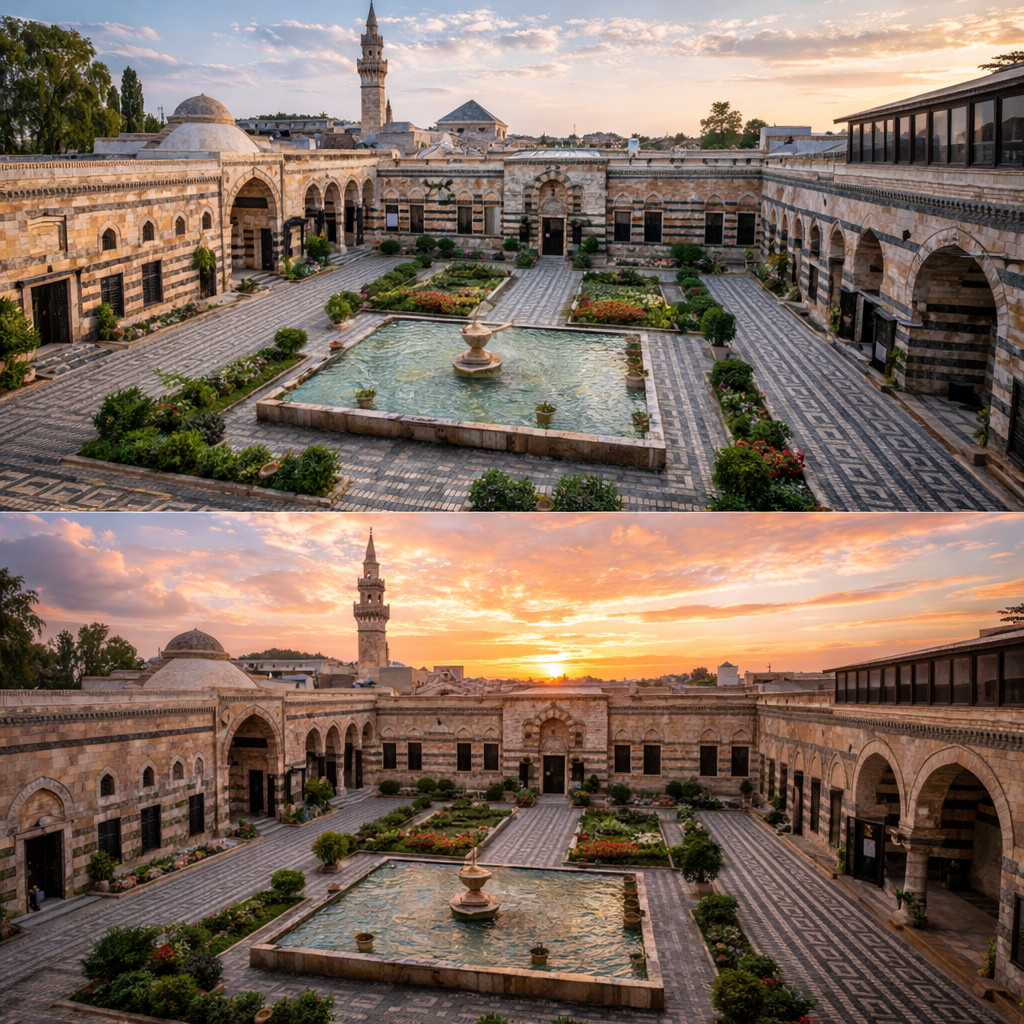
Azm Palace Damascus is a historic Ottoman palace in Damascus, Syria, famous for its beautiful Islamic architecture, courtyards, and cultural importance.
Located in the heart of the Old City of Damascus, one of the world’s oldest continuously inhabited capitals, Azem Palace (Qasr al-Azm) stands as a remarkable example of 18th-century Ottoman domestic architecture. Today, the palace offers visitors a vivid glimpse into traditional Damascene life, blending history, culture, and art within its elegant courtyards.
A Grand Vision: History of Azm Palace
Historically, Asʿad Pasha al-Azm, the Ottoman governor of Damascus, commissioned Azm Palace in 1749 as his private residence. As a member of the influential al-Azm family, he intended the palace to reflect authority, refinement, and cultural prestige.
At the time, master craftsmen from across the region worked on its construction, combining Ottoman architectural principles with local Syrian traditions. As a result, the palace quickly became a center of political and social life in Damascus.
However, the palace did not escape the turbulence of modern history. During the Syrian uprising of 1925, French artillery caused significant damage to parts of the complex. Fortunately, Syrian authorities later led extensive restoration efforts in the mid-20th century, carefully preserving the palace using historical records and traditional techniques.

Architectural Beauty and Design of Azm Palace Damascus
Overall, Azm Palace represents one of the finest surviving examples of Damascene courtyard architecture. While its exterior appears modest, the interior reveals remarkable artistic richness.
Ablaq Stonework and Layout
Notably, the palace features classic ablaq masonry, which alternates light limestone and dark basalt. This technique, common in Syrian architecture, gives the walls and arches their striking striped appearance.
Courtyards and Social Space
In addition, the palace is organized around several courtyards, each serving a distinct function:
-
Haremlik – the private family courtyard with a central fountain and shaded trees
-
Selamlik – the public reception area for official guests
-
Service courtyards – spaces for kitchens, storage, and staff quarters
Together, these courtyards reflect Islamic architectural values of balance, hospitality, and harmony with nature.
Interior Details
Inside, visitors encounter painted wooden ceilings, carved doors, and richly decorated rooms. Moreover, each space carefully balances privacy and openness, which was essential in traditional Middle Eastern residential design.
From Palace to Museum: Preserving Living Traditions
Over time, Azem Palace transitioned from a private residence into a cultural institution. Today, it operates as the Museum of Arts and Popular Traditions, preserving everyday life in Damascus during the 18th and 19th centuries.
For example, the museum displays:
-
Traditional clothing and textiles
-
Handcrafted tools and household items
-
Recreated domestic scenes and ceremonies
-
A traditional kuttab (Quranic school)
-
Bathhouse and wedding settings
As a result, visitors experience Syrian heritage as a living story rather than static history. Importantly, the palace’s restoration earned the Aga Khan Award for Architecture, recognizing its excellence in cultural preservation.
Azm Palace Damascus Location in the Old City of Damascus
Geographically, Azm Palace lies just north of Al-Buzuriyah Souq and within walking distance of the Umayyad Mosque and Straight Street (Via Recta). Meanwhile, the surrounding alleys and markets continue to function as they have for centuries.
Therefore, visiting the palace also means experiencing the living urban fabric of Old Damascus.
How to Reach Azm Palace
Once in Damascus, reaching Azm Palace is straightforward:
By Foot
Most visitors explore the Old City on foot. From the Umayyad Mosque or Al-Hamidiyah Souq, walk north toward Buzuriyah Souq and follow local signs.
By Taxi
Alternatively, taxis can drop visitors near Buzuriyah or Al-Hamidiyah Souq, followed by a short walk.
Guided Tours
Additionally, many guided walking tours include Azm Palace, offering deeper historical context.
A video about the Azm Palace Damascus is on our YouTube channel.
Visiting Tips
-
Best time to visit: Morning or late afternoon
-
Opening hours: Usually open daily, though hours may vary
-
Photography: Generally allowed, especially in courtyards
For this reason, checking local updates before visiting is always recommended.
Salkhad Castle (Salhad): History and Facts About the Ancient Castle in Syria
Why Azm Palace Matters
Ultimately, Azm Palace is more than a historic building. It serves as a bridge between past and present, preserving both architectural beauty and social memory. Through its halls and courtyards, visitors witness how Damascene families lived, welcomed guests, and expressed cultural identity.
In conclusion, whether you are interested in history, architecture, or Syrian heritage, Azm Palace offers an intimate and unforgettable journey into the heart of historic Damascus.
Read also:
Tell Rifaat Archaeological Site: History and Facts About the Ancient City in Syria
Leave a Reply