
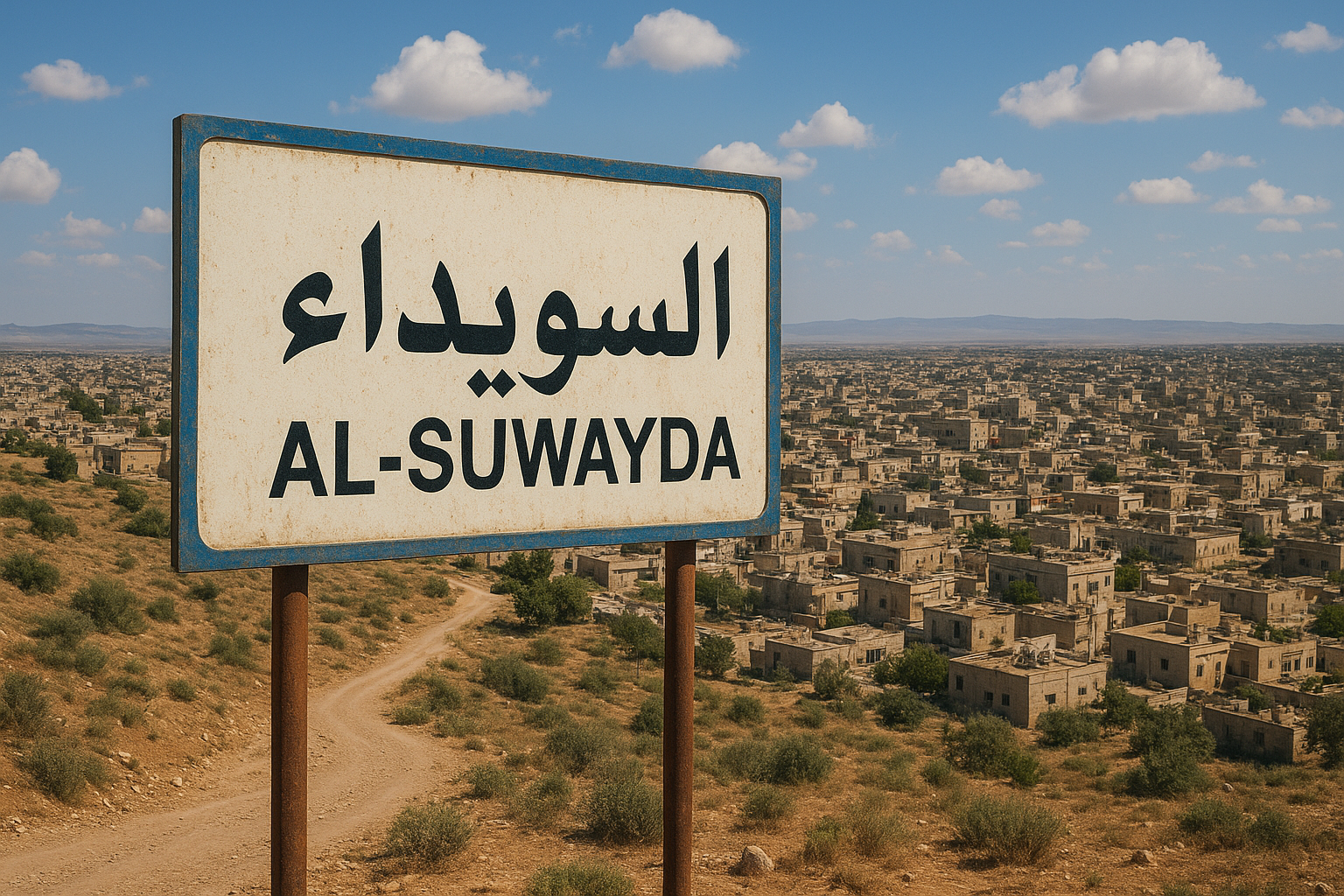
As-Suwayda Governorate in Southern Syria – History, Geography, and Cultural Heritage
As-Suwayda is a city in southern Syria, known for its mountains, agriculture, and rich cultural heritage in the Druze region.
Suwayda Governorate, known in Arabic as Al-Suwayda (السويداء), is a remarkable region in southern Syria distinguished by its rich historical legacy, enduring cultural traditions, and unique landscape. Often called the “Land of Black Basalt,” Suwayda has been shaped over thousands of years by multiple civilizations, leaving behind a remarkable tapestry of archaeological treasures and cultural heritage that continues to inspire researchers, visitors, and historians alike.
The geographical context of the city of As-Suwayda
Suwayda Governorate lies in the southern part of Syria, bordering the Daraa Governorate to the west and stretching toward the eastern edges of the Syrian plateau. Its terrain is defined by the volcanic highlands of Jabal al-Arab — a dramatic landscape of lava fields and basalt rock that distinguishes the region from much of Syria’s surrounding plains. This volcanic soil, though rugged, has supported human settlement and agriculture since ancient times.
The governorate’s capital is the city of Suwayda, a hub of local commerce, culture, and community life. The region’s position on historic trade and travel routes helped connect it to neighboring lands and civilizations throughout history.
As-Suwayda, a land of ancient human history
Archaeological evidence shows that the Suwayda region has been inhabited since prehistoric times, with artifacts and burial sites indicating human presence in the Stone Age. Over the centuries, Suwayda witnessed a succession of civilizations that left enduring cultural and architectural marks upon the landscape.
Nabataean and Hellenistic influences on As-Suwayda
Before the rise of the Roman Empire, the area was influenced by the Nabataeans — a nomadic Arab people renowned for their skill in stone architecture and trade. The Nabataean kingdom, with its famous capital at Petra (in modern Jordan), played a key role in connecting Arabia and the Levant.
In Suwayda and the broader Hauran region, Nabataean artistic traditions are visible in basalt sculptures and funerary monuments that reflect a vibrant local culture blending nomadic roots with settled craftsmanship.
Roman Era: Dionysias and Philippopolis
With the expansion of Roman power into the Near East, Suwayda became part of the province of Arabia Petraea. The Romans developed existing settlements into urban centers. The city now known as Suwayda was called Dionysias during this era, and it became notable for its public buildings, marketplaces (agora), and religious structures.
Roman architectural remains — such as temples, arches, and bath complexes — still dot the landscape, offering insight into the region’s blend of local traditions and imperial Roman culture.
Some 15 kilometers north of Suwayda lies the ancient city of Shahba, which Roman Emperor Philip the Arab elevated to the status of a significant city. Renamed Philippopolis, this city featured basilicas, temples, monumental gates, and a sophisticated urban layout, reflecting its importance as a provincial center in the Roman world.
The cultural and historical importance of the city of As-Suwayda today
The combination of volcanic geography, ancient cities, and living traditions gives Suwayda Governorate a distinctive identity within southern Syria. Its archaeological sites, historic towns, and enduring cultural heritage make it one of the most historically rich regions of the country.
From prehistoric settlements and Nabataean influences to Roman urban planning and continued habitation into the modern era, Suwayda stands as a living record of human adaptation, resilience, and cultural continuity in the Levant.

Byzantine Period
After the Roman Empire transitioned into the Byzantine era, the region continued to flourish. During this period, Byzantine churches and religious architecture became increasingly prominent across Suwayda Governorate. In many cases, these structures incorporated earlier Roman sites and architectural styles, reflecting continuity rather than replacement.
As Christianity spread throughout the region, several early Christian basilicas and ecclesiastical buildings were constructed. Today, the remains of these churches stand as clear evidence of Byzantine cultural influence and the integration of Christian traditions into local society.
Archaeological Sites and Monuments
Suwayda Governorate contains a remarkable concentration of archaeological sites. Together, these ruins and monuments reveal the region’s long and layered human history.
Roman Amphitheaters and Temple Ruins:
Throughout the governorate, remnants of amphitheaters, sanctuaries, and civic buildings from the Roman era remain visible. These structures highlight the region’s urban importance during antiquity.Byzantine Churches and Christian Monuments:
Several early Christian basilicas and worship sites still preserve traces of original masonry and decorative elements. As a result, they provide valuable insight into early Christian architecture.Basalt Sculptures and Inscriptions:
Numerous basalt carvings and statues demonstrate a fusion of artistic traditions from different historical periods. Notably, these artifacts depict daily life, religious symbols, and funerary practices.Ancient Houses and Reservoirs:
Remains of Roman and Byzantine houses, water reservoirs, aqueducts, and hydraulic systems survive across the region. Collectively, they reflect the sophistication of ancient urban infrastructure.
Discover more details about As-Suwayda on our YouTube channel.
Cultural Heritage and Museums
At the heart of Suwayda city stands the Suwayda National Museum, one of the most important cultural institutions in southern Syria. Built from local black basalt stone, the museum itself reflects the region’s architectural identity.
Inside, the museum presents a comprehensive overview of Suwayda’s history. Its collections range from prehistoric tools to Nabataean art, Roman mosaics, Byzantine relics, and early Islamic artifacts.
The museum’s exhibits include:
Basalt sculptures and stone reliefs
Pottery, glassware, and everyday ceramics
Coins from multiple historical periods
Mosaics depicting mythological and daily scenes
Personal ornaments and inscriptions in various ancient scripts
Additionally, the museum’s gardens function as an open-air exhibition space. Visitors can view large stone artifacts while overlooking Suwayda’s volcanic landscape.
Importance in the Past and Present
Suwayda’s historical importance lies in its continuity of human settlement and its position as a crossroads between civilizations. Over time, the region absorbed influences from Nabataean, Roman, and Byzantine cultures while maintaining strong local traditions.
Furthermore, Suwayda’s basalt architecture offers scholars valuable insight into how regional societies adapted imperial styles to local materials and needs. At the same time, the preservation of these sites provides a tangible connection to the past.
Today, Suwayda remains recognized for its cultural identity, archaeological richness, and distinctive environment. Consequently, it continues to play an important role in heritage studies and cultural tourism, standing as a living record of thousands of years of history.
Daraa: History, Culture and Facts About Syria’s Southern City
Conclusion
Suwayda Governorate is a region where the echoes of ancient civilizations remain clearly visible among basalt hills, stone ruins, and museum galleries. Thanks to its strategic location in southern Syria, Suwayda became a crossroads for cultures and peoples who left behind a rich collection of archaeological treasures.
From Nabataean artistry to Roman urban planning and Byzantine spirituality, the governorate offers a unique window into thousands of years of human history. Each historical layer adds depth to Suwayda’s identity and reflects its long-standing role in the ancient Near East.
Whether explored through its monuments, museums, or natural landscapes, Suwayda’s story deepens our understanding of the ancient world. Ultimately, it stands as a living testament to the enduring legacy of the civilizations that once flourished on its land.
Damascus: The Fragrant City Where History Never Sleeps
Leave a Reply