
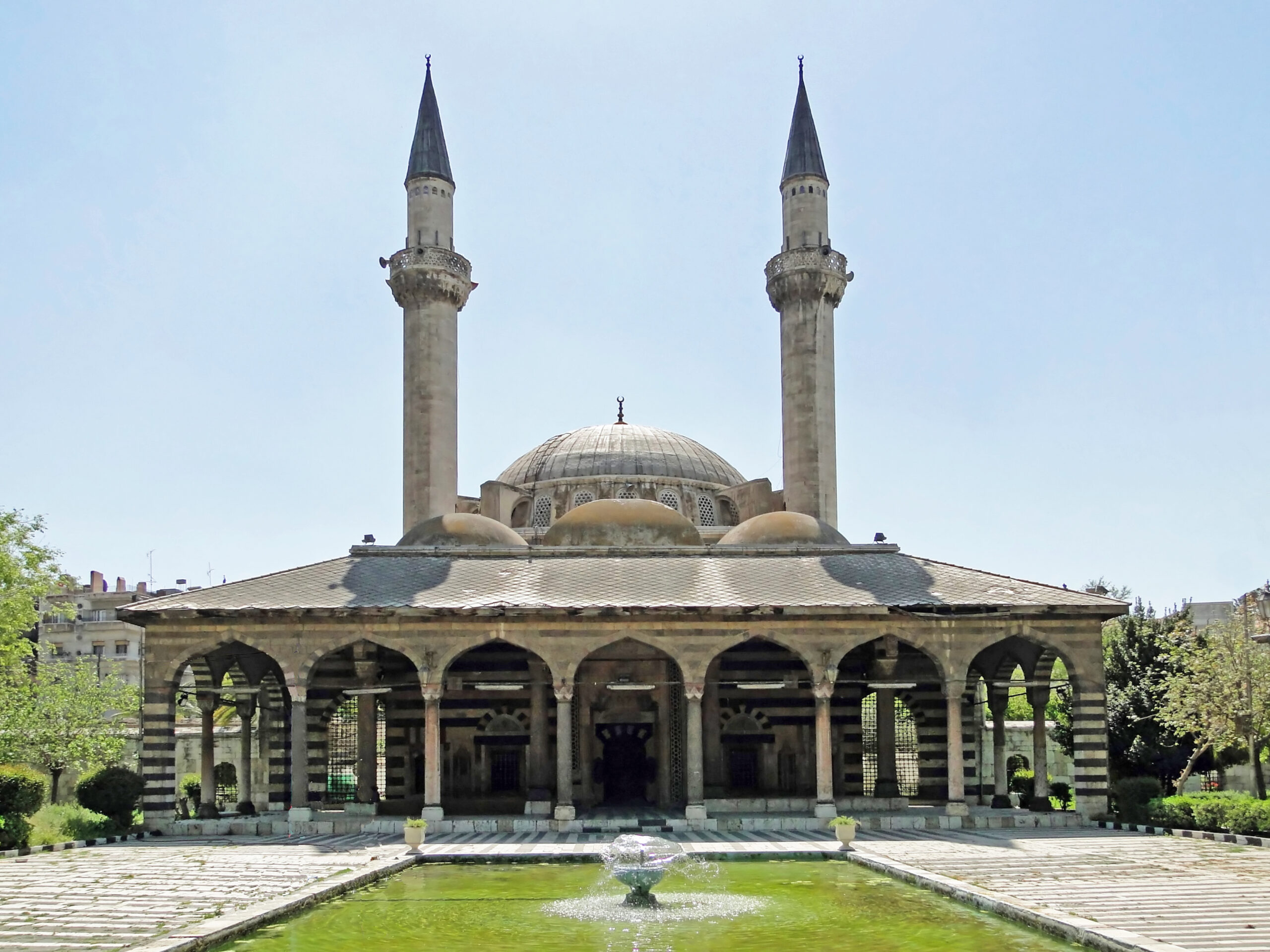
Al-Tekkiyeh Al-Suleimaniyah(The Sulaymaniyya Mosque of Damascus)
Nestled along the gentle curves of the Barada River, the Sulaymaniyya Mosque — also known as Al-Tekkiyeh Al-Suleimaniyah — stands as one of the finest Ottoman landmarks in Damascus. Built in the mid-16th century, this grand complex reflects both imperial Ottoman vision and local Syrian craftsmanship.
Moreover, the mosque does more than serve as a place of prayer. It represents cultural exchange, charitable tradition, and architectural elegance in one unified space.
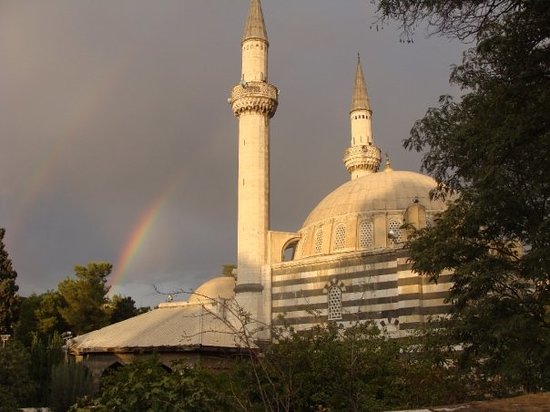
Origins and historical background of Al-Tekkiyeh Al-Suleimaniyah
Suleiman the Magnificent commissioned the Sulaymaniyya Mosque during the height of Ottoman power. Construction began around 1554–1555 CE, and builders completed the central mosque by 1558–1559 CE.
Importantly, the Ottomans chose a site layered with history. The complex replaced the ruins of Qasr al-Ablaq, a 13th-century palace built by Baybars. By building here, Ottoman authorities asserted their presence in Damascus and reshaped an older political symbol into an imperial religious monument.
The renowned architect Mimar Sinan designed the mosque. Although the structure is smaller than his monumental works in Istanbul, it remains one of the most important examples of classical Ottoman architecture outside the imperial capital.
The Mosque and Its Takiyya Complex
Unlike a simple neighborhood mosque, the Sulaymaniyya formed part of a takiyya — a multifunctional religious and charitable complex. Therefore, it served both spiritual and social needs.
The complex includes:
Mosque: The centerpiece features twin slender Ottoman minarets and domes. Alternating bands of light and dark stone — known as ablaq — give the façade a distinct Damascene character.
Courtyard: A spacious open courtyard, often centered around a fountain, provides space for reflection and ablution.
Hospice and Lodgings: Arcaded wings once sheltered travelers and pilgrims.
Imaret (Soup Kitchen): The complex offered free meals to pilgrims and the poor, reflecting Ottoman charitable values.
Madrasa: A religious school later expanded the educational function of the site.
Together, these elements show how Ottoman mosque complexes functioned as community centers. In addition, they supported pilgrims traveling to Mecca along the Hajj route.
The architectural significance of Al-Tekkiyeh Al-Suleimaniyah
Architecturally, the Sulaymaniyya blends Ottoman structural planning with Syrian decorative traditions. The central dome and balanced layout reflect classical Ottoman design principles. At the same time, local stonework and ablaq patterns root the building firmly in Damascus.
Furthermore, the twin minarets frame the skyline along the Barada River, creating one of the city’s most recognizable silhouettes. The porticos, arches, and courtyard arrangement demonstrate harmony and proportion — hallmarks of Sinan’s architectural philosophy.
Although the complex projects imperial dignity, it was never a fortress. Instead, it functioned as a welcoming spiritual station along the pilgrimage road to Mecca.
Historical and Cultural Importance of Al-Tekkiyeh Al-Suleimaniyah
Beyond architecture, the Sulaymaniyya Mosque holds deep symbolic meaning:
Ottoman Heritage: It represents one of the finest Ottoman-era monuments in Damascus.
Pilgrimage Landmark: For centuries, pilgrims from Anatolia, the Balkans, and other regions stopped here before continuing south.
Royal Cemetery: The complex includes the tomb of Mehmed VI, the final Ottoman Sultan, who died in exile in the 20th century.
Cultural Memory: Today, locals and visitors recognize the mosque as a powerful reminder of Damascus’s layered history.
In recent decades, restoration efforts have aimed to preserve its Ottoman features while protecting the structure from natural wear and urban pressure.
How to Visit Al-Tekkiyeh Al-Suleimaniyah
Location: The mosque stands on the right bank of the Barada River, just west of the Old City of Damascus. It lies near the National Museum of Damascus and within walking distance of several historic landmarks.
Getting There
From the Old City: Walk west along Shukri al-Quwwatli Street toward the river. The mosque’s minarets are clearly visible.
By Taxi: Ask for “Takkiyah al-Sulaymaniyah” (جامع التكية السليمانية). Most drivers know the location.
Public Transport: Buses and minibuses connect central Damascus to the Barada area. However, routes may vary, so confirm locally.
Visitor Tips
Dress modestly, especially during prayer times.
Check opening hours before entering internal sections.
Combine your visit with nearby attractions such as the National Museum or the Old City walls for a fuller historical experience.
Mount Qasioun: The Iconic Mountain Overlooking Damascus
Conclusion
The Sulaymaniyya Mosque of Damascus stands as more than a 16th-century monument. It embodies imperial ambition, religious devotion, and architectural dialogue between Anatolia and Syria.
Today, its domes and minarets continue to overlook the Barada River, reminding visitors that Damascus — one of the world’s oldest continuously inhabited cities — remains a crossroads of civilizations and faith.
Bab Touma Damascus: Historic Gate and Christian Quarter Guide
Leave a Reply