
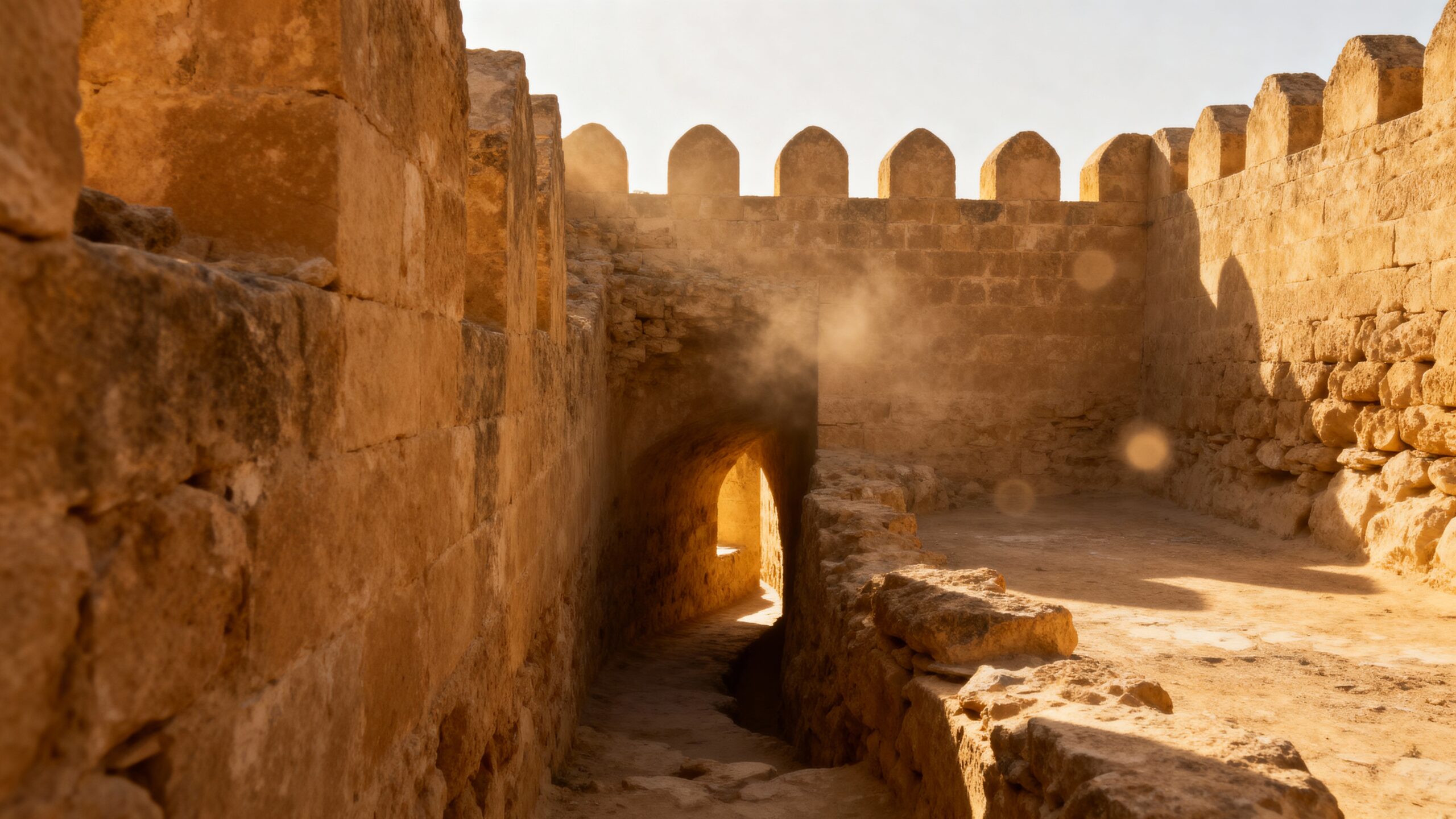
Al-Subaybah Castle, also known as Nimrod Fortress, is a historic mountain castle in Syria near the Golan Heights, famous for its strong defenses and strategic location.
Al-Subaybah Castle, also widely known as Nimrod Fortress, rises dramatically along the southern slopes of Mount Hermon. Overlooking the vast Golan Heights and the fertile Hula Valley, this medieval stronghold has dominated the landscape for centuries. From its elevated position, Al-Subaybah Castle watched the movement of armies, guarded critical routes, and witnessed the rise and fall of powerful empires that shaped the Levant’s history.
Today, the fortress stands not only as an architectural relic, but also as a powerful symbol of medieval strategy, regional conflict, and the enduring importance of geography in shaping history.
Where History and Geography Converge at Al-Subaybah Castle
Al-Subaybah Castle (Arabic: قلعة الصبيبة, Qalʿat al-Subeiba — “Castle of the Large Cliff”) lies within what is administratively part of the Quneitra Governorate in southwestern Syria, in the Golan Heights region. The fortress occupies a rugged limestone ridge at roughly 800 meters above sea level, a location chosen deliberately for its commanding visibility and natural defenses.
From this height, Al-Subaybah Castle controls mountain passes linking the interior of Syria with Galilee and the Mediterranean coast. Later traditions referred to the site as Qalʿat Namrud or Nimrod’s Castle, connecting it to the biblical figure Nimrod. However, this legendary name appeared centuries after the castle’s actual construction and reflects folklore rather than historical origin.

The Construction of Al-Subaybah Castle and Its Strategic Purpose
The fortress visible today dates primarily to the early 13th century during the Ayyubid period. Around 1229 CE, Al-Aziz ʿUthman, the nephew of Saladin, ordered the construction of Al-Subaybah Castle as a defensive response to Crusader pressure advancing from the west.
Rather than concentrating defenses in a single tower, Ayyubid engineers stretched the fortress along the ridge itself. This design allowed soldiers to monitor multiple directions while creating overlapping defensive zones. As a result, the castle became extremely difficult to assault directly, especially given the steep slopes and narrow access paths.
Medieval Power Struggles Around Al-Subaybah Castle
Ayyubid Beginnings
Shortly after its construction, regional instability tested the strength of Al-Subaybah Castle. In 1260, Mongol forces swept through Syria and briefly captured the fortress. Although the Mongols damaged sections of its defenses, their control proved short-lived.
Mamluk Expansion and Fortification
After the decisive Mamluk victory at the Battle of ʿAin Jalut, Sultan Baybars I reclaimed the region and recognized the strategic value of Al-Subaybah Castle. He ordered major expansions, including taller towers, reinforced curtain walls, and large rock-cut cisterns capable of sustaining defenders during prolonged sieges.
Stone inscriptions carved during this phase still commemorate the Mamluk restoration works. Under governors such as Bilik, the castle became part of a broader defensive chain protecting Syria from renewed Crusader incursions and steppe invasions.
Ottoman Era and Gradual Decline
When the Ottomans conquered Syria in 1517, Al-Subaybah Castle had already lost much of its frontline military importance. The empire used it sporadically, sometimes as a detention site, but gradually abandoned it. Earthquakes—especially the devastating tremor of 1759—further weakened the structure and accelerated its decline.
Why Al-Subaybah Castle Mattered Historically
At its peak, Al-Subaybah Castle served far more than a single defensive role. It overlooked interconnected routes linking Banias, Damascus, Galilee, and Mediterranean ports. Control of the fortress meant influence over trade, troop movements, and political stability across a wide region.
Its architecture reflects advanced medieval military engineering. Builders maximized natural terrain, limited access points, and integrated water systems that allowed defenders to endure long sieges. These features explain why the fortress remained relevant for centuries despite changing rulers.
Architectural Features of Al-Subaybah Castle
Despite centuries of weathering and conflict, visitors can still identify key elements:
Massive Defensive Walls that follow the jagged ridge and exploit the natural cliff edges
Rectangular and Semi-Circular Towers, many added during the Mamluk period
Rock-Hewn Cisterns designed to collect and store rainwater
Hidden Stairways and Passages used for defense, retreat, or surprise movement
Together, these features demonstrate how medieval architects blended landscape and stone into a unified defensive system.
Al-Subaybah Castle Today: Legacy and Modern Significance
Today, Al-Subaybah Castle remains one of the largest and most impressive medieval fortifications in the Levant. The surrounding Nimrod Fortress National Park preserves the ruins as an open-air archaeological site, attracting visitors interested in history, hiking, and panoramic scenery.
Although the political status of the region remains contested—internationally recognized as Syrian territory but administered by Israel since 1967—the fortress itself continues to function as a cultural landmark rather than a military one. Its ruins offer sweeping views of Mount Hermon, the Golan Heights, and the Hula Valley.
How to Reach Al-Subaybah Castle
Access to Al-Subaybah Castle is typically by road through the northern Golan Heights. Visitors commonly approach via Road 989, with parking available near the main entrance of the national park. From there, marked paths guide visitors on foot through the ruins.
Because the terrain includes steep sections and uneven stone surfaces, sturdy footwear and water are essential, especially during summer months.
Entrance Fees and Visiting Information (2026)
As part of Nimrod Fortress National Park, visitors generally pay an entrance fee when entering from the Israeli-administered side:
Adults: approximately ₪24
Children: approximately ₪10
A video about Al-Subaybah Castle is on our YouTube channel.
Group and student discounts may apply. Opening hours and fees can change seasonally, so checking current information before visiting is recommended.
Qadesh: The Ancient Crossroads of Empires in the Homs Countryside
Conclusion: Al-Subaybah Castle, a Fortress Between Worlds
What sets Al-Subaybah Castle apart is not only its dramatic setting, but the layers of history embedded in its stones. From Ayyubid ambition and Mamluk strength to Ottoman decline and modern preservation, the fortress reflects the shifting balance of power in the medieval Near East.
For historians, travelers, and curious explorers alike, Al-Subaybah Castle offers more than ruins—it offers perspective. Standing on its walls, one can still sense how geography, strategy, and human ambition once converged to shape the fate of empires.
Hama Water Wheels (Norias): History and Facts About Syria’s Famous Landmark
Leave a Reply