
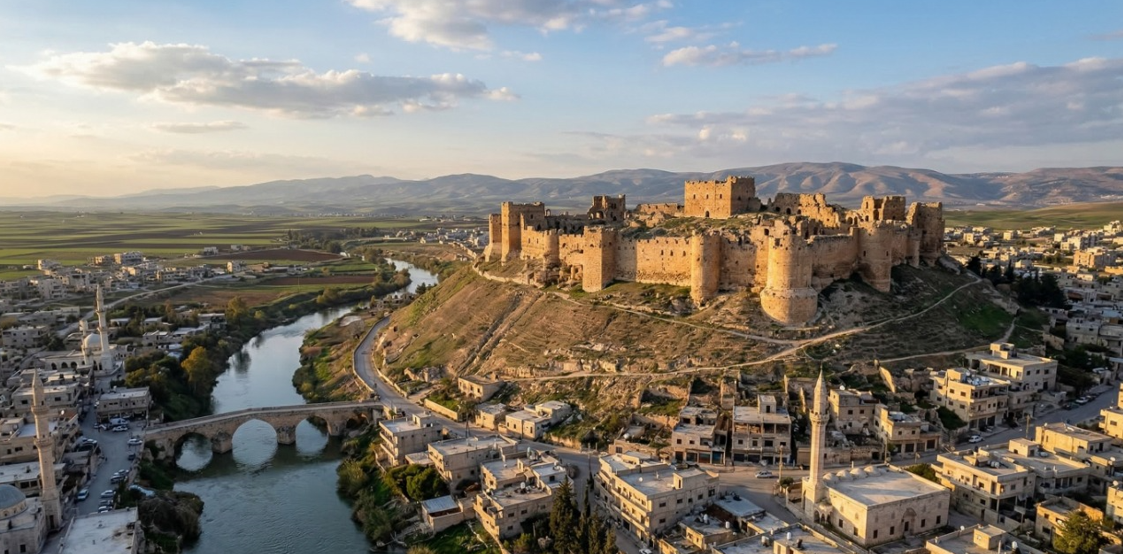
Al-Rastan Castle: A Forgotten Stronghold in the Heart of Syria
Al-Rastan Castle Location and Strategic Importance
Al-Rastan Castle stands in the historic city of Al-Rastan, between Homs and Hama. The castle rises near the Orontes River. This location gave it strong control over movement in central Syria. Armies, traders, and travelers passed through this corridor for centuries.
The site sits on elevated ground. This gave defenders a wide field of view. It also made the site easier to defend. Control of Al-Rastan meant control of a key inland route. That is why the location stayed important for a long time.
History of Al-Rastan Castle
Al-Rastan has deep historical roots. In ancient times, the city was known as Arethusa. It was part of the Roman province of Syria. The region held both political and military value. Early fortifications likely appeared during this period.
During the Byzantine era, rulers strengthened defenses. They aimed to secure the region from external threats. The location remained a key link between major cities. This made it worth defending again and again.
After the Islamic conquests in the 7th century, control shifted. However, the importance of the site remained. Muslim rulers continued to use Al-Rastan as a defensive position. They protected trade routes and communication lines.
In the medieval period, conflicts spread across Syria. Crusader and Muslim forces fought over strategic locations. Al-Rastan was not a major battlefield, but it supported nearby military networks. Its fortifications likely saw repairs and reuse during this time.
The castle never reached the fame of major fortresses. However, it played a steady and practical role. It supported regional defense and protected movement between cities.
Architecture of Al-Rastan Castle
Al-Rastan Castle shows simple military design. Builders focused on strength and function. Thick stone walls formed the main defense. These walls helped resist attacks and slow advancing forces.
The structure likely included watchtowers. These towers allowed soldiers to observe the surrounding land. Early warning was essential for survival.
Inside, the layout was practical. The castle likely had small courtyards and storage areas. Soldiers needed space for supplies and rest. Every part of the structure served a clear purpose.
Unlike larger castles, it had little decoration. It was not built to impress. It was built to defend. Today, parts of the structure remain visible. The ruins still reflect its original layout and function.
Why Al-Rastan Castle Matters Today
Al-Rastan Castle represents an overlooked part of Syrian heritage. Smaller fortifications like this supported larger cities and trade systems. They formed a network of defense across the region.
Famous landmarks often receive attention. However, sites like Al-Rastan complete the historical picture. They show how daily defense and regional control worked.
The castle also reflects resilience. It survived multiple historical periods. Even in ruins, it continues to tell its story. It connects the present with layers of the past.
How to Visit Al-Rastan Castle
Visitors can reach Al-Rastan Castle by road. The city lies between Homs and Hama. The route is direct and commonly used.
Once inside Al-Rastan, the site is accessible. Visitors may need to walk to explore the remains. The castle blends into the urban surroundings.
It is important to check local conditions before visiting. Travel access may vary. A local guide can provide helpful context and direction.
Conclusion
Al-Rastan Castle is a quiet but important historical site. It does not rely on size or fame. Its value comes from its role and location.
For centuries, it helped control movement across central Syria. It supported trade, defense, and communication. Today, it stands as a reminder of hidden heritage.
Exploring this site offers a deeper understanding of Syria’s history. It invites visitors to look beyond well-known landmarks and discover the stories that shaped the region.
Frequently Asked Questions (FAQs)
1. What was the ancient name of Rastan?
Rastan was known as Arethusa during the Hellenistic, Roman, and Byzantine periods.
2. Where is Rastan Castle located?
It is located in the Homs Governorate, approximately 20 km north of Homs and 25 km south of Hama, overlooking the Orontes River.
3. What is the most famous discovery in Rastan?
In 2022, a magnificent 1,600-year-old Roman mosaic was discovered, depicting scenes from the Trojan War and the Amazon warriors.
4. Is the castle still standing?
The main mound (Tell) and some foundational walls are visible, though much of the upper medieval structure was damaged or built over in later centuries.
Exploring the historical sites of Syria reveals a depth of culture found nowhere else. If you are interested in Syrian heritage, don’t miss our guide on the nearby Shmemis Castle!
Harem Castle Syria: History of the Ancient Fortress in Idlib
Leave a Reply