
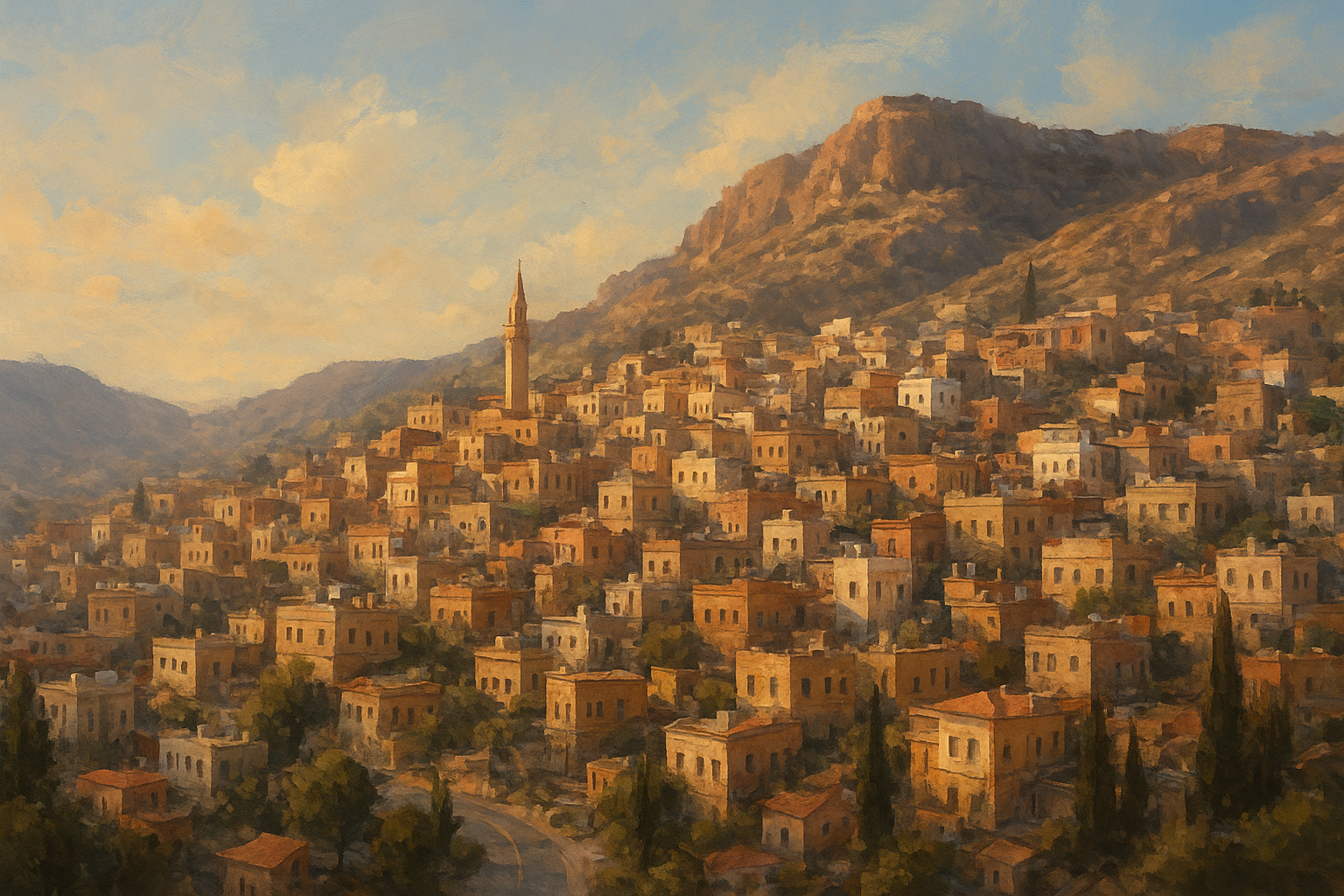
Al-Nabk is a historic city in Syria, located in the Qalamoun Mountains north of Damascus, known for its strategic location and rich history.
Nestled high in the rugged terrain of western Syria, النبك , Al-Nabk stands as a place where ancient history, dramatic landscapes, and strategic crossroads converge. Often overlooked on world maps, this city serves as the capital of the Qalamoun region and embodies centuries of cultural layering, geographical significance, and modern historical relevance.
Where is Al-Nabk?
An-Nabk (also spelled Al-Nabek or simply Nabk) is located in the Rif Dimashq Governorate of Syria, about 81 km (50 mi) north of Damascus and south of Homs. It sits on an elevated plateau at roughly 1,255 meters above sea level—hence its Arabic name, which translates to something like “high ground.”
This elevated position places the city at the heart of the Qalamoun region, a stretch of mountains and valleys extending along the borderlands between Syria and Lebanon. The area includes portions of the Anti-Lebanon Mountains, whose ridges and passes have shaped trade, travel, and military movements for millennia.

Al-Nabk is a tale through time
Al-Nabk’s story begins in antiquity, though written sources first mention it in medieval Arabic geography. The famous 12th-century traveler Ibn Jubayr records a settlement “north of Damascus with abundant water and fertile fields.” Later writer Yaqut al-Hamawi echoed similar descriptions in the 13th century.
The city’s longevity owes much to its fertile springs and agricultural terrain, which historically supported residents and passing caravans alike. Throughout the Middle Ages, Al-Nabk was part of a series of connecting routes from the Syrian interior to Mediterranean ports and inland cities, shaping its role as both a market town and cultural meeting point.
Historic Landmarks
One of the region’s most enduring monuments is the Deir Mar Musa al-Habashi (Monastery of Saint Moses the Abyssinian), perched on the slopes above the town. Thought to be founded as early as the 6th century, this monastery blends Roman watchtower foundations with early Christian basilical architecture and medieval frescoes. It reflects the deep and layered religious history of the area.
In addition to monastic heritage, the Qalamoun region around Al-Nabk hosts ancient defensive structures, traditional villages, and archaeological sites that speak to centuries of settlement and cultural exchange among Muslim and Christian communities alike.
Life Today: Culture and Community
Before the war, An-Nabk’s demography consisted predominantly of Sunni Muslim residents, with a historic presence of Christian communities tied to the monasteries and churches of the region.
Life in the town remains characterized by traditional Syrian cultural practices—markets, agricultural life, and community gatherings—though the impacts of conflict and displacement have, like in many parts of Syria, reshaped everyday experience. Still, many expatriates with roots in An-Nabk maintain strong ties to the city, sending remittances and maintaining cultural connections abroad.
Nature Around An-Nabk
The Qalamoun Mountains—so often mentioned in histories of the region—are more than just rocky heights. They comprise rolling plateaus, valleys dotted with orchards and springs, and sweeping vistas that transition from snow in winter to wildflower plains in spring.
For visitors (when safe and possible), the area offers a rich tapestry of natural landscapes and hiking terrain, with panoramic views of both the Syrian interior and distant Lebanese peaks.
How to Get There
Travelers aiming for An-Nabk usually depart from Damascus, Syria’s capital:
- By Road: The most direct route is a drive north from Damascus along the M5 highway. At designated regional junctions, travelers turn toward the Qalamoun mountain road network leading directly to An-Nabk.
- From Homs: Travelers coming from the north would head south on the same major artery before turning eastward into the mountain foothills.
Because Al-Nabk sits at a significant elevation, roads winding through the Anti-Lebanon range offer dramatic views but require careful driving, especially in winter when snow and ice can be present.
A video about the city of Al-Nabk is on our YouTube channel.
Best Times to Visit
Historically, the region’s Mediterranean-mountain climate meant warm summers and cold, sometimes snowy, winters. Spring and early autumn—when temperatures are mild and the landscape lush—have traditionally been the most pleasant times to explore mountain paths and cultural sites.
Masyaf Castle: History and Facts About the Famous Ismaili Fortress in Syria
Why Al-Nabk Matters
Whether viewed through the lens of ancient travelers, medieval geographers, or modern historians, Al-Nabk offers something beyond its size on the map. It is a place of convergence—where rugged geography meets human resilience, where communities have thrived under varied empires and conditions, and where the echoes of history remain visible in stone, trail, and tradition.
In a region often spoken of in broad terms, Al-Nabk and the Qalamoun remind us that the world’s crossroads are not always grand capitals, but small towns with deep roots and wide horizons.
Mari Ancient City: History and Facts About the Bronze Age City in Syria
Leave a Reply