
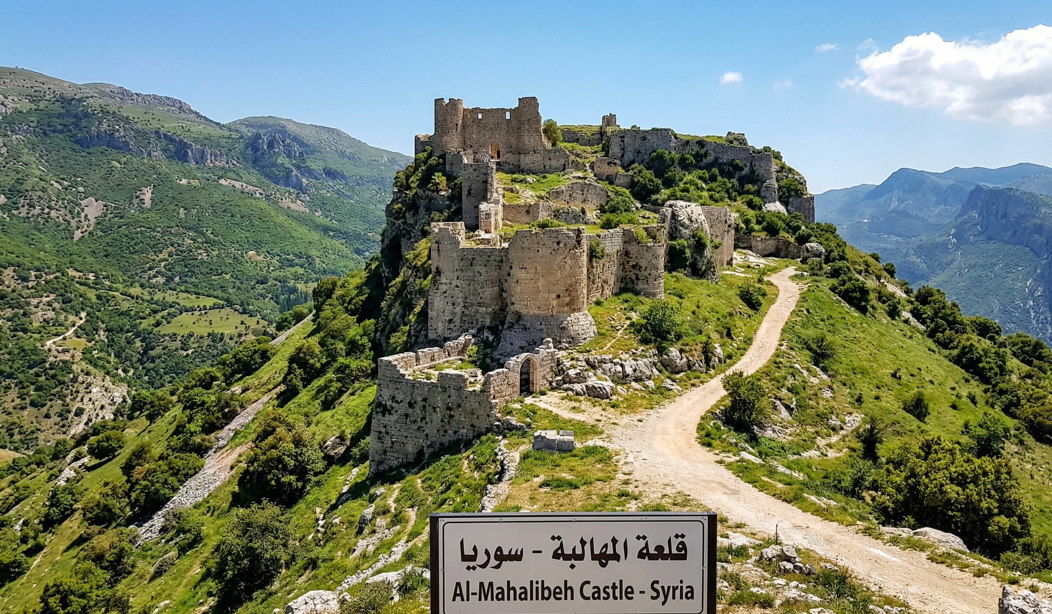
Al-Mahalbeh Castle (Qalaat al-Mahalbeh): A Mountain Stronghold Overlooking the Syrian Coast
Location and Strategic Importance of Al-Mahalbeh Castle
Al-Mahalbeh Castle rises in the coastal mountains near the town of Al-Haffah in the countryside of Latakia, western Syria. The fortress sits on a high ridge within the forested coastal mountain range that separates the Mediterranean coast from inland Syria.
Because of this elevated position, Al-Mahalbeh Castle controlled mountain passes linking coastal cities with inland regions such as Idlib and Aleppo. These routes carried trade, travelers, and military forces for centuries. As a result, the castle became an essential defensive site along the coastal frontier.
The surrounding mountains provided natural protection. Steep slopes and dense forests made direct attacks difficult. Therefore, the fortress functioned as both a defensive stronghold and an observation point.
In addition, the castle formed part of a chain of mountain fortresses that protected the Syrian coast. Together, these sites created a defensive barrier between inland territories and the Mediterranean shoreline.
History of Al-Mahalbeh Castle
Al-Mahalbeh Castle dates back to the medieval period, when the coastal mountains became a strategic frontier zone. During the 11th and 12th centuries, the region witnessed conflicts between Byzantine forces, Crusader states, and Islamic dynasties.
The fortress likely developed during this era of instability. Its strategic location made it valuable for monitoring movement between the coast and inland Syria.
During the Crusader period, many mountain castles in the coastal region became key defensive positions. Control of these fortresses shifted between competing powers over time.
Later, during the Ayyubid and Mamluk periods, the castle continued to serve a defensive role. These dynasties strengthened coastal defenses to secure trade routes and protect major cities.
By the Ottoman era, military priorities changed and the fortress gradually lost its strategic importance. Without regular maintenance, the structure began to deteriorate and eventually became a ruin.
Architecture of Al-Mahalbeh Castle
The architecture of Al-Mahalbeh Castle reflects adaptation to a mountainous environment. Builders used local stone to create thick defensive walls that blended with the rocky terrain.
The castle followed the natural shape of the ridge rather than a strict geometric plan. This approach improved stability and defense by using the landscape as a natural barrier.
It is likely that watchtowers were located at key sites along the walls. These towers provided wide views of valleys and mountain passes. Guards could detect movement from long distances.
Inside the fortress, the layout included basic military facilities. Soldiers used small rooms for shelter and storage areas for supplies. Open courtyards provided space for daily activities.
Water storage was essential in the mountain environment. Builders constructed cisterns to collect rainwater, ensuring a reliable supply during isolation.
Today, significant ruins of the walls and foundations remain visible. These remnants still reveal the scale and design of the fortress.
Al-Mahalbeh Castle and the Coastal Defense Network
Al-Mahalbeh Castle did not stand alone. It formed part of a broader network of fortresses across the coastal mountains. These castles communicated through visibility and signal systems.
When guards spotted movement, they could warn nearby strongholds. This network helped protect the region from sudden attacks and strengthened regional security.
The castle also supported nearby agricultural communities. Protecting mountain villages ensured stable food supplies and economic activity along the coast.
Understanding this defensive system helps historians reconstruct how medieval societies protected large territories using interconnected fortresses.
Why Al-Mahalbeh Castle Matters Today
Al-Mahalbeh Castle represents an important chapter in Syria’s coastal history. While less famous than major Crusader castles, it played a vital role in regional defense.
The site demonstrates how geography shaped military strategy. Builders used mountains, forests, and elevation as natural defensive tools.
In addition, the castle offers valuable insight into medieval life in the coastal mountains. It reflects the challenges of defense, communication, and survival in a rugged landscape.
Preserving Al-Mahalbeh Castle helps protect Syria’s cultural heritage and supports the development of historical tourism.
How to Visit Al-Mahalbeh Castle
Visitors can reach the castle by traveling from Latakia towards Al-Hafa and then continuing on to the coastal mountain.. Local roads lead toward the ridge where the fortress stands.
The final approach usually involves walking along mountain paths. Comfortable shoes are essential due to uneven terrain.
Carrying water is strongly recommended, especially during warm months. The mountain climate can vary, so visitors should prepare for changing weather.
Spring and autumn offer the best visiting conditions. Cooler temperatures and clear views make exploration more enjoyable.
Before traveling, visitors should check local conditions and consider hiring a guide for additional historical context.
Conclusion
Al-Mahalbeh Castle stands as a powerful reminder of the defensive systems that once protected the Syrian coast. Its elevated position allowed guards to monitor mountain passes and secure vital routes.
Over time, the fortress lost its strategic role and fell into ruin. However, its remains still tell a story of resilience, adaptation, and regional defense.
Today, Al-Mahalbeh Castle offers a unique opportunity to explore a lesser-known heritage site in the coastal mountains. It remains a cultural landmark that deserves preservation and appreciation.
Leave a Reply