
🏰 Al-Hisn Castle (Krak des Chevaliers Syria): The Timeless Sentinel of Syria’s Ancient Crossroads
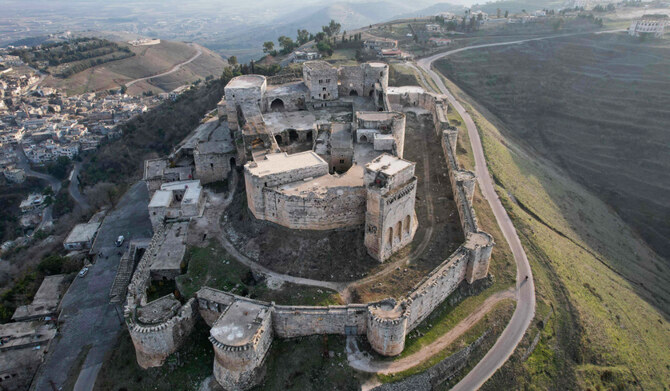
Perched dramatically atop a rugged hill in western Syria, Al-Hisn Castle rises as one of the most extraordinary medieval fortresses ever built. Known to the medieval West as Krak des Chevaliers, this monumental stronghold represents centuries of military innovation, cultural interaction, and political struggle. Historians frequently describe it as the finest surviving example of Crusader military architecture. Its towering walls, layered defenses, and commanding views over vital trade routes secured its reputation as an almost impregnable bastion.
📍 Strategic Location of Al-Hisn Castle
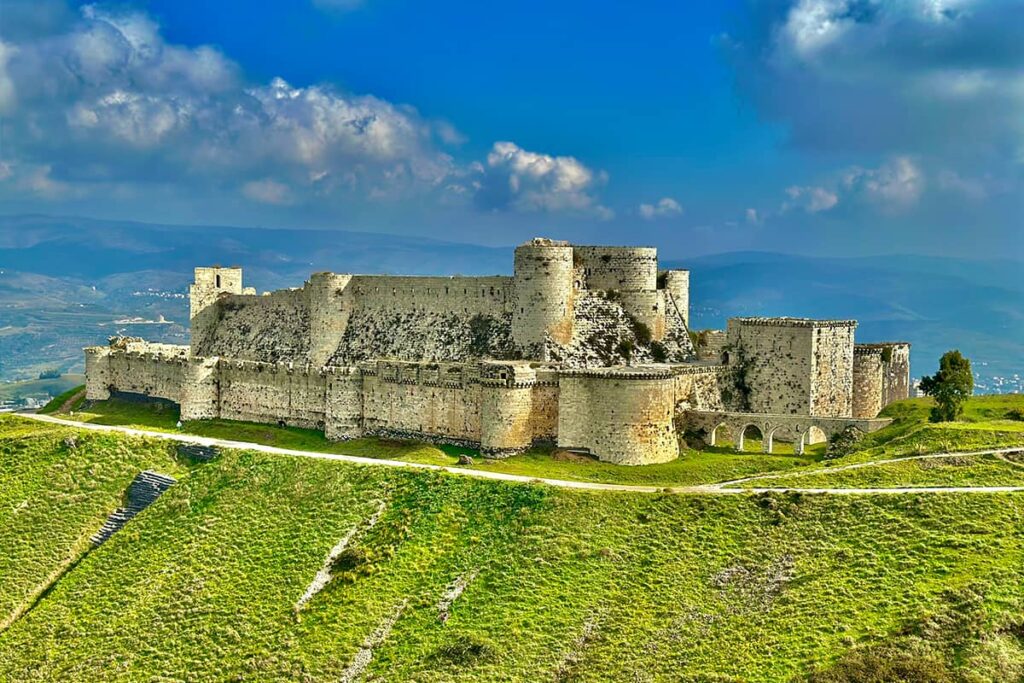
Al-Hisn Castle stands approximately 60 kilometers west of Homs in the Orontes Valley, near the modern village of Al-Husn. The fortress overlooks the crucial Homs Gap — a natural corridor linking the Mediterranean coast to Syria’s interior. This passage connected major coastal cities such as Tartus and Tripoli with inland trade centers.
Because armies and caravans relied on this route for movement and commerce, whoever controlled Al-Hisn Castle effectively controlled a gateway between regions. Its hilltop elevation provided sweeping views of the surrounding plains, enabling defenders to detect approaching forces long before they arrived.
🏗️ Origins of Al-Hisn Castle Before the Crusades
Long before Crusader armies arrived in the Levant, earlier fortifications occupied the hill. In 1031 AD, the site became known as Hosn al-Akrad (“Fortress of the Kurds”), constructed under a local Kurdish ruler to secure the region and supervise key trade roads. This early structure formed the foundation upon which later builders expanded.
Although archaeological evidence suggests earlier defensive uses of the hill, documented history begins clearly in the 11th century. The strategic significance of the location ensured that rulers invested resources in strengthening its fortifications.
⚔️ Al-Hisn Castle Under the Crusaders and the Knights Hospitaller
The First Crusade dramatically altered the political landscape of the Near East. After a period of contest between Muslim and Crusader forces, the castle passed into Crusader control in the early 12th century. Around 1142–1144, the fortress was granted to the Knights Hospitaller, also known as the Knights of Saint John.
Under the Hospitallers, Al-Hisn Castle transformed into its iconic medieval form. Builders reinforced the structure with massive concentric walls, defensive towers, vaulted halls, and fortified gates. They installed cistern systems capable of storing water for long sieges and constructed living quarters, chapels, and stables within the inner defenses.
The Hospitallers engineered the castle to withstand prolonged assaults. Thick stone ramparts, sloping glacis to deflect siege weapons, and strategically placed towers created multiple layers of defense. These features made Al-Hisn Castle one of the most formidable strongholds in the Crusader states.
The castle resisted numerous attacks, including campaigns led by the famous Muslim leader Saladin. However, in 1271, the Mamluk Sultan Baibars finally captured the fortress after a determined siege. With this conquest, Crusader control of Al-Hisn Castle came to an end.
🏛️ Architectural Brilliance of Al-Hisn Castle
Al-Hisn Castle stands as a masterclass in medieval military engineering. Its design incorporates:
Massive concentric defensive walls
Strong towers positioned for archers and surveillance
Deep defensive ditches and sloped exterior barriers
Secure inner courtyards and supply storage areas
Chapels and vaulted halls demonstrating Gothic influence
The concentric design allowed defenders to retreat from outer walls to inner strongholds if attackers breached the first line. This layered system greatly increased the fortress’s defensive strength and influenced castle construction across Europe and the Middle East.
The blend of Western Crusader architecture with local building techniques illustrates cultural exchange during a period often defined solely by conflict.
👑 Al-Hisn Castle Through Later Empires
After the Mamluk conquest, Al-Hisn Castle gradually lost its central military importance. It later passed under Ottoman administration and eventually came under the French Mandate in the 20th century.
Modern restoration projects helped stabilize the structure and preserve its architectural integrity. In 2006, UNESCO recognized the global significance of the site by inscribing UNESCO World Heritage status to Krak des Chevaliers alongside Qal’at Salah al-Din. This recognition highlighted the fortress as an outstanding example of medieval military architecture and cross-cultural interaction.
Although recent regional conflicts caused some damage, conservation efforts continue to protect the castle’s legacy.
🌍 Visiting Al-Hisn Castle Today
Today, Al-Hisn Castle remains one of Syria’s most iconic heritage landmarks. Visitors walking through its arched gateways encounter towering halls, narrow staircases, and panoramic battlements overlooking rolling valleys.
Standing atop the walls, travelers can imagine the echoes of armored knights, watchmen scanning the horizon, and the tension of siege warfare that once defined the site. The landscape that stretches below remains as dramatic as it was centuries ago.
🚗 How to Reach Al-Hisn Castle
From Homs
Travelers commonly begin their journey from Homs, approximately 60 kilometers east of the fortress. The drive usually takes between 1.5 and 2 hours.
From Damascus
From Damascus, the journey spans roughly 150 kilometers northwest toward the coastal mountains.
Transportation Options
Private car or taxi offers the most convenient access.
Regional buses may operate from nearby cities but often require transfers.
Because regional conditions can change, visitors should check updated travel guidance before planning a trip.
🎟️ Entrance Fees (2026 Guide)
Entrance fees may vary depending on visitor category and local administration. As of 2026, reports suggest approximate costs of:
€3 – €5 per foreign visitor
Prices can fluctuate, so carrying small cash in local currency remains advisable.
Ugarit Syria: Ancient City of the First Alphabet
🏰 The Enduring Legacy of Al-Hisn Castle
Al-Hisn Castle represents far more than a relic of medieval warfare. It symbolizes:
The fusion of Eastern and Western architectural traditions
The shifting tides of empire and political power
The resilience of Syrian heritage across centuries
A living monument to human ingenuity in times of conflict
From its Kurdish foundations to its Crusader expansion and Mamluk conquest, Al-Hisn Castle tells a story of ambition, defense, and endurance. Today, it continues to stand as a powerful reminder that history shapes landscapes — and that stone fortresses can preserve the echoes of entire civilizations.
Palmyra Citadel: History and Facts About Qalaat Ibn Ma’an in Syria
A video about the story of Al-Hisn Castle is available on our YouTube channel.
Leave a Reply