
Abu Qubays Castle (Al-Ghab): A Mountain Fortress Overlooking the Orontes Valley
Location and Strategic Importance of Abu Qubays Castle
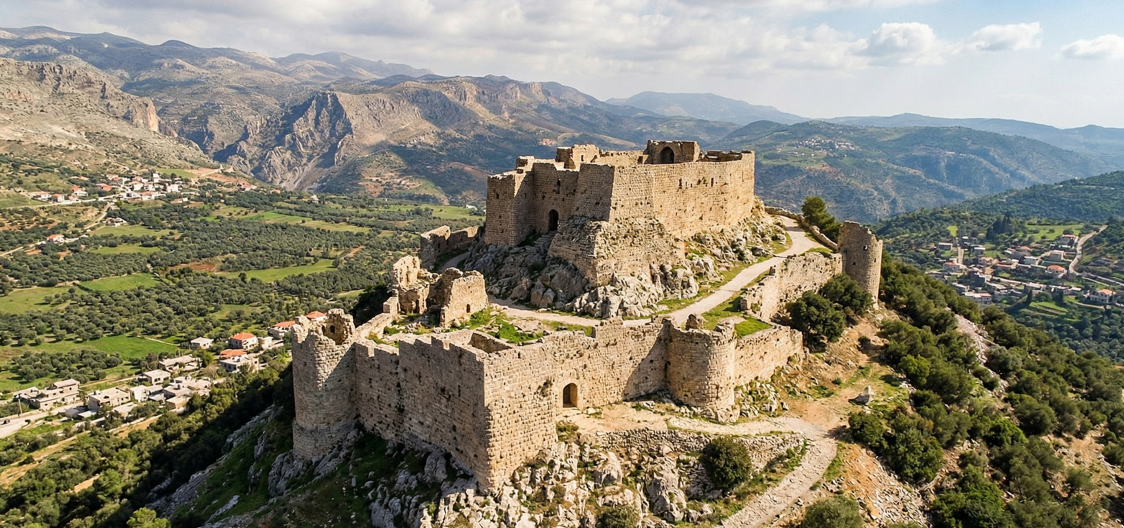
Abu Qubays Castle stands on a high ridge overlooking the fertile plains of the Al-Ghab region in western Syria. The fortress occupies a commanding position along the edge of the coastal mountain range, offering wide panoramic views across the valley.
Because of its elevation, Abu Qubays Castle controlled one of the most productive agricultural areas in the region. The nearby Orontes River has long supported farming and settlement, making the valley strategically valuable.
Moreover, the castle overlooked key routes connecting inland cities such as Hama with coastal centers like Latakia. As a result, it played an important role in monitoring trade and military movement.
In addition, the surrounding mountainous terrain created natural defensive barriers. Steep slopes made direct attacks difficult, while the height allowed defenders to detect approaching forces early. Therefore, Abu Qubays Castle functioned as both a fortress and an observation point.
History of Abu Qubays Castle
Abu Qubays Castle dates back to the medieval period and is closely linked to the era of regional conflicts between Byzantine, Crusader, and Islamic forces.
The site was initially fortified during the Byzantine period. Later, it became part of the Crusader defensive network, which aimed to control inland territories near the Syrian coast.
However, control of the castle shifted over time. In the 12th century, it was captured by Muslim forces during campaigns led by Saladin. Under Ayyubid rule, the fortress was strengthened and integrated into a broader defensive system.
Because of its strategic location, Abu Qubays Castle remained important during the Mamluk period. It helped secure the region and maintain control over key routes between inland and coastal areas.
Later, during the Ottoman era, the military importance of the castle declined. Advances in warfare and changes in political organization reduced the need for such fortifications. As a result, the site gradually fell into disuse.
Over time, lack of maintenance and natural erosion caused partial destruction. Today, the castle survives as a historical ruin overlooking the valley.
Architecture of Abu Qubays Castle
The architecture of Abu Qubays Castle reflects its defensive function and adaptation to rugged terrain. Builders used strong local stone to construct thick walls designed to resist attacks.
The layout follows the natural contours of the mountain ridge. This irregular design improved both stability and defense, making the fortress more difficult to access.
The castle likely featured multiple defensive layers, including outer walls and inner sections. Towers were positioned at strategic points to provide wide visibility across the valley and surrounding routes.
Inside, the structure included essential facilities such as soldier quarters, storage rooms, and open courtyards. Unlike more elaborate castles, the design focused on practicality rather than decoration.
Water storage systems were essential for survival. Builders likely constructed cisterns to collect rainwater, ensuring a reliable supply during isolation or siege.
Today, parts of the walls and towers still stand. These remains provide valuable insight into the original structure and its defensive capabilities.
Why Abu Qubays Castle Matters Today
Abu Qubays Castle represents an important yet often overlooked part of Syrian heritage. While more famous castles attract attention, sites like this played a critical role in regional defense systems.
In addition, the castle highlights the historical importance of the Al-Ghab region. Its fertile lands and strategic location made it valuable for both economic and military purposes.
Moreover, the site demonstrates how geography influenced military architecture. Builders used natural landscapes to strengthen defensive structures rather than relying only on construction.
Today, preserving Abu Qubays Castle helps protect a significant cultural landmark. It also supports future tourism development in lesser-known regions of Syria.
How to Visit Abu Qubays Castle
Visitors can reach Abu Qubays Castle by traveling from Hama or Latakia toward the Al-Ghab region. From there, local roads lead to the mountainous area where the castle is located.
Reaching the fortress may require hiking along steep and uneven terrain. Therefore, comfortable footwear is essential. Carrying water and basic supplies is also recommended.
The best time to visit is during spring or autumn when temperatures are moderate and visibility is clear. These conditions improve both safety and the overall experience.
However, visitors should always check local conditions before traveling. Accessibility and safety may vary. Hiring a local guide can provide historical context and improve navigation.
Conclusion
In conclusion, Abu Qubays Castle stands as a strong reminder of Syria’s medieval past. Its elevated position above the Al-Ghab plain made it a key point for defense and control.
Because of its strategic location, the castle played an important role in monitoring routes and protecting the region. Over time, it lost its military function and became a historical ruin.
However, its remains continue to tell a story of resilience and strategic planning. The fortress reflects the importance of geography in shaping historical developments.
Today, Abu Qubays Castle offers a unique opportunity to explore a lesser-known but historically significant site. It remains a valuable landmark that deserves recognition and preservation.
Shmemis Castle: The Historic Fortress Near Salamiyah in Syria
Leave a Reply